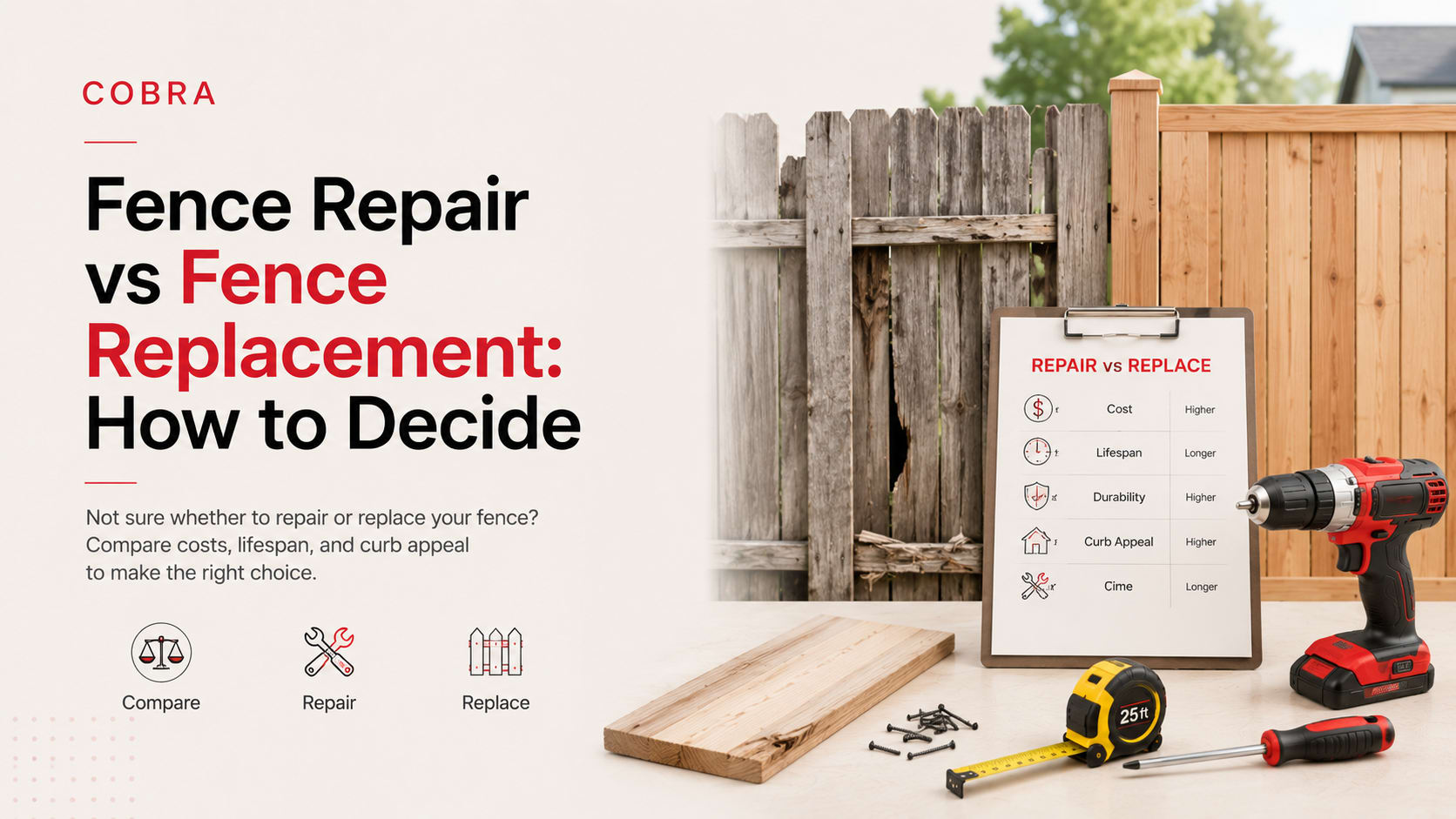
Fence Repair vs Fence Replacement: What’s the Right Move?
If you’re responsible for a property or community, a failing fence is more than a cosmetic issue. It’s a question of liability, security, compliance, and budget. The decision to repair or replace a fence isn’t always obvious—especially when you’re accountable to a board, residents, or a facilities budget. Here’s how to make the call with confidence, backed by real-world criteria and a process that stands up to scrutiny.
Lead With the Outcome: Repair or Replace?
Start by defining the outcome you need: secure boundaries, safe access, compliance with local codes and HOA rules, and a cost that doesn’t wreck your maintenance plan. Here’s a practical rule of thumb:
Repair if damage is minor, isolated, and the rest of the fence is structurally sound.
Replace if more than 20-30% of the fence is compromised, or if underlying issues (rot, rust, shifting posts) threaten the whole structure.
Always consider these factors before deciding:
Safety: Broken panels, exposed nails, or leaning posts are liability risks—especially near playgrounds, pools, or public walkways.
Security: Gaps or weak points undermine access control and can invite trespassers.
Compliance: Check local codes and HOA documents. Some communities require uniform fencing or prohibit patchwork repairs.
Budget: Repairs cost less up front, but repeated fixes add up. Replacement is a bigger investment, but may offer lower lifecycle costs.
Appearance: Mismatched repairs can hurt curb appeal or property value—especially in visible areas.
Inspection Checklist: Fence Repair vs Replacement
CriteriaRepairReplacementExtent of DamageLess than 20% of panels/postsMore than 30% affectedType of DamageLoose boards, minor rot, isolated rustWidespread rot, rust-through, shifting postsAge of FenceUnder 10 years, good overallNear or past expected lifespanComplianceRepairs allowed by code/HOANon-compliant or outdated designBudget ImpactOne-off, minor expenseLong-term savings, fewer future repairs
Preventive vs. Reactive Maintenance: Why It Matters
Deferred fence maintenance leads to bigger risks and costs down the line. If you’re still in the “patch and pray” cycle, it’s time to rethink your approach. Schedule regular inspections—especially after storms, winter freeze/thaw cycles, or landscaping work. Use a structured Outdoor Maintenance Checklist for Homeowners to catch issues early and document your diligence for the board or insurance.
Vendor Vetting and Accountability
Fence work is notorious for no-shows and corner-cutting. Vet vendors for licensing, insurance, and a clear process. Cobra Prime uses an Assess → Plan → Execute → Monitor model, so you get one accountable provider for fence repairs, replacements, and related services—no finger-pointing between contractors. This is especially critical for HOAs, schools, and multi-property portfolios where consistency and documentation matter.
Need more than just fence work? Many property managers find it efficient to bundle with other handyman services in NJ—like gate repairs, playground fixes, or small carpentry jobs—so you’re not juggling multiple vendors.
HOA and Community-Specific Considerations
Uniformity: Most HOAs require fences to match in style, height, and material. Piecemeal repairs can trigger violations.
Shared Fences: Clarify ownership and cost-sharing before proceeding. Document all communications and approvals.
Access Control: In communities or facilities where fences are part of a security plan, even minor breaches can be a big deal. Consider whether your fence is supporting—or undermining—your access strategy.
Budgeting and Long-Term Planning
Fence replacement is a capital expense, but it can be planned for. Build it into your reserve study or capital plan. For repairs, track frequency and cost—if you’re calling for fixes more than twice a year, it’s time to revisit replacement. Cobra Prime can help you scope, prioritize, and execute both repairs and replacements as part of broader outdoor maintenance services.
Who Should Do the Work? Handyman vs. Contractor
For most minor repairs, a licensed handyman is sufficient. For major replacements, structural changes, or code-driven projects, a general contractor may be required. Not sure which you need? See our guide on handyman vs. general contractor for a breakdown of roles and when to use each.
Frequently Asked Questions
How often should fences be inspected?
Inspect fences at least twice a year—spring and fall are best. Add inspections after major storms or construction activity near the fence line.
Can I repair just a section of fence, or does the whole thing need replacement?
If the damage is isolated and the rest is sound, section repairs are fine. But widespread issues, age, or recurring repairs usually mean full replacement is more prudent.
What are the risks of deferring fence repairs?
Delaying repairs increases liability (injury, trespass), can result in code or HOA violations, and often leads to higher costs as damage spreads.
How do I budget for fence maintenance and replacement?
Track repair frequency and costs over time. If repairs are frequent, plan for replacement in your next capital budget cycle. Document all work for transparency.
Does Cobra Prime handle permits and compliance?
Yes, as a licensed and insured provider, Cobra Prime manages permitting and ensures all work meets local codes and HOA requirements.
Make the Right Call—With One Accountable Partner
Fence repair vs. replacement isn’t just about cost—it’s about safety, compliance, and operational efficiency. Cobra Prime delivers licensed, accountable service through a proven Assess → Plan → Execute → Monitor process. If you’re ready for a fence decision that holds up—across one property or many—request a quote or schedule a consultation with Cobra Prime today.