
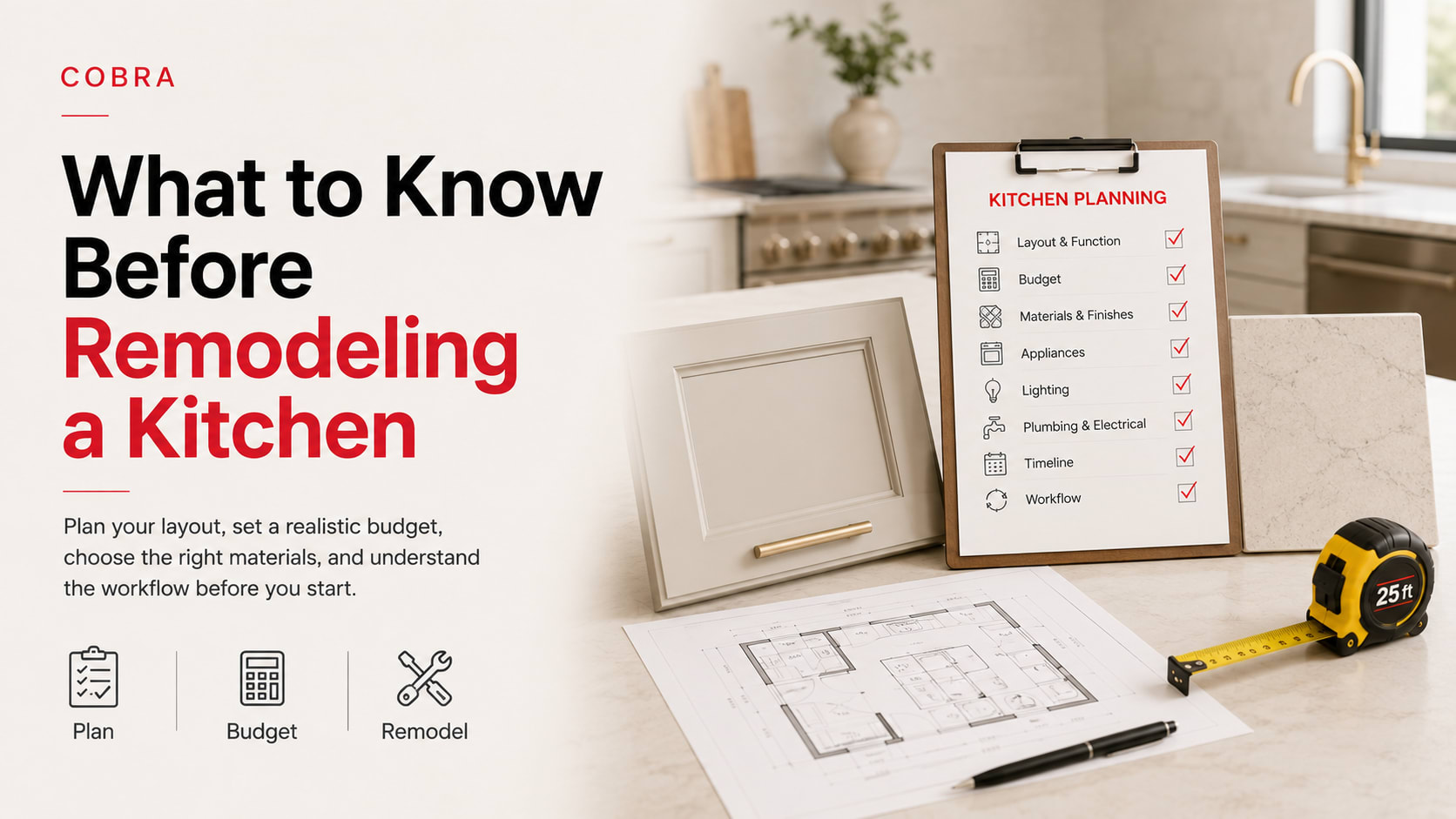
Start with the End in Mind: Define Your Kitchen Remodel Outcome
Before you demo a single cabinet, clarify your goals. Are you aiming for increased property value, improved tenant satisfaction, ADA compliance, or simply updating worn-out fixtures? For HOAs, schools, and commercial properties, your kitchen remodel must balance aesthetics, safety, and code compliance with budget and operational continuity. Assemble your stakeholders, document your must-haves versus nice-to-haves, and confirm your authority to proceed—especially if you’re working within an HOA or multi-unit environment.
Kitchen Remodel Checklist for Property Decision-Makers
Assess: Evaluate the current kitchen’s condition, usage patterns, and compliance gaps. Is there deferred maintenance or hidden water damage?
Plan: Set a realistic scope, budget, and timeline. Identify code requirements (fire suppression, ventilation, accessibility). Map out who needs access and when—especially if the kitchen serves multiple units or a public facility.
Execute: Select a licensed, insured provider who can manage permits, coordinate trades, and minimize downtime. Avoid juggling multiple vendors; one accountable contractor streamlines communication and liability.
Monitor: Track milestones, change orders, and inspections. Document everything for future reference and warranty claims.
Comparison Table: In-House Management vs. All-in-One Provider
CriteriaIn-House/Multiple VendorsAll-in-One Provider (e.g., Cobra Solutions)AccountabilityFragmented; finger-pointing commonSingle point of contact for all tradesComplianceRisk of gaps between contractorsLicensed, insured, code-compliant workSchedulingCoordination headaches, delaysStreamlined scheduling, fewer gapsCost ControlHidden costs, scope creepTransparent scoping and monitoring
Budgeting and Risk Management
Kitchen remodels are notorious for hidden costs—think plumbing surprises, electrical upgrades, or asbestos abatement. Build a contingency (typically 10-20%) into your budget. Require detailed quotes and clear scopes of work. For community properties, factor in the cost of alternate meal prep or downtime. Don’t forget to plan for cleaning and debris removal—if you’re unfamiliar with post-construction cleanup, see our guide on Pressure Washing Services for related considerations.
Compliance and Vendor Vetting
Remodeling in a regulated environment means strict adherence to building codes, fire safety, and accessibility standards. Vet your provider’s licenses, insurance, and track record with similar properties. Ask for references and confirm their experience in multi-unit or institutional settings. If your remodel is part of a larger property improvement plan, coordinate with other projects like Seasonal Yard Cleanup or Storm Debris Cleanup to minimize disruption.
Operational Continuity and Safety
Kitchen remodels can disrupt daily operations, especially in schools or multi-family properties. Schedule work during low-usage periods if possible. Control access to the jobsite to prevent unauthorized entry and ensure safety—review your security services in nj plan for temporary changes during construction. Communicate clearly with residents, staff, and vendors about timelines, noise, and restricted areas. If outdoor areas are impacted, coordinate with your landscaping team—our Lawn Care Basics resource offers tips for protecting green spaces during construction.
How Cobra Solutions Simplifies Kitchen Remodels
Managing a kitchen remodel shouldn’t mean herding a dozen contractors or losing sleep over compliance. With Cobra Solutions, you get one licensed, insured provider for renovation and construction services—from assessment and planning through execution and post-project monitoring. Our Assess → Plan → Execute → Monitor process is built for property managers and boards who need scalable, repeatable results across multiple sites. We coordinate with your cleaning, security, and maintenance needs, so you get a turnkey solution—no finger-pointing, no gaps.
Frequently Asked Questions
How long does a typical kitchen remodel take in a managed property?
Timelines vary by scope and property type, but most full remodels require several weeks. Add time for permitting, inspections, and supply chain delays. Working with an experienced, all-in-one provider helps avoid common scheduling pitfalls.
Who is responsible for permits and inspections?
The licensed contractor should pull all required permits and coordinate inspections. Always confirm this in your contract—never assume a vendor will handle compliance automatically.
How can we minimize disruption to residents or staff?
Schedule work during off-hours or low-usage periods, communicate early and often, and use physical barriers to separate construction zones. Consider temporary kitchen solutions if downtime will be extensive.
What are common hidden costs in kitchen remodels?
Unexpected plumbing or electrical upgrades, code-required changes, and remediation (like mold or asbestos) are frequent drivers of overages. Build a contingency fund and require detailed, line-item quotes.
Can Cobra Solutions coordinate related property services during a remodel?
Yes. As a one-stop provider, Cobra can bundle kitchen remodels with cleaning, security, landscaping, and maintenance services, streamlining your project and reducing vendor headaches. Learn more about our approach on the Cobra Prime home page.
Ready for a Smarter Kitchen Remodel?
If you’re planning a kitchen remodel for your property or community, don’t settle for vendor chaos or compliance risks. Request a quote or schedule a consultation with Cobra Solutions—the accountable, all-in-one partner for property decision-makers who expect reliability, transparency, and results that last.