
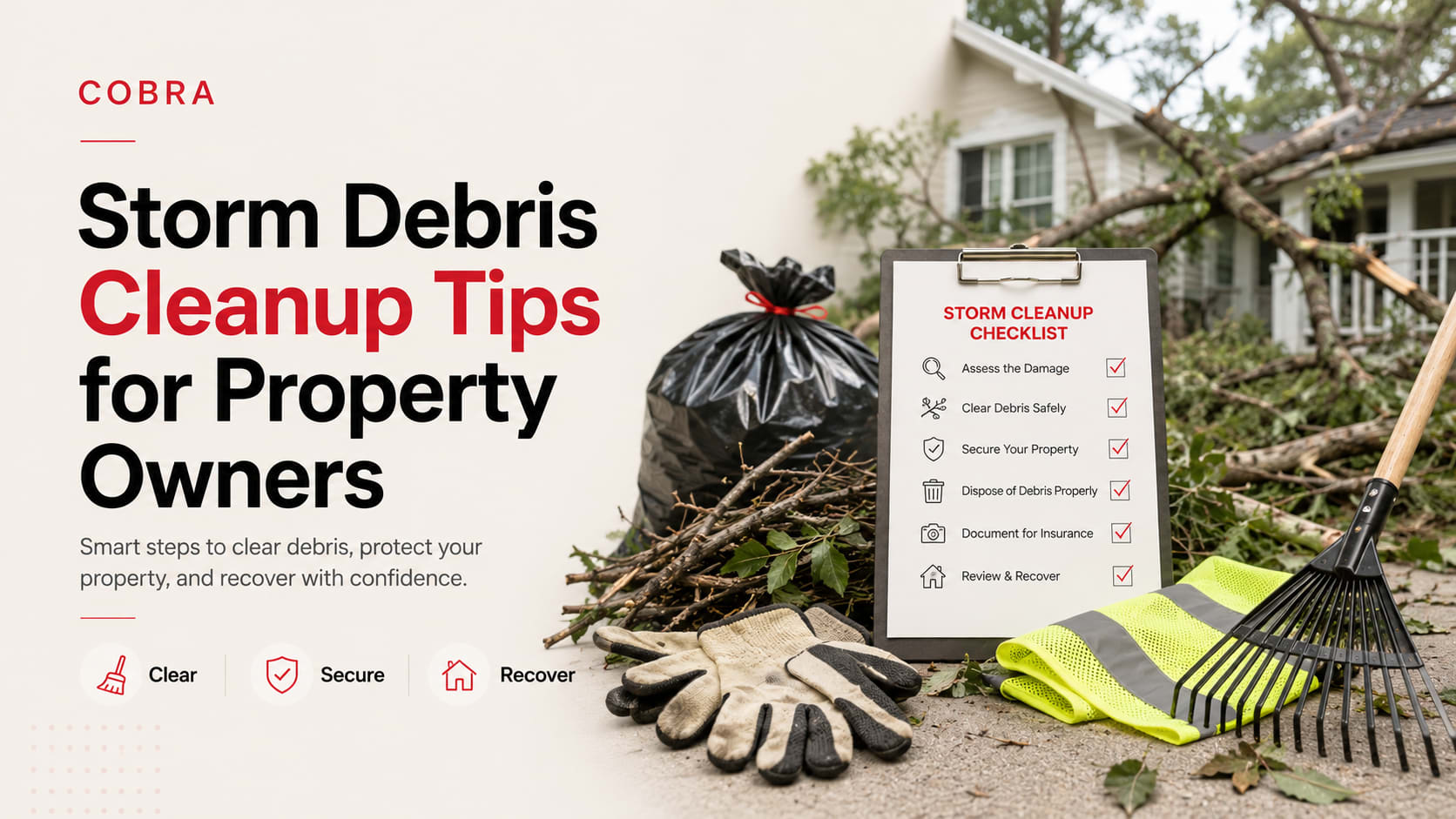
Storm Debris Cleanup: What Decision-Makers Need to Know
After a major storm, the pressure is on property managers, HOA board members, and facility administrators to restore safety and normalcy fast. Delayed or poorly managed debris cleanup can lead to slip-and-fall hazards, blocked access, pest infestations, and even fines for code violations. Here’s how to tackle storm debris cleanup efficiently, safely, and in full compliance—without getting burned by unreliable vendors.
Immediate Steps After a Storm
Inspect for Hazards First: Before sending anyone onto the property, check for downed power lines, unstable trees, sharp debris, and standing water. Coordinate with emergency services if there’s any doubt about safety.
Document Damage: Take timestamped photos and notes for insurance, board records, and future audits.
Secure the Area: Block off unsafe zones and post clear signage. Notify residents or occupants about hazards and cleanup timelines.
Storm Debris Cleanup Checklist
TaskWho Should HandleNotesRemove branches & fallen treesLicensed outdoor maintenance or tree serviceCheck for utility line entanglementClear walkways & drivewaysMaintenance team or vetted contractorPrioritize emergency access routesDispose of damaged fencing/furnitureJunk removal providerFollow local disposal regulationsClean gutters & drainsMaintenance staff or vendorPrevents flooding and water damageInspect for structural damageLicensed contractorDocument and triage repairs
Preventive vs. Reactive Cleanup: What’s the Difference?
Proactive maintenance—like trimming trees, clearing drains, and securing loose objects—reduces the volume and danger of storm debris. If you’re not already following a seasonal checklist, now’s the time to start. For a detailed reference, see this Outdoor Maintenance Checklist for Homeowners.
Reactive cleanup, by contrast, is about minimizing damage and restoring safe operations after the fact. Both are essential, but preventive work pays off by reducing emergency costs and liability exposure.
How to Vet Debris Cleanup Vendors
Licensing & Insurance: Confirm the provider is licensed and insured for property maintenance and debris removal.
References & Track Record: Ask for case studies or references from similar properties—especially HOAs, schools, or commercial sites.
Compliance: Ensure the vendor follows local disposal, recycling, and safety regulations. Fines for improper dumping can be steep.
Accountability: Choose providers who offer a clear scope of work and post-cleanup reporting. Avoid “one-man shows” who disappear after payment.
Scalability: If you manage multiple properties, look for a partner who can scale operations and provide consistent service across sites.
HOA and Property Manager Responsibilities
Maintain clear records of all cleanup activities and communications.
Notify residents about cleanup schedules and any access restrictions.
Budget for both routine and emergency cleanup. Build relationships with vendors before disaster strikes.
Coordinate with your board or management company to ensure insurance claims are filed promptly and accurately.
Liability, Access Control, and Compliance
Unattended debris isn’t just unsightly—it’s a liability magnet. Injuries, blocked fire lanes, and code violations can all result from slow or incomplete cleanup. Maintain strict access control during debris removal, especially around heavy equipment or hazardous materials. Document every step for compliance and insurance purposes.
How Cobra Prime Simplifies Storm Debris Cleanup
With Cobra Prime, you get one accountable, licensed, and insured provider for outdoor maintenance services, debris removal, and post-storm repairs. Our Assess → Plan → Execute → Monitor process ensures nothing falls through the cracks—whether you manage a single property or a portfolio. No more chasing multiple contractors or worrying about compliance gaps. Every project is scoped to your property’s needs, with transparent reporting and follow-up.
If you need help disposing of large items or storm-damaged materials, see our junk removal services in NJ for safe, compliant hauling and recycling. For year-round upkeep and emergency response, our property maintenance services cover everything from inspections to repairs.
Budgeting and Planning for Future Storms
Review your property’s storm response plan annually.
Set aside contingency funds for emergency cleanup.
Schedule regular maintenance to minimize future debris risks.
Keep an up-to-date vendor list with backup contacts.
For a pre-cleanout checklist that helps you prep for any major removal or restoration project, review the Junk Removal Checklist Before a Home Cleanout.
Frequently Asked Questions
How quickly should storm debris be removed?
Remove hazards (like blocked exits or downed trees) immediately. For non-critical debris, aim to complete cleanup within a week to minimize risks and restore operations.
What are the most common compliance issues with storm debris?
Improper disposal, blocked emergency access, and lack of documentation are the top issues. Always follow local codes and keep clear records of all actions taken.
Can my regular maintenance crew handle storm debris?
For minor debris, yes. For large trees, hazardous materials, or heavy loads, use a licensed provider with the right equipment and insurance.
What should I include in a storm debris cleanup contract?
Define the scope (types of debris, areas to clear), timeline, disposal methods, reporting requirements, and proof of insurance/licensing.
How can I reduce future storm debris?
Invest in preventive maintenance like tree trimming, gutter cleaning, and securing outdoor furniture. Regular inspections help catch risks early.
Take the Next Step
Don’t leave storm debris cleanup to chance. Request a quote or schedule a consultation with Cobra Prime to get a tailored plan and a single point of accountability for your property’s safety, compliance, and recovery needs.