Fire Watch Security: The Decision-Maker’s Guide
If you’re responsible for a property, HOA, school, or commercial facility, you can’t afford to get fire watch security wrong. Non-compliance can mean fines, liability, and—most importantly—putting people and assets at risk. Here’s what you need to know to make the right call, keep your property safe, and stay on the right side of the law.
What Is Fire Watch Security?
Fire watch security is a temporary safety measure—mandated or recommended—when your property’s fire detection or suppression systems (alarms, sprinklers) are offline, malfunctioning, or being installed or renovated. Trained personnel patrol the affected areas, watch for signs of fire or hazards, and are ready to alert emergency services if needed. This is not a passive role; it’s an active, documented process with real compliance requirements.
When Is Fire Watch Security Required?
Fire alarm or sprinkler systems are out of service (planned maintenance, breakdown, renovation).
During hot work (welding, cutting, or any activity with fire risk).
Construction sites before permanent fire protection is installed.
Events with large crowds or temporary structures, especially if fire systems are compromised.
Anytime required by the fire marshal or local code.
Requirements vary by jurisdiction, but if your fire protection is down for more than a few hours, you’re likely required to implement fire watch. Always confirm with your local fire authority and document your actions.
What Does a Fire Watch Actually Do?
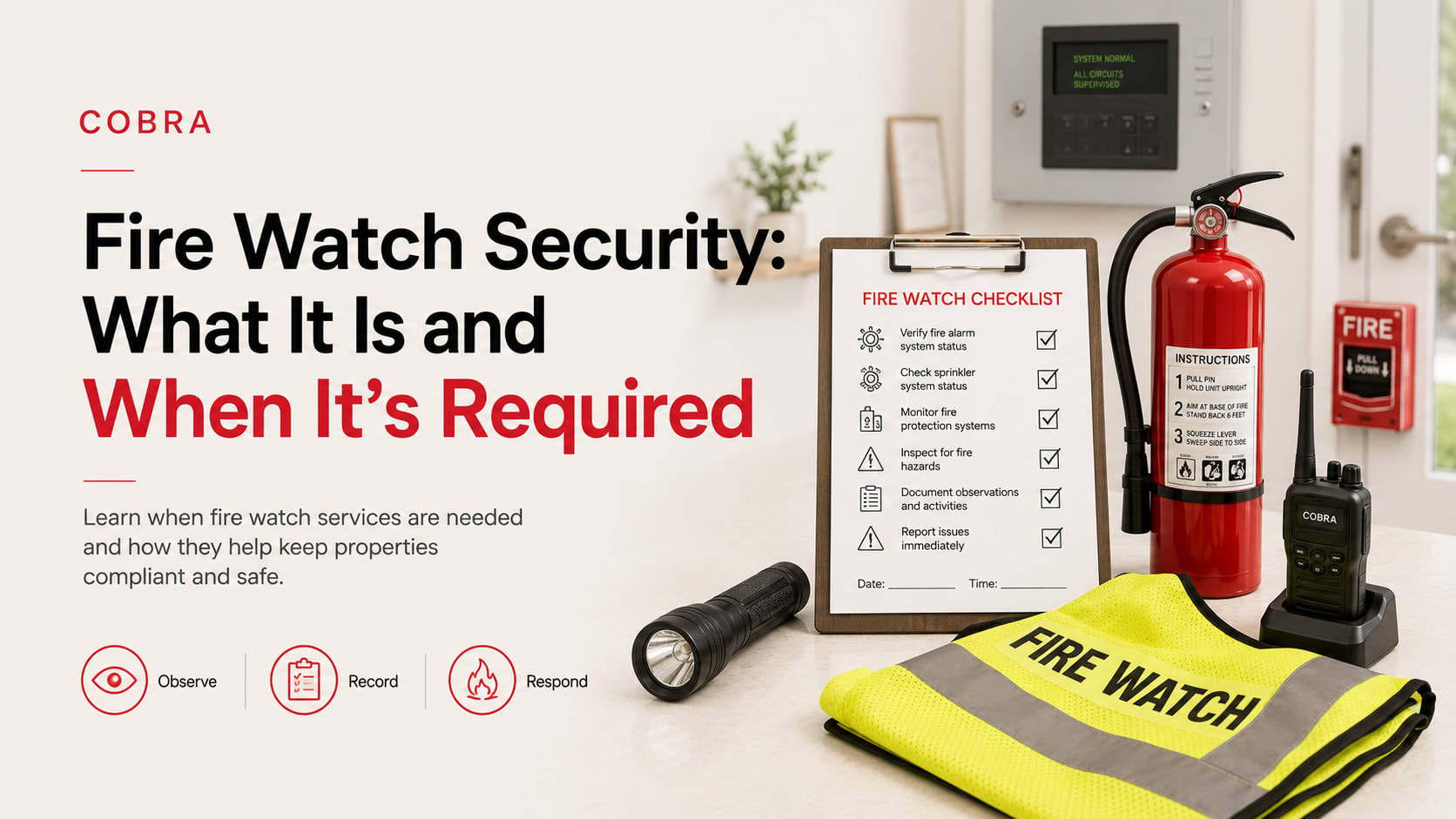
Fire watch personnel are not just “extra eyes.” Their duties are specific and must be logged:
Patrol all affected areas at regular, documented intervals (often every 30 minutes or as required).
Check for fire, smoke, or hazards (blocked exits, combustible materials).
Ensure access to fire extinguishers and exits is clear.
Log each patrol and report issues immediately.
Be ready to alert 911 and initiate evacuation if needed.
For a deeper dive on fire watch protocols, see our guide to fire watch services.
Who Can Provide Fire Watch Security?
Most jurisdictions require fire watch to be performed by trained, licensed, and insured personnel—not just any staff member. You need someone who understands fire risks, reporting, and compliance documentation. This is where using a professional provider like Cobra Prime matters. We’re a licensed and insured security services in NJ provider, trained in both fire safety and regulatory compliance.
Fire Watch vs. Security Guard: What’s the Difference?
RolePrimary FocusTrainingDocumentation Fire WatchFire hazards, system outagesFire safety, evacuation, complianceDetailed patrol logs, incident reports Security GuardAccess control, theft, general safetySecurity, emergency responseIncident reports, visitor logs
Some professional guards are cross-trained, but not all are qualified for fire watch. Make sure your vendor provides the right credentials. For more on what professional guards do, read Security Guard Duties: What Do Professional Guards Actually Do?
Common Triggers for Fire Watch—With Real Examples
Sprinkler system repair at a condo building: HOA must post fire watch until repairs are complete and inspected.
School undergoing major renovation: Fire alarms offline in part of the building—fire watch required during school hours.
Construction site: No permanent fire protection yet; fire watch is required around the clock. See more tips in Construction Site Security Tips to Prevent Theft and Damage.
Fire Watch Compliance Checklist
Confirm fire system status and outage duration.
Check local code and notify the fire marshal as required.
Document start/end time of fire watch and all patrols.
Use trained, licensed, and insured personnel.
Ensure clear access to exits and extinguishers.
Keep logs for inspection and liability defense.
End fire watch only after written clearance from the authority having jurisdiction.
Risks of Getting Fire Watch Wrong
Regulatory fines or stop-work orders
Increased liability in case of fire or injury
Insurance claim denials
Reputational damage with residents, tenants, or stakeholders
Don’t cut corners—using an unqualified provider or failing to document can cost far more than doing it right the first time.
How Cobra Prime Simplifies Fire Watch Security
Coordinating fire watch shouldn’t mean juggling multiple vendors or scrambling for compliance. Cobra Prime handles the entire process: Assess your risks, Plan the right coverage, Execute with licensed personnel, and Monitor with detailed logs and communication. Our operations scale across multiple properties, and you get one accountable partner for security, maintenance, and compliance—not a patchwork of contractors.
Frequently Asked Questions
How long do I need to maintain fire watch?
Fire watch must remain in place until your fire protection systems are fully restored and cleared by the local fire authority. Always get written confirmation before ending fire watch duties.
Can my regular staff provide fire watch?
Unless your staff are specifically trained and your local code allows it, it’s safest (and often required) to use a licensed, insured provider. This protects you from liability and compliance gaps.
How do I prove I complied with fire watch requirements?
Maintain detailed patrol logs, incident reports, and all communications with the fire marshal. These documents are your defense against fines or insurance issues if something goes wrong.
Is fire watch only for emergencies?
No—fire watch is often required during scheduled maintenance, renovations, or any planned shutdown of fire protection systems. It’s a preventive measure, not just a reactive one.
Next Steps: Protect Your Property and Stay Compliant
If you’re facing a fire system outage, renovation, or any situation where fire watch might be required, don’t risk costly mistakes. Request a quote or schedule a consultation with Cobra Prime. Our licensed experts will assess your needs, build a compliance-ready plan, and handle the details—so you can focus on your property, not the paperwork.