Shrink is one of the quietest costs a retail business absorbs, small losses spread across a year that add up to a real dent in margins. A visible, well-trained security presence is one of the most effective tools retailers have against it, but only when it's structured correctly.
Cameras are a core part of that visible presence, see our guide to live-monitored vs. recording-only security cameras for how the two approaches compare.
Why visible presence deters theft
Most shoplifting isn't planned by a professional, it's opportunistic, someone who sees an unwatched moment and takes it. A visible security presence removes that opportunity before it happens. This is different from catching theft after the fact, which recovers little and does nothing to prevent the next incident.
The core components of retail loss prevention
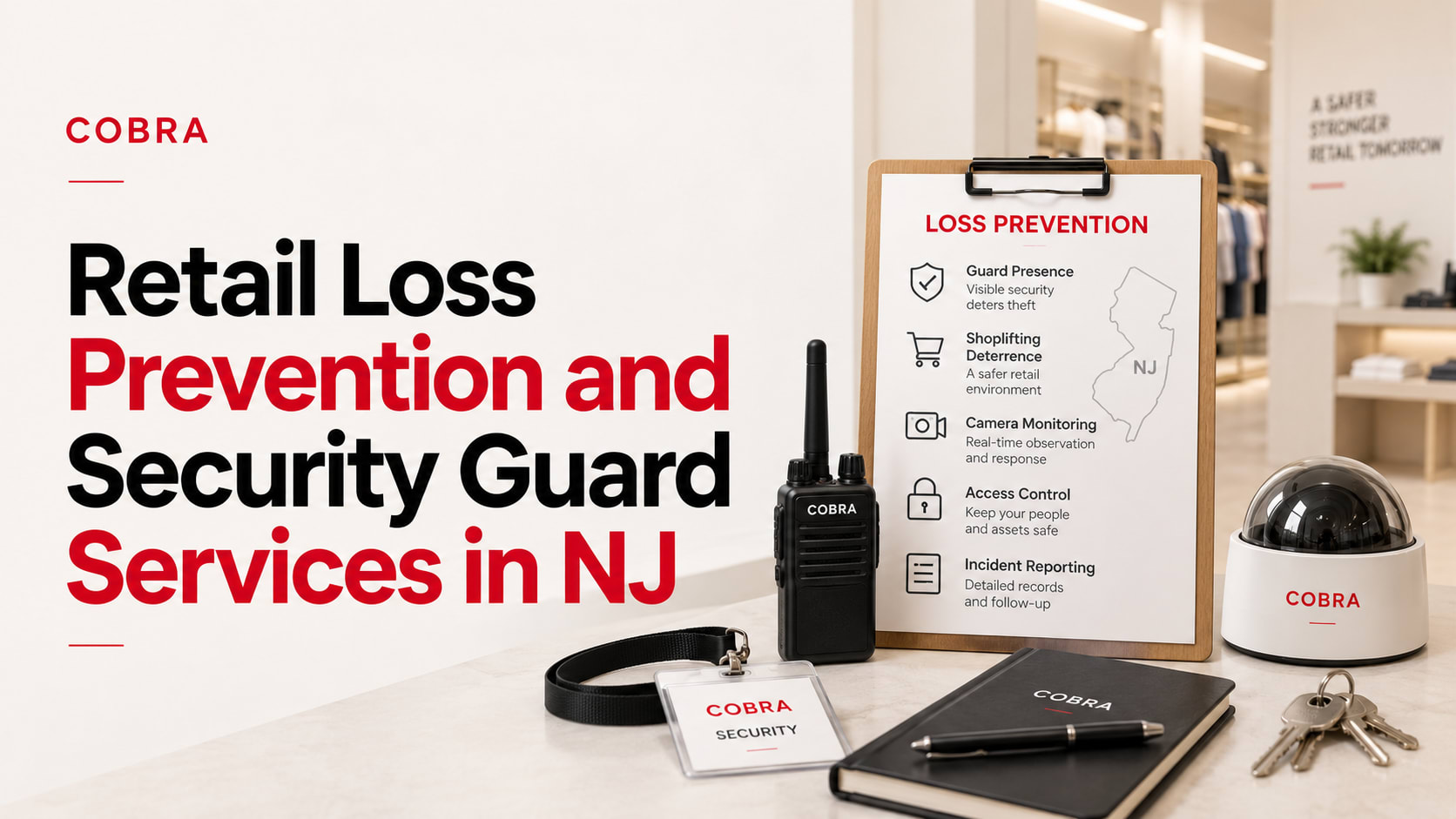
Guard presence. Visible security that deters theft simply by being there.
Shoplifting deterrence. A safer retail environment created through consistent, visible coverage rather than occasional spot checks.
Camera monitoring. Real-time observation and response, not just recording for later review.
Access control. Keeping people and assets safe by managing who enters restricted areas.
Incident reporting. Detailed records and follow-up when something does happen, so patterns can be identified and addressed.
Why real-time monitoring matters more than recording alone
Recorded footage is useful after an incident, but it doesn't stop anything from happening. Real-time camera monitoring paired with a security guard able to respond immediately catches an incident in progress, rather than just documenting it for later. For retail environments with high foot traffic, that immediate response capability is what actually reduces loss, not just the presence of cameras.
Training matters as much as presence
A security guard in a retail environment needs a different skill set than one guarding a warehouse or construction site, de-escalation, customer interaction, and recognizing behavioral patterns associated with shoplifting without creating a hostile shopping experience for honest customers. Ask any vendor specifically about retail-focused training, not just general security experience.
Incident reporting closes the loop
Every incident, whether prevented or not, should be documented clearly: what happened, when, and how it was handled. Over time, this reporting reveals patterns, specific times of day, specific areas of the store, that a retailer can use to adjust staffing or store layout, not just react to individual incidents as they happen.
For a closer look at what guards on a retail floor actually do day to day, see our guide to security guard duties.
Frequently Asked Questions
Does visible security actually reduce shoplifting?
Yes. Most shoplifting is opportunistic, and a visible security presence removes the unwatched moment that opportunistic theft depends on.
Is camera monitoring enough without a security guard?
Recording alone documents incidents after the fact. Real-time monitoring paired with a guard able to respond immediately is more effective at actually preventing loss.
What training should retail security guards have?
De-escalation, customer interaction, and the ability to recognize shoplifting behavior without creating a hostile environment for honest shoppers.
Why does incident reporting matter if the incident is already over?
Documented patterns over time help a retailer adjust staffing or layout to prevent future incidents, not just react to individual events.
What's the difference between loss prevention and general security?
Loss prevention is specifically focused on reducing theft and shrink, using deterrence, monitoring, and reporting tailored to a retail environment.
For the full range of coverage available, see our guide to security services in New Jersey.