Warehouses and industrial sites carry a different risk profile than retail or office properties, large footprints, valuable inventory, loading docks with constant vehicle traffic, and often limited natural surveillance across the site. Security for these properties needs to be built around those specific conditions.
Large industrial sites also have to decide between coverage models, see our guide to mobile patrol vs. stationary security guards.
The core components of industrial security
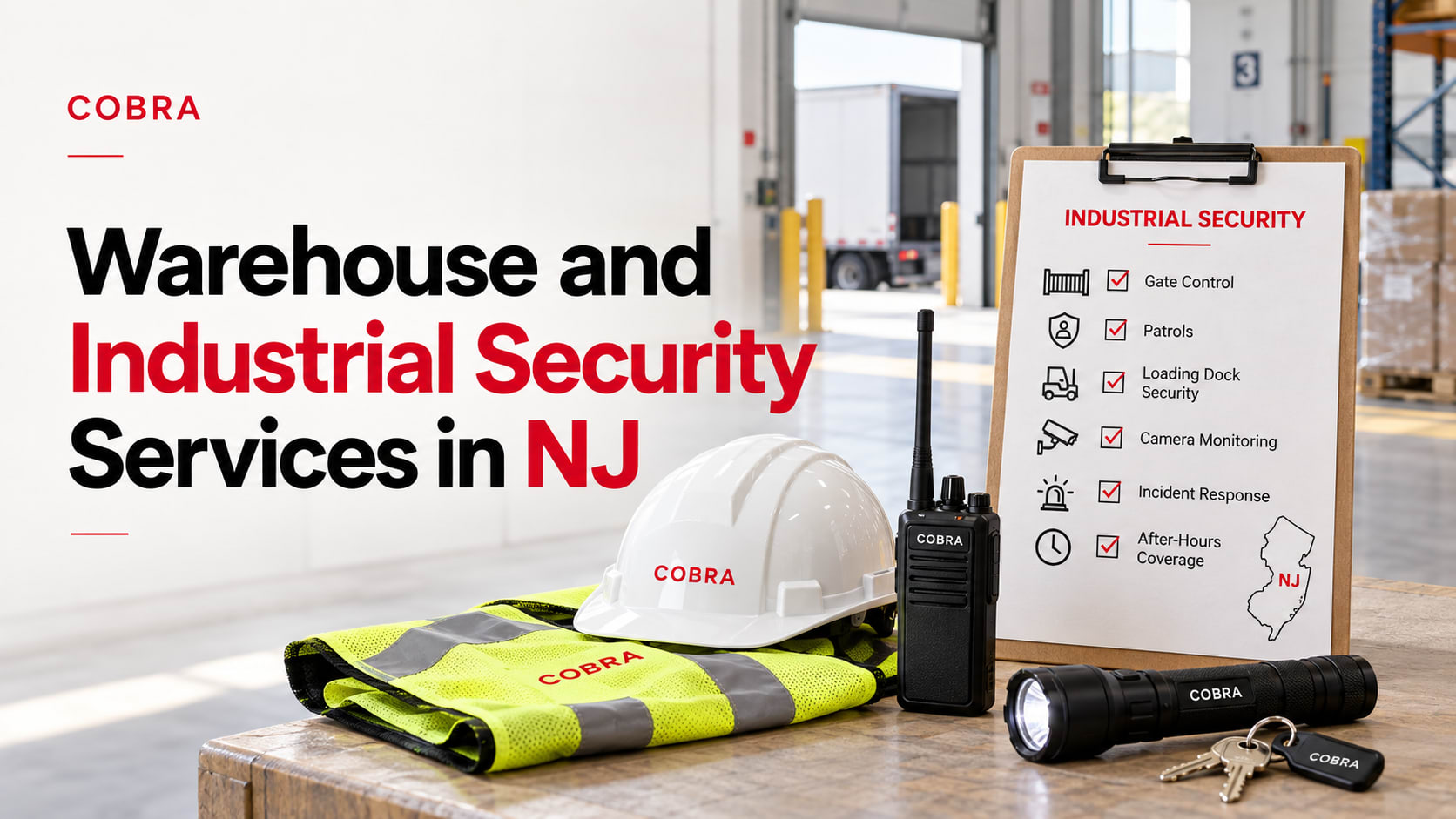
Gate control. Managing who and what enters the site, especially with regular delivery and shipping traffic.
Patrols. Regular movement across a large footprint that fixed cameras alone can't fully cover.
Loading dock security. A specific point of vulnerability where goods, vehicles, and personnel all converge.
Camera monitoring. Coverage across a site large enough that no single vantage point sees everything.
Incident response. A clear, practiced process for what happens when something is flagged.
After-hours coverage. Many industrial sites see reduced staffing overnight, exactly when they're most vulnerable.
Why loading docks deserve specific attention
A loading dock is where a warehouse's security is most exposed, vehicles coming and going, doors open for extended periods, and a high volume of goods moving in and out. It's also one of the easier points for theft or unauthorized access to go unnoticed in the normal flow of activity. A security plan for an industrial site should treat the loading dock as its own priority area, not just part of the general perimeter.
Why patrols matter even with cameras installed
Cameras are excellent for coverage and after-the-fact review, but a large industrial site has blind spots and areas where a camera alone doesn't create real deterrence. Regular patrols, especially varied in timing rather than a predictable routine, catch what a stationary camera might miss and create a visible presence across the whole property, not just the areas under direct camera coverage.
After-hours risk is higher than most owners assume
Many industrial and warehouse properties run with minimal or no staff overnight, which is exactly when the property is most vulnerable. After-hours coverage, whether through patrols, monitored cameras, or on-site security, closes the gap between when the property is actively staffed and when it's essentially unwatched.
Coordinating security with day-to-day operations
Security shouldn't operate separately from how a warehouse actually runs. Gate control needs to work smoothly with legitimate delivery schedules, and loading dock security needs to avoid creating unnecessary friction for normal operations while still controlling access. A security team that understands the site's actual workflow catches genuine risks without slowing down the business.
For the broader range of guard-based coverage this typically draws on, see our guide to security guard services.
Frequently Asked Questions
Why do loading docks need specific security attention?
They're a high-traffic point where vehicles, goods, and personnel all converge, making it easier for theft or unauthorized access to go unnoticed.
Are cameras enough for a large industrial site?
Cameras help with coverage and review, but patrols catch blind spots and create a visible deterrent that a stationary camera alone can't provide.
Is overnight security necessary for warehouses?
Often yes. Many industrial sites run with minimal staff overnight, which is exactly when they're most vulnerable to theft or unauthorized entry.
How does gate control work with regular delivery traffic?
A well-run system verifies legitimate deliveries efficiently without creating unnecessary delays, while still controlling who and what enters the site.
What should incident response look like for an industrial site?
A clear, practiced process, not an improvised reaction, so security staff know exactly what to do when something is flagged.
For the full range of coverage available, see our guide to security services in New Jersey.