A retail center or mall lives or dies on first impressions. Shoppers notice a cracked parking lot, dim lighting, or a dirty common area far more than they notice when everything is working the way it should. Maintaining that impression takes a different kind of program than a typical office building or apartment complex.
Regular inspection is what catches most of these issues before a shopper does, see our guide to how often a commercial property needs a maintenance inspection.
Why retail maintenance is its own category
Unlike an office building with one tenant's foot traffic to manage, a mall or retail center has constant public traffic, multiple tenants with their own storefronts, and a much higher standard for how the shared spaces look and function. A maintenance issue in a retail environment isn't just a repair item, it's something every visitor and every tenant's customer sees directly.
Core scope of retail center maintenance
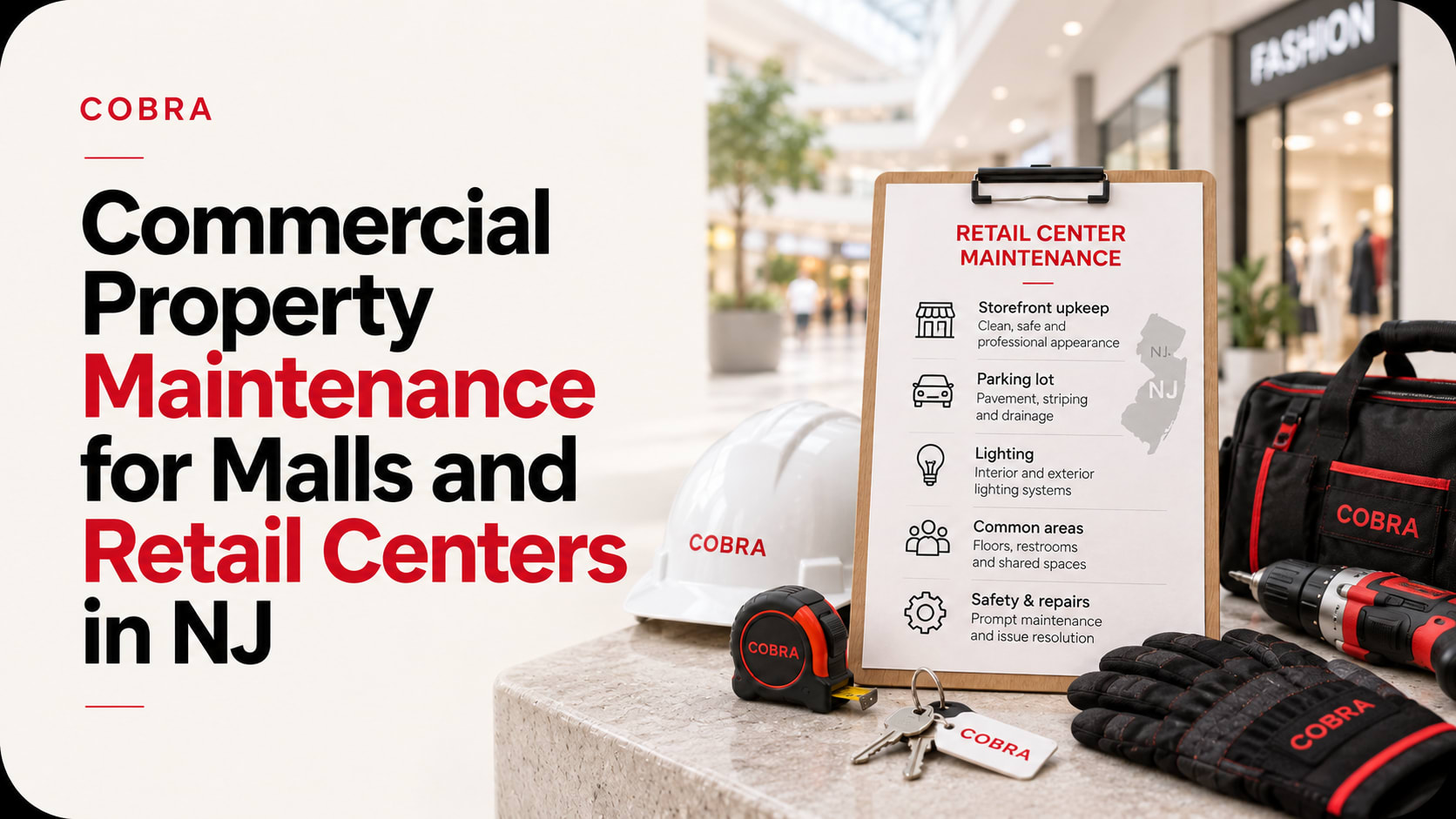
Storefront upkeep. Clean, safe, and professional appearance for the shared areas surrounding individual storefronts.
Parking lot maintenance. Pavement condition, striping, and drainage, since a poorly maintained lot is often a shopper's first and last impression.
Lighting. Both interior and exterior lighting systems kept fully functional, for safety as much as appearance.
Common areas. Floors, restrooms, and shared spaces maintained to a retail standard, not just a functional one.
Safety and repairs. Prompt maintenance and issue resolution before a small problem becomes a liability or a tenant complaint.
Why parking lot condition matters more than owners expect
A cracked or poorly lit parking lot does two things at once: it creates a real liability risk, and it signals to shoppers that the property isn't well cared for, which can affect a tenant's own foot traffic. Parking areas should be part of a regular inspection cycle, not something addressed only after a complaint or a visible hazard.
Coordinating maintenance across multiple tenants
A retail center answers to both the property owner and, indirectly, every tenant whose business depends on the shared space looking presentable. That means maintenance requests from tenants need a clear channel and a reasonable response time, since an unresolved issue outside one store's entrance reflects on the whole property, not just that tenant.
Why proactive upkeep beats reactive repairs here
In a retail setting, a maintenance issue left unaddressed doesn't just risk further damage, it's visible to every customer who walks past it. A property that schedules regular inspections, catching burnt-out lighting, minor pavement damage, or a common-area issue before it's reported, protects both the property's value and its tenants' ability to attract customers.
What to look for in a retail maintenance vendor
Ask how quickly they respond to tenant-reported issues, whether they conduct regular proactive inspections of parking and common areas, and how they coordinate with individual tenants who may have their own maintenance needs. A vendor experienced specifically in retail environments understands these priorities differently than one used to office or residential properties.
For what this kind of coverage typically costs, see our guide to commercial property maintenance cost in NJ.
Frequently Asked Questions
What makes retail center maintenance different from office maintenance?
Constant public foot traffic and multiple tenants mean maintenance issues are more visible and affect more people directly, requiring a higher standard for shared spaces.
Why does parking lot maintenance matter so much for retail properties?
It's often a shopper's first and last impression, and a poorly maintained lot also creates real liability risk.
How should tenant maintenance requests be handled in a retail center?
Through a clear, responsive channel, since an unresolved issue near one storefront can reflect on the whole property.
Should retail properties do proactive inspections?
Yes. Catching issues like burnt-out lighting or minor pavement damage before they're reported protects both property value and tenant success.
What should we ask a maintenance vendor for a retail property?
Ask about response time for tenant-reported issues, proactive inspection frequency, and experience specifically with retail or mall environments.
For the full range of services a commercial property maintenance contract can cover, see our guide to property maintenance services.