
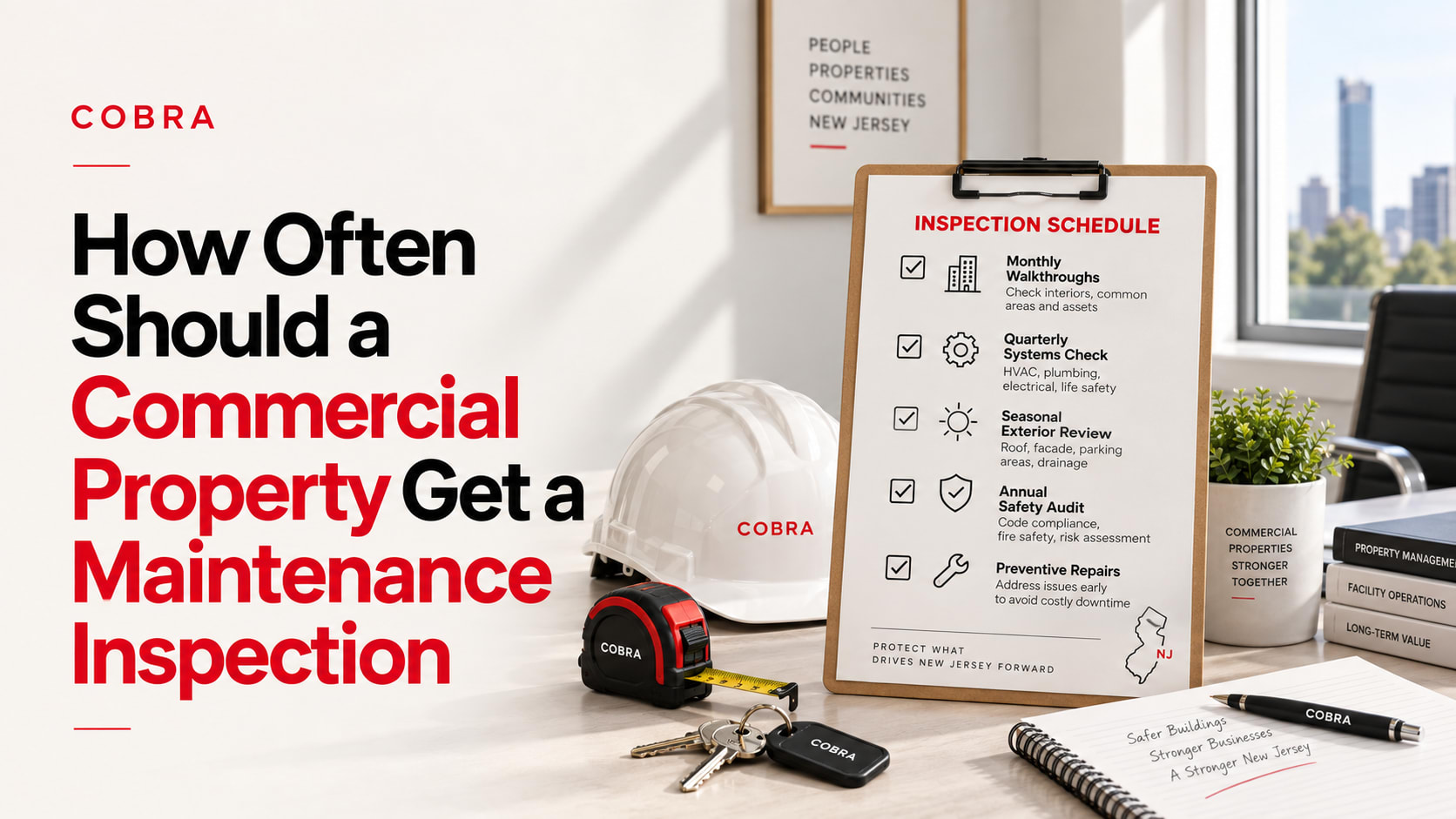
Commercial property owners often ask the same question once they've settled on a maintenance vendor: how often should someone actually be inspecting the property, beyond just responding to problems as they come up. The answer depends on what's being inspected, but there's a real structure most well-run properties follow.
Retail and mall properties in particular depend on this kind of schedule holding up, see our guide to commercial property maintenance for malls and retail centers.
A tiered inspection schedule
Monthly walkthroughs. Checking interiors, common areas, and general asset condition, catching visible issues early.
Quarterly systems checks. HVAC, plumbing, electrical, and life safety systems reviewed on a rotating basis throughout the year.
Seasonal exterior review. Roof, facade, and parking areas checked as seasons change, since weather-related wear shows up differently across the year.
Annual safety audit. Code compliance, fire safety, and full risk assessment covering the whole property.
Preventive repairs. Addressing issues identified during inspections early, rather than letting them become costly downtime later.
Why monthly walkthroughs catch what emergency calls miss
A tenant or occupant reports what's actively bothering them, a leak, a broken fixture, but they rarely notice early warning signs, like a slow HVAC performance decline or minor roof wear. A monthly walkthrough by someone trained to look for those signs catches problems long before they become a tenant complaint or an emergency repair.
Why quarterly is the right cadence for major systems
HVAC, plumbing, and electrical systems don't usually fail without some warning, but that warning only gets noticed if someone is actually checking. A quarterly review means each system gets meaningful attention four times a year, frequent enough to catch developing issues, without the cost of constant, unnecessary inspection.
Seasonal review matters because weather-related wear is seasonal
Roof and facade issues often show up differently depending on the season, ice damage in winter, heat-related wear in summer, storm damage in between. A seasonal exterior review timed to these patterns catches damage specific to what the building just went through, rather than a generic annual check that misses seasonal patterns entirely.
Why an annual audit still matters even with regular inspections
Monthly and quarterly checks are focused and specific. An annual audit is comprehensive, covering code compliance, fire safety, and a full risk assessment across the entire property. It's the point where smaller findings from throughout the year get reviewed together, and where compliance requirements tied to permits or insurance typically get verified.
The real value of preventive repairs
An inspection schedule only pays off if issues identified actually get addressed. A property that inspects regularly but delays acting on what's found isn't much better off than one that doesn't inspect at all. Preventive repairs, fixing what an inspection flags before it becomes a bigger issue, are what actually reduce long-term costs and downtime.
For more on why the preventive side of this schedule matters, see our guide to preventive property maintenance.
Frequently Asked Questions
How often should a commercial property be walked through?
Monthly is a common standard, catching visible issues in common areas and general building condition before they escalate.
Do HVAC and electrical systems need quarterly checks?
Ideally yes. A quarterly cadence catches developing issues early without the cost of constant inspection.
Why does exterior maintenance need a seasonal schedule?
Weather-related wear, ice damage, heat stress, storm impact, shows up differently by season, so a review timed to those patterns catches more than a single annual check.
Is an annual safety audit still necessary with regular inspections?
Yes. It's more comprehensive than routine checks and typically covers code compliance and risk assessment requirements tied to permits or insurance.
What's the point of an inspection if issues aren't fixed right away?
Not much. The real value comes from addressing what's found through preventive repairs, not just documenting the issue.
For the full range of what a maintenance program should cover, see our guide to property maintenance services.