Preventive Property Maintenance: Inspections That Save You Money and Headaches
If you’re responsible for a property or community, you know that the real costs aren’t just in repairs—they’re in the emergencies you could have prevented. The best operations leaders don’t wait for things to break. They inspect, budget, and act before small issues become major liabilities. Here’s how to build a preventive property maintenance program that works—what to inspect, when, and why it matters.
Why Preventive Maintenance Beats Reactive Repairs
Reactive maintenance is expensive, disruptive, and risky. Deferred repairs lead to safety hazards, compliance violations, and angry residents or tenants. Preventive maintenance, on the other hand, means scheduled inspections and planned fixes. You control costs, reduce liability, and keep your property in compliance. If you’re still debating the value, review the basics in What Is Property Maintenance and Why Does Every Property Need It?.
What to Inspect: The Core Checklist
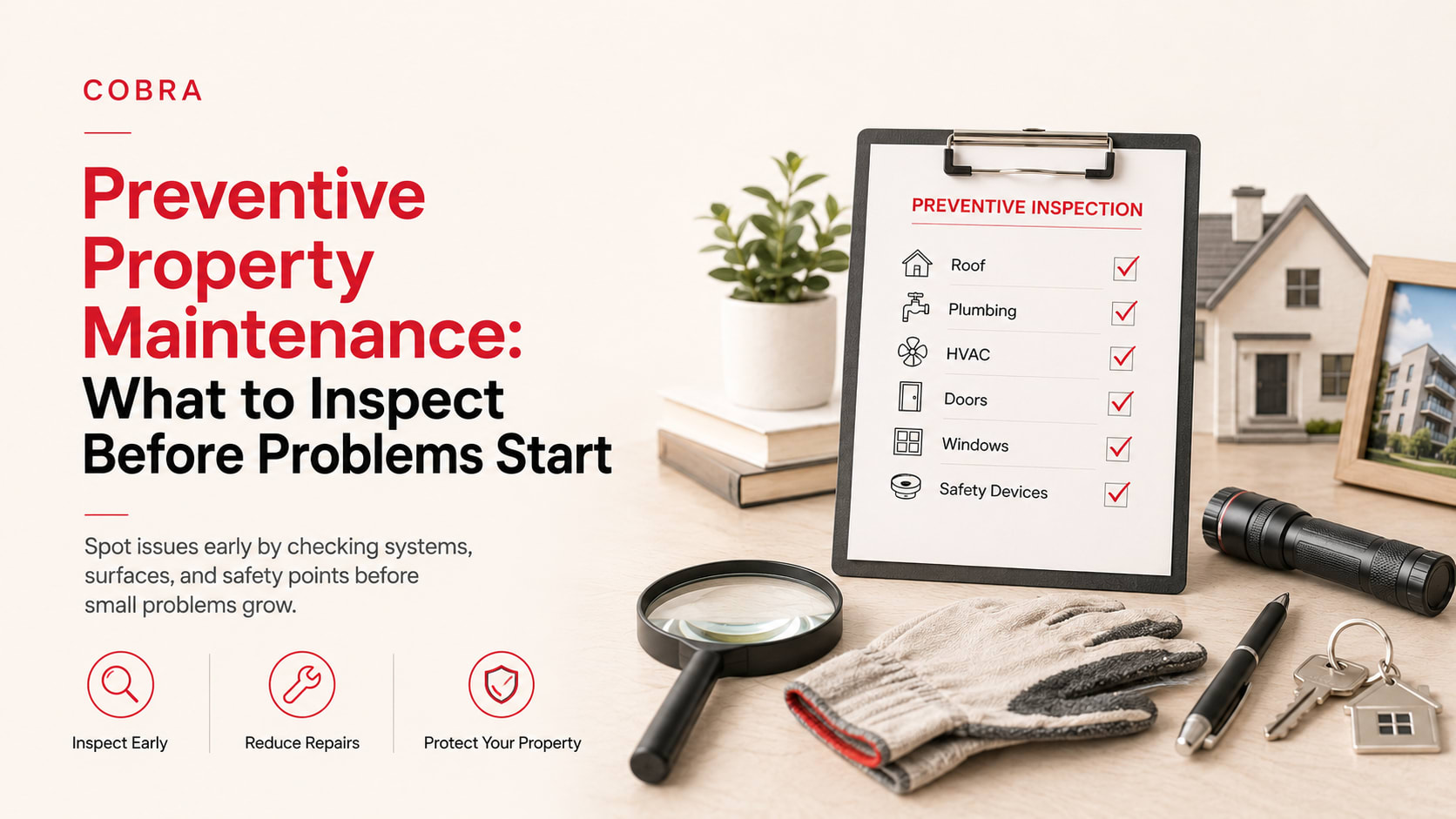
Every property is different, but some areas always demand attention. Use this checklist as your baseline—then tailor it to your site’s unique needs.
Area What to Inspect Frequency Roof & Gutters Leaks, missing shingles, debris, drainage Biannual or after storms HVAC Filters, belts, refrigerant, thermostats Quarterly Plumbing Leaks, water pressure, corrosion, insulation Quarterly Electrical Panels, outlets, GFCIs, exposed wiring Annually Fire & Life Safety Extinguishers, alarms, exit lights, egress Monthly/Annually (per code) Exterior & Grounds Sidewalks, lighting, landscaping, trip hazards Monthly/Seasonal Common Areas Doors, locks, flooring, signage, cleanliness Monthly Security Systems Cameras, access controls, alarms Quarterly
For a more detailed list tailored to homes, see this home maintenance checklist.
How to Structure Your Preventive Maintenance Program
Consistency is critical. Here’s a practical process you can scale across multiple properties or communities:
Assess: Walk the property, review past work orders, and identify recurring issues. Use inspection forms and photos for documentation.
Plan: Build a maintenance calendar. Prioritize by safety, compliance, and cost impact. Budget for both scheduled tasks and contingencies.
Execute: Assign licensed, insured professionals. Track completion and require sign-off—no job left half-done.
Monitor: Review logs and inspection results. Adjust the plan as needed and communicate updates to stakeholders.
This is the backbone of Cobra Prime’s approach—one accountable provider, not a patchwork of unreliable vendors. See how property maintenance services from Cobra Prime follow this process for every client.
What Happens If You Skip Preventive Maintenance?
Deferred maintenance leads to bigger bills and bigger risks. Common examples:
Leaking roofs cause mold, structural damage, and insurance claims.
Neglected HVAC shortens equipment life and spikes energy costs.
Uninspected fire safety systems result in code violations and liability.
Trip hazards or poor lighting increase injury risk and lawsuits.
For more on the real costs, read Common Property Maintenance Issues That Cost Owners Money.
How Often Should You Inspect?
There’s no one-size-fits-all answer. High-traffic or high-liability areas need more frequent checks. As a rule, roofs and gutters twice a year, HVAC quarterly, and life safety systems per code. For a breakdown by system and property type, see How Often Should You Schedule Property Maintenance?.
Vendor Accountability: Why It Matters
Many managers get burned by no-show contractors or unlicensed handymen. This leads to incomplete work, compliance gaps, and finger-pointing when something fails. With Cobra Prime, you get licensed and insured professionals, clear communication, and a single point of accountability—so nothing falls through the cracks.
Preventive vs. Reactive Maintenance: A Comparison
Preventive Maintenance Reactive Maintenance Cost Control Planned, budgeted Unplanned, often higher Safety & Compliance Proactive, code-compliant Risk of violations Disruption Minimal, scheduled Emergency, disruptive Vendor Management One provider, accountable Multiple vendors, unclear roles
For a deeper dive, see facility maintenance services in New Jersey.
Frequently Asked Questions
What’s the difference between preventive and reactive maintenance?
Preventive maintenance means regular inspections and planned repairs to avoid emergencies. Reactive maintenance means waiting until something breaks, then scrambling to fix it—often at higher cost and risk.
How do I vet a property maintenance provider?
Look for licensed, insured providers with a clear process, documented inspections, and references from similar properties. Avoid providers who can’t show proof of compliance or who don’t offer written scopes of work.
What are the biggest risks of skipping preventive maintenance?
You risk safety hazards, liability claims, code violations, higher repair costs, and unhappy residents or tenants. Small issues—like a minor leak or a faulty exit sign—can quickly escalate into emergencies.
How do I budget for preventive maintenance?
Start with your inspection checklist and past repair history. Prioritize critical systems (roof, HVAC, fire safety). Build a calendar and set aside contingency funds. Work with a provider who can help you scope costs to your property’s needs—never guess.
Ready to Take Control of Your Property’s Maintenance?
Don’t wait for the next emergency. Let Cobra Prime assess your property, build a preventive maintenance plan, and handle the execution—so you can focus on bigger priorities. Request a quote or schedule a consultation with Cobra Prime today to protect your property, your budget, and your reputation.