Stop Bleeding Cash: The Real Cost of Overlooked Maintenance
Most property owners and managers don’t lose money on one big disaster—they lose it drip by drip through overlooked maintenance, unreliable contractors, and reactive repairs. If you’re responsible for an HOA, school, or commercial facility, here’s what to watch for, how to get ahead of costly issues, and why a single accountable provider like Cobra Prime can keep your budget under control.
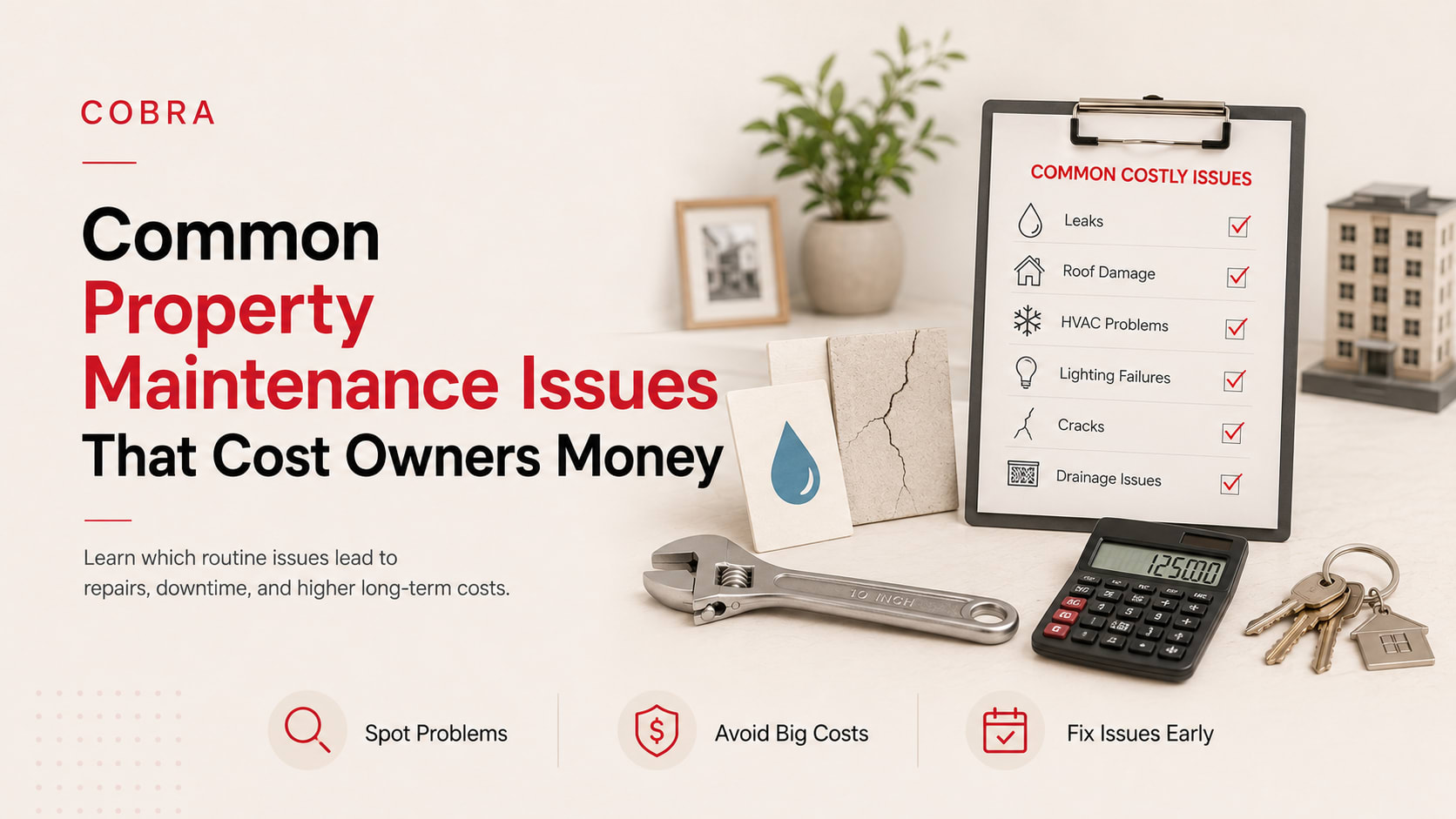
The Most Expensive Maintenance Issues—And How to Spot Them Early
Deferred Repairs: Small leaks, cracks, or HVAC issues get ignored until they require major replacements. Example: A $200 roof patch left for a year becomes a $12,000 water damage claim.
Poor Vendor Oversight: No-show contractors, incomplete jobs, or unlicensed work can trigger fines and repeat visits. Many owners don’t realize how much time and money is lost chasing unreliable vendors.
Missed Inspections: Skipping seasonal or annual checks lets safety hazards and code violations fester. This is a common source of liability for HOAs and schools.
Neglected Common Areas: Damaged walkways, broken lighting, and unkempt landscaping not only lower property value—they open the door to slip-and-fall claims and resident complaints.
Security Gaps: Broken gates, outdated access controls, and non-functioning cameras are a magnet for theft and vandalism.
Preventive vs. Reactive Maintenance: What’s the Cost Difference?
Preventive maintenance is scheduled, proactive, and usually much cheaper than emergency repairs. Reactive maintenance is what you do when something breaks—and it always costs more in labor, materials, and disruption. A good rule: Every $1 deferred in routine maintenance typically costs $4–5 in emergency repair down the line.
IssuePreventive ActionReactive Cost Roof leaksAnnual inspections, minor patchingMold remediation, ceiling/wall repair HVAC failureFilter changes, tune-upsSystem replacement, downtime Trip hazardsSidewalk inspections, crack sealingInjury claims, full replacement Security lapsesCamera/gate checksTheft, vandalism, liability
Checklists: What Every Property Decision-Maker Should Monitor
Schedule quarterly walk-throughs of all common areas and mechanical systems.
Keep a written maintenance log—note who did the work, when, and what was completed.
Vet vendors for licensing, insurance, and references. Never rely on handshake deals.
Set calendar reminders for seasonal tasks: gutter cleaning, HVAC service, fire safety checks, landscape pruning.
Review your reserve study or budget annually—are you funding major replacements or just patching problems?
For more detailed tips tailored to rental properties and landlords, see Property Maintenance Tips for Rental Properties and Landlords.
Vendor Accountability: Why Juggling Multiple Contractors Fails
Managing separate vendors for plumbing, landscaping, cleaning, and security creates blind spots and finger-pointing. If a job isn’t finished or a standard isn’t met, you’re left chasing answers. With Cobra Prime, you get one licensed and insured provider handling it all—so there’s no confusion about who’s responsible for results.
Learn how a comprehensive approach to property maintenance services can reduce risk, improve oversight, and simplify your operations.
Inspection and Maintenance Schedules: What Should You Inspect, and How Often?
Monthly: Lighting, access controls, landscaping, trash/junk removal, common area cleaning
Quarterly: Roof and gutter checks, HVAC filter changes, fire safety equipment, playgrounds/facilities
Annually: Reserve study updates, major system inspections (plumbing, electrical), security review
For a deep dive on what to inspect before problems start, see Preventive Property Maintenance: What to Inspect Before Problems Start.
Common Home Repairs That Add Up
Even small, recurring repairs—like leaky faucets, running toilets, or door hardware issues—can add thousands to your annual spend if left unaddressed. Tracking these and resolving them promptly is key. For a breakdown of the most frequent (and costly) repairs, check out common home repairs.
How Cobra Prime Solves for Cost, Compliance, and Accountability
Cobra Prime uses a clear Assess → Plan → Execute → Monitor process. We start with a walk-through and risk assessment, then build a maintenance plan tailored to your property or portfolio. You get one point of contact, licensed and insured technicians, and ongoing reporting—so you never have to wonder what’s getting done or who’s on site. Our integrated approach scales for HOAs, schools, and commercial properties, eliminating the gaps and overlaps that drain budgets.
Frequently Asked Questions
What’s the biggest maintenance mistake property owners make?
Waiting until something breaks before addressing it. Deferred maintenance almost always leads to more expensive repairs, safety issues, and compliance headaches down the line.
How do I know if my current vendors are costing me more than they should?
Look for signs like repeated callbacks, missed appointments, or incomplete work. If you’re spending too much time managing vendors instead of outcomes, it’s time to reconsider your approach.
What’s the right frequency for property inspections?
Monthly for common areas and safety checks, quarterly for major systems, and annually for a full review. Adjust frequency for high-use or high-risk areas.
How can I budget for maintenance without surprises?
Use a written maintenance plan and reserve study. Track all repairs and schedule preventive tasks in advance. A single provider can help you forecast and control costs more accurately.
Take Control of Your Property’s Maintenance—and Your Budget
Stop letting small issues become expensive problems. Request a quote or schedule a consultation with Cobra Prime to see how one accountable team can simplify your maintenance, improve compliance, and help you avoid the hidden costs that drain property budgets.