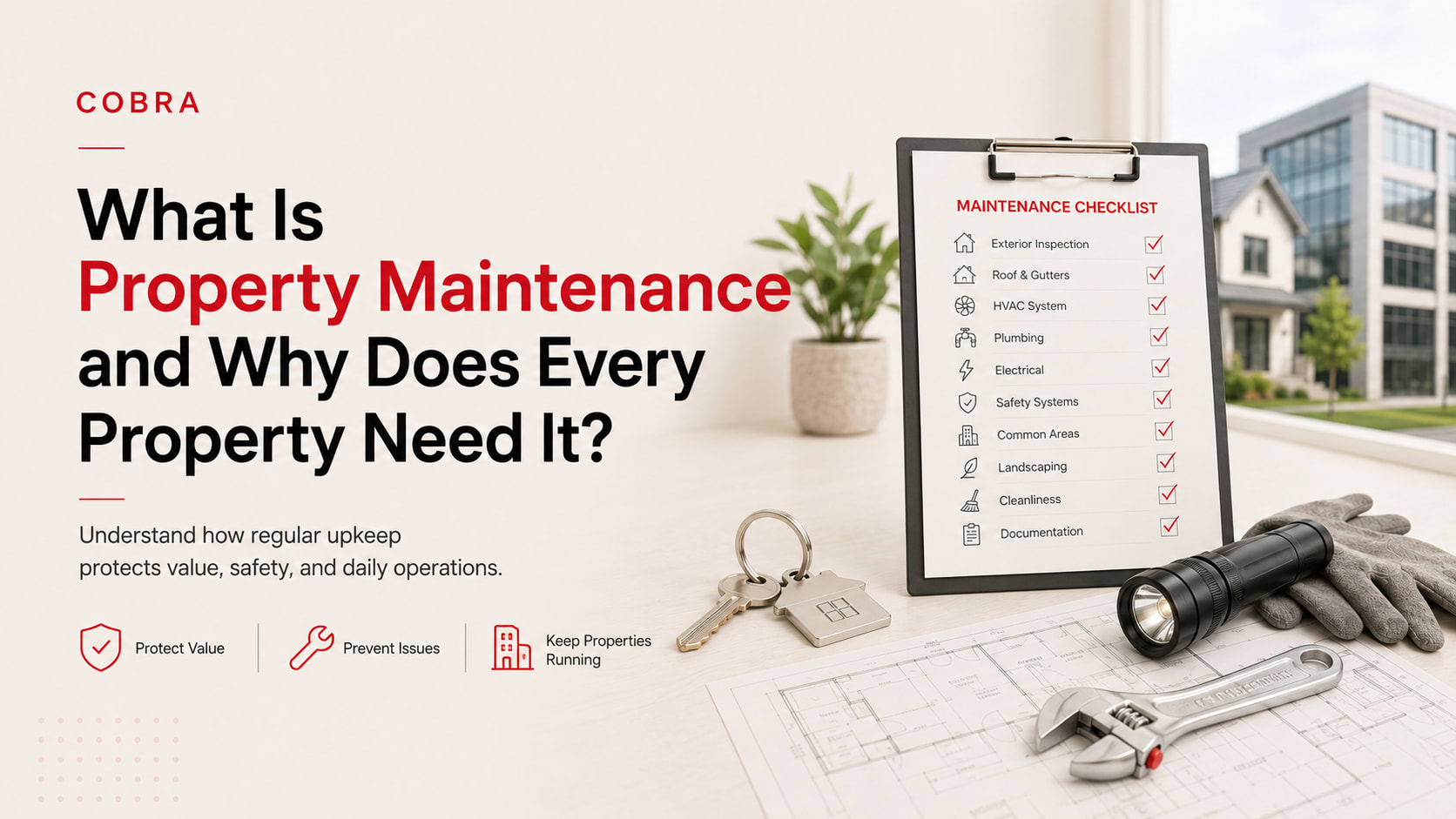
What Is Property Maintenance?
Property maintenance is the ongoing process of keeping buildings, grounds, and infrastructure in safe, functional, and compliant condition. For HOAs, property managers, school administrators, and commercial operators, it’s not just about fixing what’s broken. It’s a disciplined approach to protecting your asset, your budget, and your reputation.
At its core, property maintenance covers:
Routine inspections (HVAC, roofs, plumbing, electrical, safety systems)
Preventive work (cleaning gutters, lubricating doors, landscaping, pest control)
Repairs (leaks, lighting, locks, broken fixtures)
Compliance tasks (fire code, ADA, local ordinances)
Emergency response (water leaks, storm damage, security breaches)
For a deeper dive into the difference between maintenance and management, see Property Maintenance vs Property Management.
Why Every Property Needs a Maintenance Program
Deferred maintenance leads to bigger bills, safety hazards, and legal risk. A single overlooked fire extinguisher or ignored roof leak can result in thousands of dollars in damage or liability exposure. Proactive property maintenance is the only way to:
Comply with insurance, municipal, and safety requirements
Control costs by catching issues early
Reduce liability and injury risk
Protect property value and reputation
Keep tenants, residents, or students safe and satisfied
Whether you oversee a single building or multiple sites, the need is universal. The difference is in the execution.
Preventive vs. Reactive Maintenance: What Works Best?
Preventive maintenance means inspecting and servicing assets before they fail. Reactive maintenance is waiting until something breaks. The most successful operators prioritize preventive work—because it’s always less expensive than emergency repairs or unplanned downtime.
For practical examples of what to inspect and when, see Preventive Property Maintenance: What to Inspect Before Problems Start.
Key Responsibilities in Property Maintenance
HOA Boards: Oversee common areas, enforce standards, vet vendors, manage budgets.
Property Managers: Schedule and document maintenance, coordinate access, communicate with owners/tenants.
Facilities Managers: Ensure building systems operate safely and efficiently, manage compliance, oversee contractors.
School Administrators: Prioritize safety, ADA and fire code compliance, and grounds upkeep.
What Should Be on Your Maintenance Checklist?
Every property is different, but the fundamentals don’t change. Use a checklist to ensure nothing falls through the cracks. Here’s a sample comparison of preventive and reactive approaches:
TaskPreventiveReactiveHVAC ServiceBiannual inspection and filter changeWait for system failureRoof InspectionAnnual check for leaks/damageRepair after water intrusionFire SafetyQuarterly extinguisher and alarm checksRespond to code violations or incidentsLightingReplace bulbs on scheduleWait for tenant complaints
For comprehensive lists, see Property Maintenance Checklist for Residential and Commercial Buildings and home maintenance checklist.
How to Vet and Manage Property Maintenance Vendors
The biggest risk isn’t always the work—it’s the vendor. No-shows, shoddy repairs, or noncompliance can put your operation on the line. Here’s what to look for:
Licensed and insured provider
Clear scope of work and reporting
Ability to scale across multiple properties
Single point of accountability
References and documented processes
Many decision-makers juggle a patchwork of contractors. This leads to communication gaps and finger-pointing. A single, all-in-one provider like Cobra Prime reduces risk and streamlines oversight.
The Cobra Prime Approach: Assess → Plan → Execute → Monitor
Cobra Prime delivers property maintenance services through a disciplined four-step process:
Assess: Review property condition, compliance, and owner priorities.
Plan: Build a custom maintenance schedule and budget.
Execute: Licensed, insured teams deliver the work—no no-shows.
Monitor: Track tasks, document outcomes, and adjust as needed.
This model works for single buildings, portfolios, and multi-site operations. You get one accountable partner, not a revolving door of vendors.
Common Pitfalls and How to Avoid Them
Skipping preventive tasks to save money—always more expensive later
Poor documentation—leads to missed repairs or compliance issues
Unclear vendor contracts—creates gaps and disputes
Not budgeting for capital replacements—deferred costs snowball
For more on how to implement a proactive approach, see our blog.
Frequently Asked Questions
What’s the difference between property maintenance and property management?
Property maintenance focuses on the physical upkeep and repair of the property, while property management covers leasing, rent collection, and tenant relations. For details, see Property Maintenance vs Property Management.
How often should property maintenance be performed?
Most properties require monthly, quarterly, and annual tasks. The exact schedule depends on building type, age, and use. A professional assessment will set the right cadence.
What are the risks of neglecting maintenance?
Risks include safety hazards, code violations, costly emergency repairs, tenant dissatisfaction, and reduced property value.
How do I know if my current maintenance provider is doing enough?
Check for documented inspections, clear work orders, and timely completion. If you’re unsure, request an independent assessment.
Take the Next Step
Reliable property maintenance isn’t optional—it’s essential. If you’re ready for a single, accountable partner who can assess, plan, execute, and monitor your maintenance needs, request a quote or schedule a consultation with Cobra Prime today.