How Often Should You Schedule Property Maintenance?
If you manage a property, HOA, or facility, maintenance isn’t optional—it’s a strategic decision. The right schedule keeps your buildings safe, compliant, and cost-controlled. The wrong one leads to deferred repairs, liability, and spiraling expenses. Here’s how to set a maintenance cadence that works for your property and your budget—without getting burned by unreliable vendors.
Lead with Prevention: Why Maintenance Frequency Matters
Most property failures—HVAC breakdowns, leaks, safety hazards—are preventable. The catch: you need a plan that’s proactive, not reactive. Preventive maintenance (scheduled, routine checks) saves far more in repairs and liability than reactive fixes. But how do you decide what gets checked monthly, quarterly, or annually?
Core Maintenance Intervals: What to Schedule and When
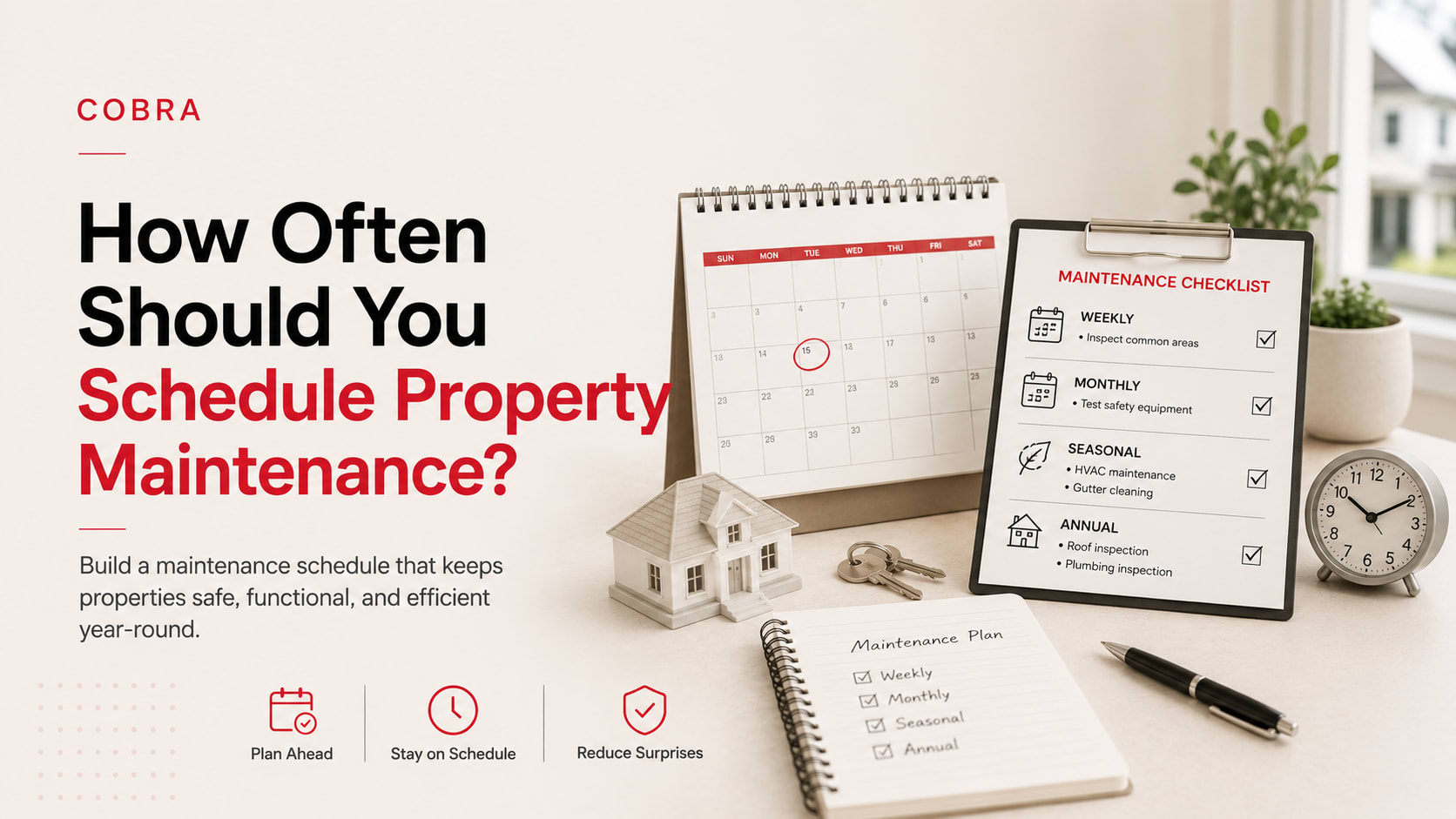
Monthly: Fire/safety systems, lighting, common area cleaning, access control checks, pest inspections.
Quarterly: HVAC filter changes, irrigation system tests, roof and gutter inspections, playground or amenity checks.
Semi-Annual: Deep cleaning, landscaping refresh, exterior inspections, minor paint/touch-ups, mechanical system testing.
Annual: Full property inspection, electrical panel review, major HVAC service, code compliance audit, reserve study (for HOAs).
For a detailed breakdown by asset type and property class, see this Property Maintenance Checklist for Residential and Commercial Buildings.
Checklist: Setting Your Maintenance Calendar
Task Frequency Who Should Perform Notes Fire alarm & extinguisher check Monthly Licensed provider Document for compliance HVAC filter change Quarterly Maintenance tech Increase during heavy use Roof & gutter inspection Quarterly Handyman/contractor After storms or heavy rain Full property walk-through Annual Property manager & vendor Update maintenance plan
Key Factors that Affect Your Schedule
Property Type & Age: Older buildings, high-traffic facilities, and multifamily properties need more frequent checks.
Occupancy & Use: Schools, HOAs, and commercial sites with shared amenities face higher wear and stricter compliance requirements.
Local Codes & Insurance: Some tasks (fire, elevator, pool) have mandated inspection intervals. Always document maintenance for liability and insurance claims.
Seasonal Risks: Schedule roof, HVAC, and irrigation checks ahead of peak seasons (before winter or summer).
Vendor Accountability: What to Demand
One of the biggest risks is relying on multiple vendors—missed appointments, unclear accountability, and finger-pointing when something fails. A single, licensed, and insured provider like Cobra Prime can streamline your process. Our property maintenance services follow a four-step Assess → Plan → Execute → Monitor cycle, so you’re never left guessing what’s next or who’s responsible.
HOA and Community Association Requirements
HOA boards and community managers have legal and fiduciary duties to maintain common areas, amenities, and building systems. Deferred maintenance can trigger special assessments, insurance claims, or even lawsuits. Document every inspection, repair, and vendor visit. For a proactive approach, review this guide on Preventive Property Maintenance: What to Inspect Before Problems Start.
Budgeting and Cost Control
Regular maintenance isn’t just about avoiding emergencies—it’s about predictable budgeting. Build your annual plan around fixed, scheduled tasks and reserve funds for unexpected repairs. A single provider can often bundle services, reducing both direct costs and the administrative burden of managing multiple contracts.
Scaling Across Multiple Properties
If you manage several properties or a multi-site portfolio, standardize your maintenance schedules and reporting. Cobra Prime’s process is designed for scalability—whether it’s a single building, a campus, or a regional portfolio, you get consistent standards, documentation, and a single point of contact.
Frequently Asked Questions
How do I know if my current maintenance schedule is enough?
Review your incident and repair logs. If you’re seeing frequent breakdowns, emergency repairs, or tenant complaints, your schedule may be too reactive. Compare your plan to industry checklists and local code requirements.
What’s the risk of stretching intervals to save money?
Deferred maintenance can lead to higher repair costs, safety incidents, code violations, and insurance claims. Any short-term savings are usually outweighed by long-term liability and expense.
How can I ensure vendors actually show up and complete work?
Demand documented checklists, before/after photos, and digital service logs. Use providers with a clear process and a single point of accountability—no subcontractor runaround.
How does Cobra Prime’s process differ from hiring separate vendors?
Cobra Prime handles all property services under one licensed and insured contract, using a documented Assess → Plan → Execute → Monitor workflow. You get clear reporting, less admin, and no gaps between trades.
Can you help with both preventive and emergency maintenance?
Yes. While preventive maintenance is the focus, Cobra Prime also coordinates responsive repairs, so you’re covered for both scheduled and urgent needs.
Take the Next Step
Stop guessing and start controlling your property’s maintenance. Request a quote or schedule a consultation with Cobra Prime to get a tailored maintenance schedule that fits your property’s needs and your compliance requirements.