Not every repair request is equally urgent, but property managers and homeowners alike often aren't sure where the line actually sits, or what response time is reasonable to expect once something is flagged as an emergency. Having a clear standard in place before something breaks makes the moment it actually happens far less stressful.
Who actually answers that emergency call also depends on how your maintenance is structured, see our guide to commercial handyman vs. in-house maintenance staff.
What actually counts as an emergency
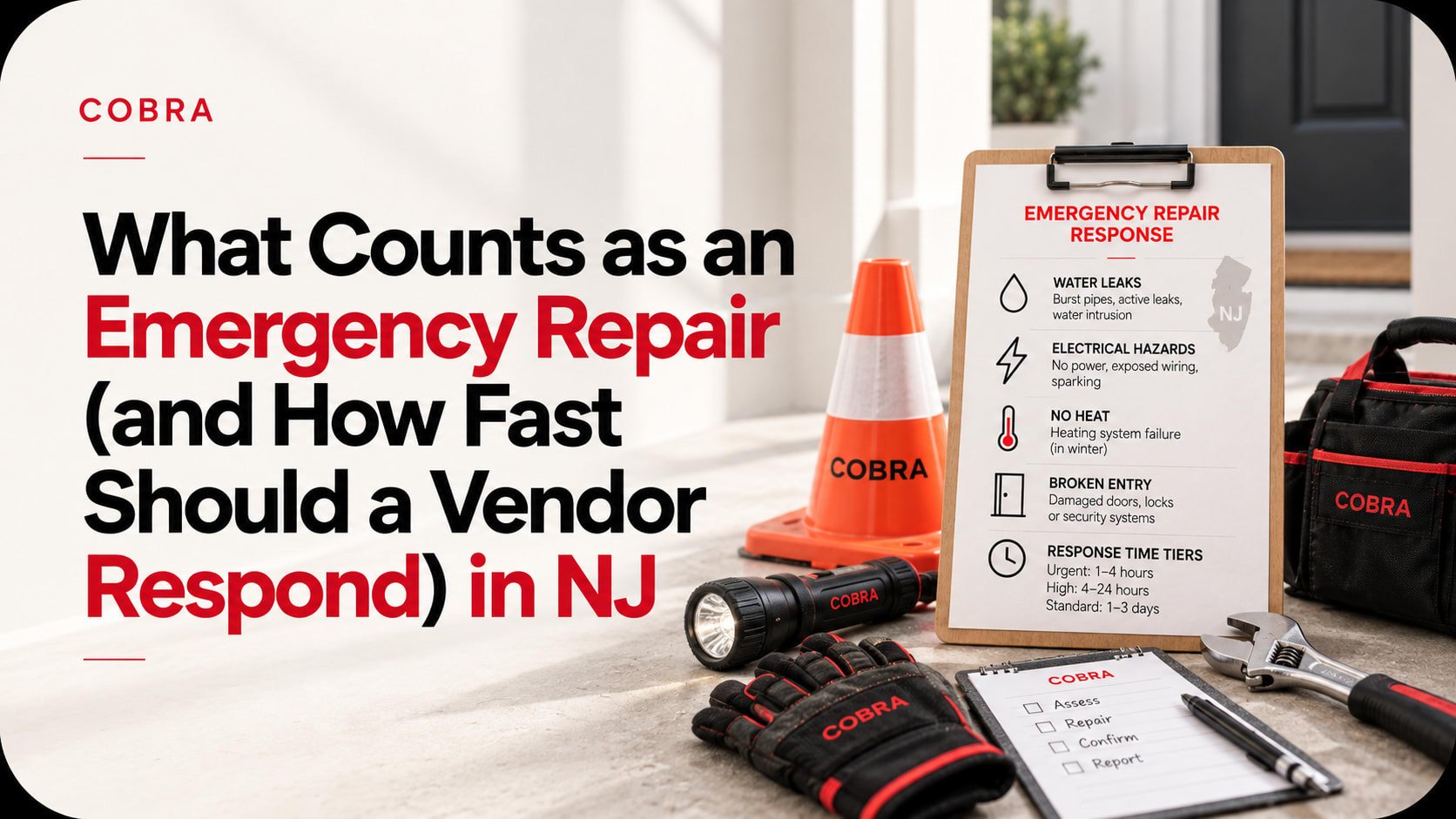
Water leaks. Burst pipes, active leaks, or water intrusion that can damage the structure or belongings if not addressed quickly.
Electrical hazards. No power, exposed wiring, or sparking, anything with a fire or shock risk.
No heat in winter. A heating system failure during cold weather is a habitability issue, not a routine maintenance item.
Broken entry points. Damaged doors, locks, or security systems that leave a property or unit exposed.
Why response time tiers matter
A reliable vendor doesn't treat every request the same way, they sort by urgency and set expectations accordingly. A true emergency, active water damage, no heat in freezing weather, a security breach, generally needs a response within a few hours. A high-priority but non-life-safety issue might have a same-day or next-day window. Routine repairs can reasonably wait a few days. The problem isn't that some things take longer, it's when a vendor doesn't communicate which category a request falls into.
What to ask a vendor about their emergency process
Before you need it, ask directly: what's your guaranteed response window for a true emergency, is that coverage available nights and weekends, and what's the actual process, do you call a number and reach a person, or submit a request and wait for a callback. A vendor who can answer these clearly, before anything is actually broken, is one you can trust to follow through when something is.
Documenting the request matters too
Assess the situation, report it clearly, and confirm what was communicated. A property manager or homeowner who can describe exactly what's happening, water leak versus dampness, no power versus a single dead outlet, helps the vendor triage correctly and arrive prepared, rather than discovering the actual scope once they're already on site.
Why this matters more in winter
Cold weather turns ordinary maintenance issues into emergencies faster than any other season. A slow leak becomes a frozen, burst pipe. A minor heating issue becomes a habitability problem overnight. Vendors who are honest about their emergency capacity during peak winter demand, rather than overpromising and then missing the window, are the ones worth keeping on file before the season starts.
For the everyday, non-emergency side of this same relationship, see our guide to home maintenance checklist.
Frequently Asked Questions
What's a reasonable response time for a true emergency repair?
Most reliable vendors target a response within a few hours for genuine emergencies like active leaks, no heat in winter, or electrical hazards.
Is a broken doorknob an emergency?
Not usually, unless it affects security or access to the unit. It typically falls into a standard repair timeline rather than an emergency response.
Should emergency coverage include nights and weekends?
Yes, true emergencies don't only happen during business hours. Confirm a vendor's after-hours coverage before you need it.
What should I do while waiting for an emergency repair?
Follow basic safety steps, shutting off water at the source for a leak, avoiding a hazardous electrical area, and document the issue clearly for the vendor.
How do I know if a vendor's emergency response is reliable?
Ask about their process before you need it. A vendor who gives a vague answer about response time or after-hours coverage is less likely to follow through when it matters.
For the range of repairs this typically covers, see our guide to handyman services in NJ.