Event Security Planning: Key Decisions for Safe, Successful Events
If you’re responsible for a property, community, or facility that hosts events—whether it’s an HOA annual meeting, school festival, or commercial tenant gathering—the stakes for security are high. One missed detail can mean property damage, injury, or liability headaches. Here’s how seasoned property managers and organizers keep events safe, compliant, and incident-free—without scrambling or relying on unreliable contractors.
Start with a Risk Assessment—Don’t Skip This Step
Effective event security starts long before the first guest arrives. Walk the site and ask:
What are the likely risks? (Crowd size, alcohol, VIPs, cash handling, parking, open access points)
What’s the event history? (Past incidents, complaints, or police calls)
Where are your vulnerabilities? (Unsecured doors, poor lighting, lack of cameras, easy perimeter access)
Who are the stakeholders? (Board, residents, staff, vendors, local police/fire)
Document your findings. This assessment shapes your security plan and budget. If you need expertise, consider a licensed provider like security services in NJ that can perform a professional risk assessment and recommend tailored solutions.
Build a Security Plan: What to Include
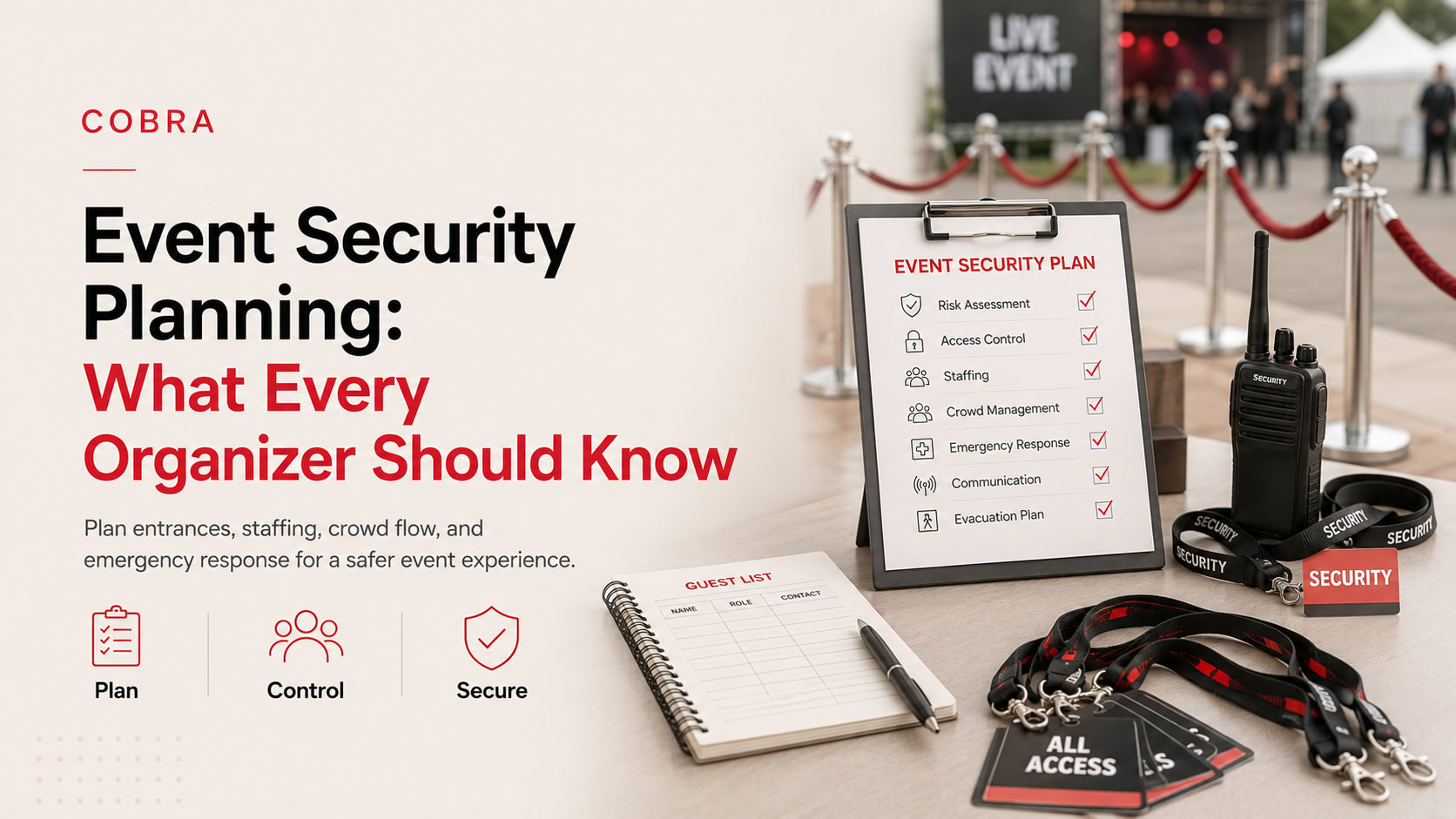
A solid event security plan covers:
Clear roles and responsibilities (Who does what, who’s in charge of decisions)
Access control (How guests, staff, and vendors enter/exit; credentialing or check-in process)
Physical security (Barricades, patrols, lighting, surveillance, bag checks if needed)
Communication (Radios, emergency contacts, escalation process)
Emergency procedures (Evacuation, medical emergencies, severe weather, lost child, active threat)
Post-event review (What worked, what didn’t, incident log)
For a deeper look at how access control can prevent unauthorized entry and protect both people and property, see Access Control Basics for Businesses and Properties.
Vetting and Managing Security Vendors
Not all security vendors are created equal. Here’s how to avoid the common pitfalls—no-shows, unlicensed guards, or poor communication:
Verify licensing and insurance (No exceptions—request documentation)
Ask for references from similar properties or events
Insist on a site walk and written plan—not just a verbal promise
Clarify supervision and reporting (Who is the on-site lead? How will you get updates?)
Understand backup plans for call-outs or emergencies
For a breakdown of what professional guards actually do (beyond just standing at the door), review Security Guard Duties: What Do Professional Guards Actually Do?.
Preventive vs. Reactive: Why Both Matter
Preventive security—such as credential checks, patrols, and visible staff—reduces the chance of incidents. Reactive planning—such as clear communication channels and emergency protocols—ensures your team responds fast if something does go wrong. Both are essential. Don’t let anyone sell you a “one-size-fits-all” approach; your plan should reflect your property’s unique needs and risks.
Sample Event Security Planning Checklist
Task Who Owns It When Status Site risk assessment completed Property manager / Security provider 4-6 weeks before event [ ] Security vendor vetted and contracted Organizer / Board 4 weeks before [ ] Access control plan finalized Security lead 3 weeks before [ ] Emergency procedures reviewed All staff/volunteers 1 week before [ ] Pre-event security walk-through Security lead / Organizer Day before [ ] Post-event incident review Organizer / Security provider Within 2 days after [ ]
Budgeting and Cost Control
Event security costs depend on scope, risk level, and local requirements. Avoid surprises by requesting a detailed quote that includes staffing, equipment, and contingency hours. Licensed providers will scope pricing to your event—don’t settle for vague estimates. If you’re weighing in-house staff versus a professional firm, factor in training, supervision, and liability exposure.
Liability, Compliance, and Documentation
Document everything: contracts, insurance certificates, post orders, incident logs. If you’re an HOA or community association, double-check your governing documents and local ordinances—some jurisdictions require licensed security for events over a certain size. Documentation protects you if an incident occurs and demonstrates due diligence to insurers and regulators.
Why a Single Accountable Provider Makes a Difference
Coordinating multiple vendors—security, maintenance, cleaning—often leads to gaps and finger-pointing. With a provider like Cobra Prime, you get one point of accountability across security and property services, all delivered through an Assess → Plan → Execute → Monitor process. This approach scales across multiple properties and events, ensures licensed and insured work, and reduces the risk of missed details or last-minute surprises. For a deeper dive into how event security services are structured and what to expect, see event security services.
Frequently Asked Questions
What’s the minimum security I need for a community or school event?
There’s no one-size-fits-all answer. Factors include headcount, location, alcohol service, and past incident history. At minimum, plan for access control, visible security presence, and clear emergency protocols. Consult with a licensed provider for a tailored recommendation.
How far in advance should I book event security?
Ideally, secure your vendor 4–6 weeks in advance—especially for large or high-profile events. Last-minute bookings risk higher costs and limited availability.
What documentation should I require from my security vendor?
Request proof of licensing, insurance, a written security plan, and an incident reporting process. Keep all documentation on file for compliance and liability protection.
How do I know if my security plan is effective?
Review incident logs, feedback from staff and attendees, and conduct a post-event debrief. Adjust your procedures for future events based on what you learn.
Next Steps
Don’t leave event security to chance. If you need a provider that can handle security, maintenance, and all property services under one roof—with clear accountability—contact Cobra Prime. Request a quote or schedule a consultation to discuss your next event’s needs and get a plan you can trust.