Move-In Cleaning: Why It Matters for Property Managers and HOAs
Every turnover is a liability moment. Missed cleaning details can lead to complaints, failed inspections, lease delays, or even health hazards. Whether you’re onboarding a new resident, preparing an apartment for a tenant, or welcoming a homeowner, a thorough move-in cleaning isn’t just about appearances—it’s about compliance, safety, and setting the right standard from day one.
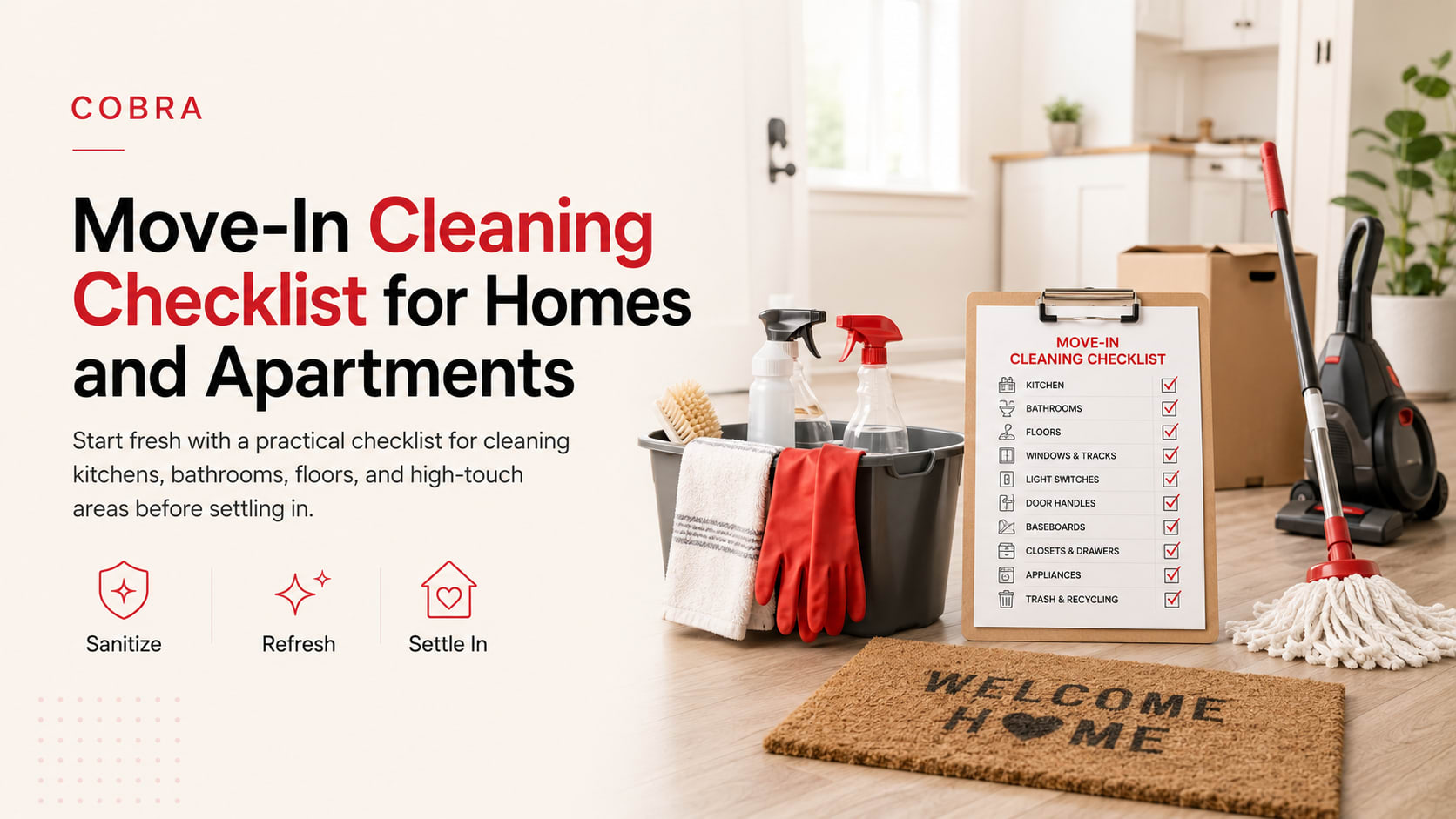
Move-In Cleaning Checklist: What to Cover Before Residents Arrive
Use this checklist to ensure nothing is missed. Walk the property before and after cleaning, document with photos, and keep records for compliance and accountability.
Room/AreaTasksEntry & Common Areas
Wipe doors, handles, and light switches
Vacuum/sweep floors and mats
Clean baseboards and trim
Check for cobwebs, dust vents, and inspect lighting
Kitchen
Clean inside/outside of cabinets and drawers
Sanitize countertops and backsplash
Deep clean sink, faucet, and garbage disposal
Clean appliances (fridge, oven, microwave, dishwasher—inside and out)
Check for leaks or mold under sink
Bathrooms
Disinfect toilet, tub, shower, and sink
Clean mirrors and fixtures
Scrub grout and tiles; check for mildew
Replace toilet paper and check exhaust fan
Bedrooms & Living Areas
Vacuum carpets or mop floors
Wipe down closet shelves and rods
Clean windows, sills, and blinds
Inspect for stains, odors, or pet hair
Utility & Laundry
Wipe washer/dryer exteriors and lint traps
Check water heater or HVAC closet for dust
Outdoor Spaces (if applicable)
Sweep patios, balconies, or entryways
Remove debris and inspect lighting
Preventive vs. Reactive Cleaning: What’s the Difference?
Preventive cleaning is scheduled, documented, and addresses issues before they escalate—reducing complaints and maintenance requests. Reactive cleaning happens after a problem or complaint. For turnovers, always choose preventive: it’s easier to address stains, odors, or pest issues before residents move in than after. If you’re unsure which level of service you need, see this comparison of Deep Cleaning vs Regular Cleaning: What’s the Difference?.
Inspection, Documentation, and Liability
Before and after cleaning, inspect each room against your checklist. Document with timestamped photos—especially of high-traffic areas, appliances, and any pre-existing damage. This protects you from disputes and supports compliance if a tenant or homeowner raises a concern later. For HOAs and community associations, a standardized checklist ensures consistency across multiple units or properties.
Vendor Accountability: What to Require
Licensed and insured cleaning provider
Clear scope of work—aligned to your checklist
Documented proof of completion (photos, signed checklist)
Ability to scale across multiple units or properties
Responsiveness if issues are reported post-move-in
With cleaning services in NJ from Cobra Prime, you get a single, accountable provider who manages the entire process—no more chasing multiple vendors or risking no-show contractors. Our Assess → Plan → Execute → Monitor approach ensures every step is documented and delivered to your standards.
Budgeting and Scheduling Tips
Schedule cleaning after repairs/maintenance but before final inspection
Build cleaning costs into your turnover or onboarding budget
Allow a buffer day between cleaning and move-in to address any issues
For multi-unit properties, stagger cleanings to avoid bottlenecks
For a full turnover process, see our Move-Out Cleaning Checklist for Tenants and Landlords—use both checklists together to ensure seamless transitions and reduce missed details.
Frequently Asked Questions
What’s the difference between move-in and move-out cleaning?
Move-in cleaning prepares a property for new residents, focusing on sanitation, safety, and presentation. Move-out cleaning often includes addressing damage, heavy stains, and restoring the property to its original condition. Both should be thorough and documented, but move-in cleaning is your last chance to ensure a positive first impression and reduce liability.
How do I verify a cleaning vendor’s work?
Require before-and-after photos, a signed checklist, and a walkthrough inspection. For multi-unit properties, spot-check a random sample. Use a provider with a documented process and clear communication.
Who is responsible for move-in cleaning in an HOA or managed property?
Responsibility depends on the governing documents and lease agreements. Typically, the property manager or HOA arranges cleaning for common areas and turnovers, while residents may be responsible for ongoing upkeep. Always clarify expectations in writing.
What if issues are discovered after move-in?
Respond promptly—send a cleaning crew or maintenance as needed. Document the issue and resolution. A proactive, accountable provider will have a process for handling post-move-in complaints efficiently.
How far in advance should move-in cleaning be scheduled?
Ideally, schedule cleaning 24-48 hours before move-in, after all repairs and maintenance are finished. Build flexibility into your schedule for last-minute issues or delays.
Ready to Simplify Your Turnovers?
Don’t risk complaints, delays, or liability with incomplete move-in cleaning. Let Cobra Prime handle the entire process—licensed, insured, and accountable from start to finish. Request a quote or schedule a consultation today to streamline your property operations and ensure every resident’s first impression is the right one.