An office building's maintenance needs are easy to overlook precisely because the space works quietly in the background, until an HVAC system fails on the hottest day of the year or a lighting issue starts affecting tenant productivity. A structured checklist keeps the building running instead of reacting one failure at a time.
Multi-tenant residential buildings face a similar structure with their own added complexity, see our guide to multi-family apartment property maintenance.
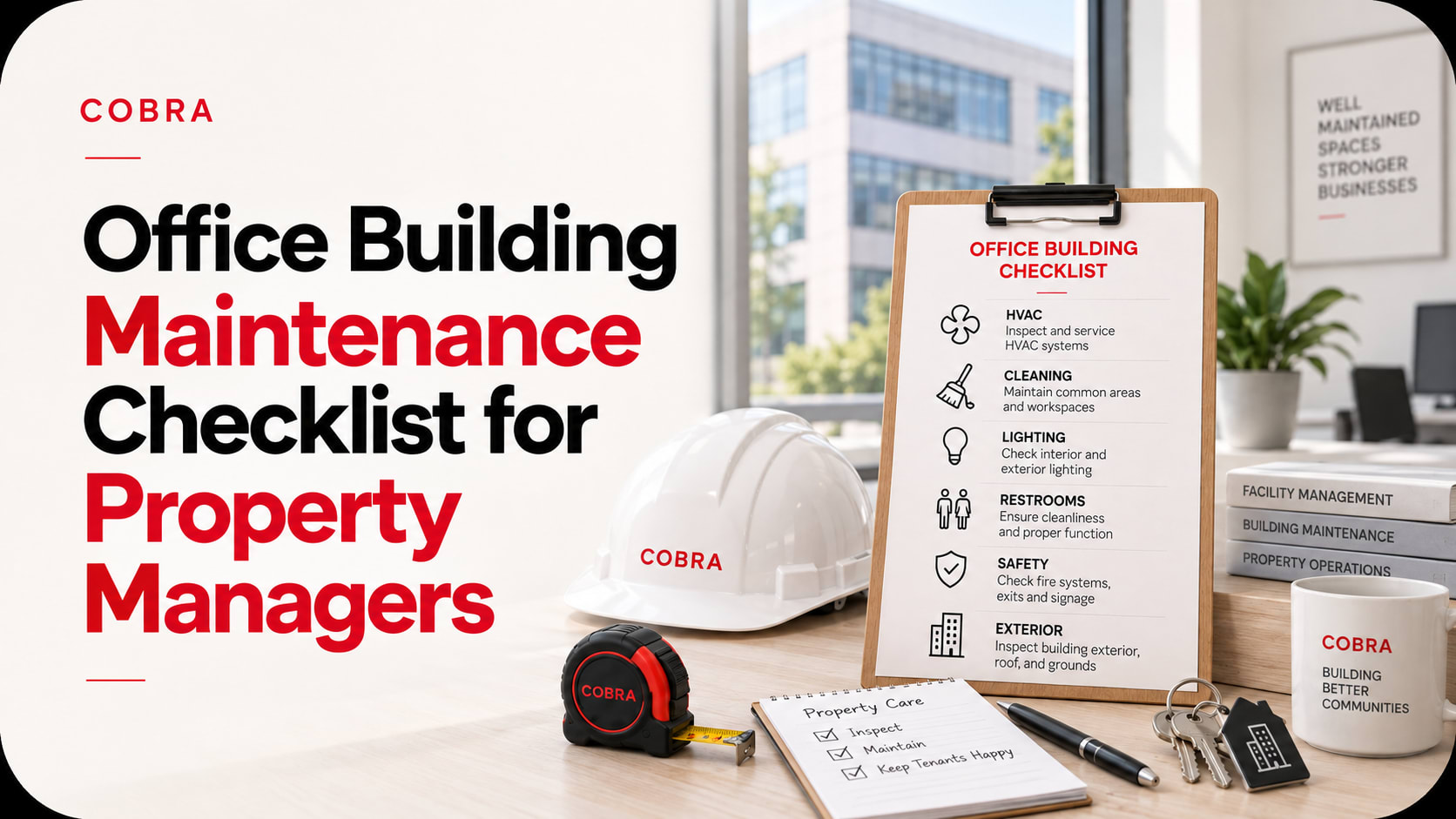
The core office building checklist
HVAC systems. Regular inspection and servicing, since heating and cooling failures are both disruptive and expensive to fix on an emergency basis.
Cleaning. Common areas and shared workspaces maintained to a consistent standard, not just when something looks obviously dirty.
Lighting. Interior and exterior lighting checked regularly, both for tenant experience and for safety in parking areas and walkways.
Restrooms. Cleanliness and proper function checked on a set schedule, since this is one of the fastest ways tenants judge a building's management.
Safety. Fire systems, exits, and signage inspected and kept compliant.
Exterior. Building exterior, roof, and grounds inspected regularly rather than only after visible damage appears.
Why HVAC deserves special attention
Of everything on this list, HVAC failures cause the most disruption and the highest emergency repair costs. A system that's serviced on a predictable schedule rarely fails without warning, while one that's ignored until something breaks tends to fail at the worst possible time, during a heat wave or a cold snap, when demand on the system is highest.
Tenant satisfaction and maintenance are directly connected
In a multi-tenant office building, maintenance quality is one of the biggest factors in tenant retention. A building that responds quickly to issues and keeps common areas genuinely well-maintained gives tenants fewer reasons to look elsewhere at lease renewal. A building that lets small issues linger sends the opposite signal, even if the individual issues seem minor.
Building a proactive inspection schedule
Rather than waiting for tenant complaints, a property manager should have a set schedule for walking through common areas, checking HVAC performance, and reviewing safety systems. Monthly walkthroughs catch small issues, quarterly systems checks cover HVAC, plumbing, and electrical basics, and annual safety audits confirm code compliance and fire safety systems are current.
Why documentation matters
Keeping a record of inspections and completed maintenance isn't just useful for internal tracking, it protects the property manager and owner if a dispute or liability question comes up later. A building with a documented history of regular HVAC servicing, safety inspections, and prompt repairs is in a much stronger position than one relying on memory of what was done and when.
For more day-to-day guidance beyond the inspection checklist itself, see our guide to property maintenance tips.
Frequently Asked Questions
How often should an office building's HVAC system be inspected?
Most systems benefit from inspection at least twice a year, before the heating and cooling seasons, to catch issues before they cause a failure during peak demand.
What's the biggest maintenance factor in tenant retention?
Responsiveness. Buildings that address issues quickly and keep common areas well-maintained tend to retain tenants better than ones that let small problems linger.
Should safety systems be inspected annually or more often?
At minimum annually, though buildings with higher occupancy or specific code requirements may need more frequent checks.
Why is documentation important for building maintenance?
It protects the property manager and owner in the event of a dispute or liability question, and creates a clear record of what was maintained and when.
What should a monthly walkthrough actually cover?
Common areas, shared workspaces, and general building condition, catching visible issues before they're reported by a tenant.
For the full scope of what a property maintenance contract typically includes, see our guide to property maintenance services.