New Jersey winters swing between freezing rain, heavy snow, and hard overnight freezes, often in the same week. A property that isn't prepared for that shift doesn't just look bad, it creates real liability, from ice on a walkway to a burst pipe that floods a unit. Getting ahead of winter is far cheaper than reacting to it once the first storm hits.
A rushed winter checklist is often the clearest sign of a bigger issue, see our guide to signs your maintenance vendor isn't doing enough if this checklist looks unfamiliar for your property.
Why winter prep matters more than people think
Most of the damage properties take every winter isn't from the snow itself, it's from what freezing temperatures do to systems that were already due for attention. A gutter that was slightly clogged in October becomes an ice dam in January. A door that stuck a little in the fall stops sealing properly once the wood contracts in the cold. Winter doesn't create these problems, it exposes ones that were already there.
The core winter readiness checklist
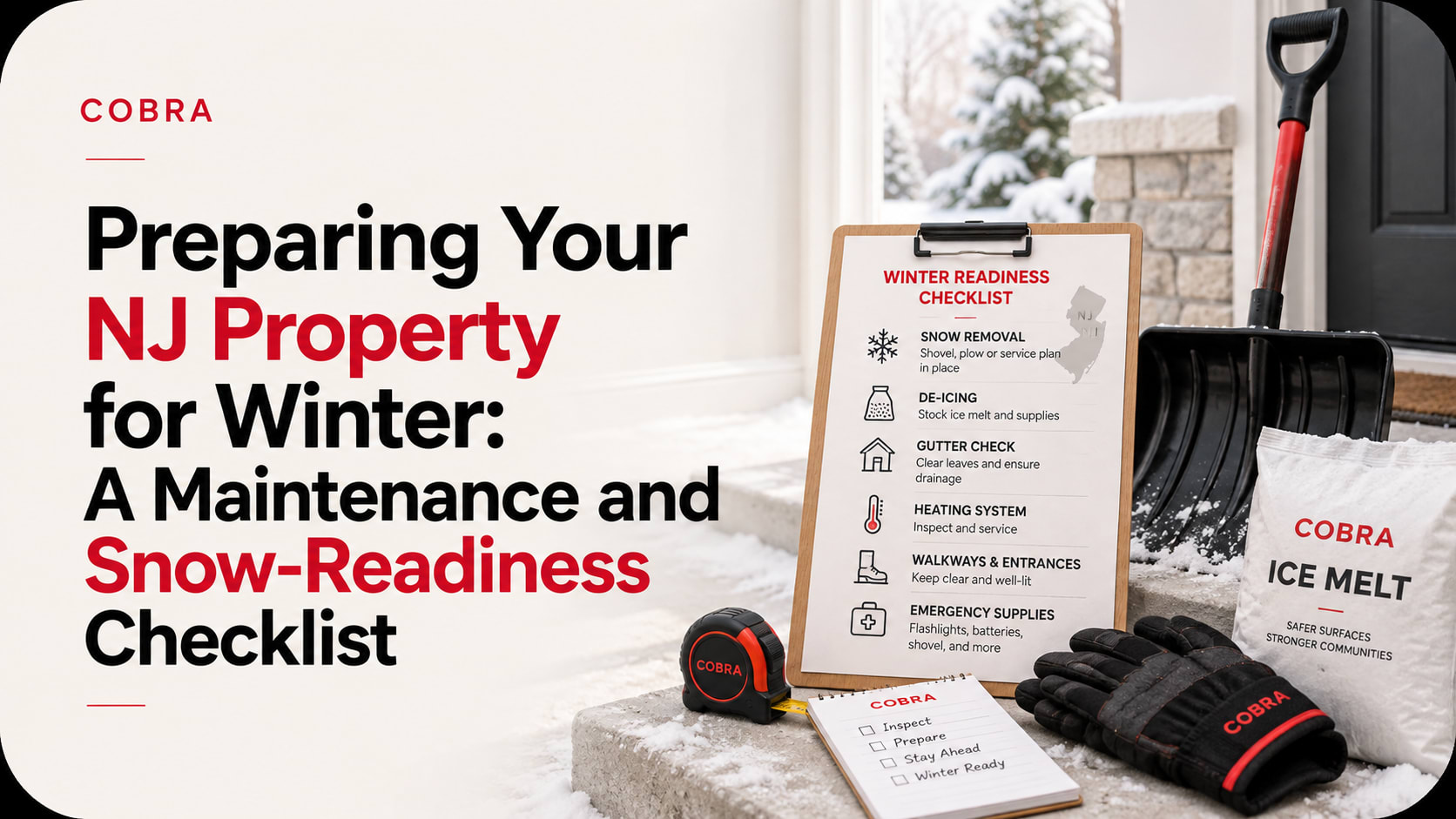
Gutters and downspouts. Clear leaves and debris before the first freeze so meltwater has somewhere to go instead of backing up under the roofline.
Heating systems. Have the heating system inspected and serviced before it's actually needed, not after it fails on the coldest night of the year.
Exposed pipes. Insulate pipes in unheated spaces, crawl spaces, garages, exterior walls, where a hard freeze can cause a burst.
Walkways and entrances. Confirm a snow and ice plan is in place before the first storm, not during it.
Emergency supplies. Ice melt, flashlights, and backup supplies stocked ahead of time rather than sourced during a storm when everyone else is buying the same things.
Snow and ice: the liability that matters most
Of everything on a winter checklist, snow and ice management carries the most immediate liability. A slip-and-fall on an unshoveled walkway or an unsalted parking lot is one of the most common winter claims a property owner or HOA board will face. Having a plan means knowing in advance who is responsible for clearing snow, how quickly it needs to happen after a storm, and what happens on a weekend or overnight when most other services go quiet.
A written plan should specify trigger points, for example when snowfall reaches a certain depth, and applies ice melt on a schedule rather than only after someone reports a problem. Waiting for a complaint means the hazard was already there long enough for someone to encounter it.
Where winter maintenance failures actually show up
Ice dams are one of the most expensive winter problems because they aren't obvious until water is already coming through a ceiling. They form when heat escaping from the building melts snow on the roof, which then refreezes at the colder eaves, building a dam that forces water back under the shingles. Clean gutters and proper attic insulation are the two biggest factors in preventing them, and both need to be addressed before winter, not during it.
Heating system failures are the other recurring pattern. A system that has gone all year without a service call is far more likely to fail in the exact week it's working hardest. A pre-season inspection catches small issues, a worn part, a dirty filter, before they become a no-heat emergency in a occupied building.
Building a plan instead of reacting to storms
The properties that handle winter well aren't the ones with the biggest maintenance budgets, they're the ones with a plan written down before the season starts. That means knowing which vendor handles snow removal and what their response window is, having heating and gutter work scheduled in the fall rather than left until something fails, and making sure walkways and common areas have a clear, assigned party responsible for them after every storm. A property without that plan is making decisions in the middle of a snowstorm instead of before one.
Yard and grounds cleanup earlier in the fall also makes winter prep easier, since clear beds and cut-back plantings mean less debris for gutters and drains to deal with once storms arrive. For that seasonal groundwork, see our guide to seasonal yard cleanup.
Frequently Asked Questions
When should winter property prep start in New Jersey?
Ideally in early fall, before the first hard freeze. Gutter cleaning, heating inspections, and pipe insulation all need to happen before cold weather arrives, not after.
What's the biggest winter liability for property owners?
Snow and ice on walkways and parking areas. Slip-and-fall incidents are among the most common claims property owners and HOA boards face each winter.
What causes ice dams and how are they prevented?
Ice dams form when heat escaping the building melts roof snow, which refreezes at the colder eaves. Clean gutters and adequate attic insulation are the main ways to prevent them.
Should heating systems be serviced every year?
Yes. A pre-season inspection catches minor issues before they become a full system failure during the coldest part of the year.
Who should be responsible for snow removal on a shared property?
This should be defined in writing before winter, not decided during a storm, so everyone knows who clears walkways and how quickly it needs to happen after snowfall.
For the broader picture of what year-round upkeep should cover, see our guide to property maintenance services.