Most property owners don't realize their maintenance vendor is underperforming until something breaks that shouldn't have. The warning signs are usually there long before that, they're just easy to dismiss individually. Here's what to actually watch for.
These signs tend to surface fastest during a seasonal stress test, see our guide to preparing your NJ property for winter.
The core warning signs
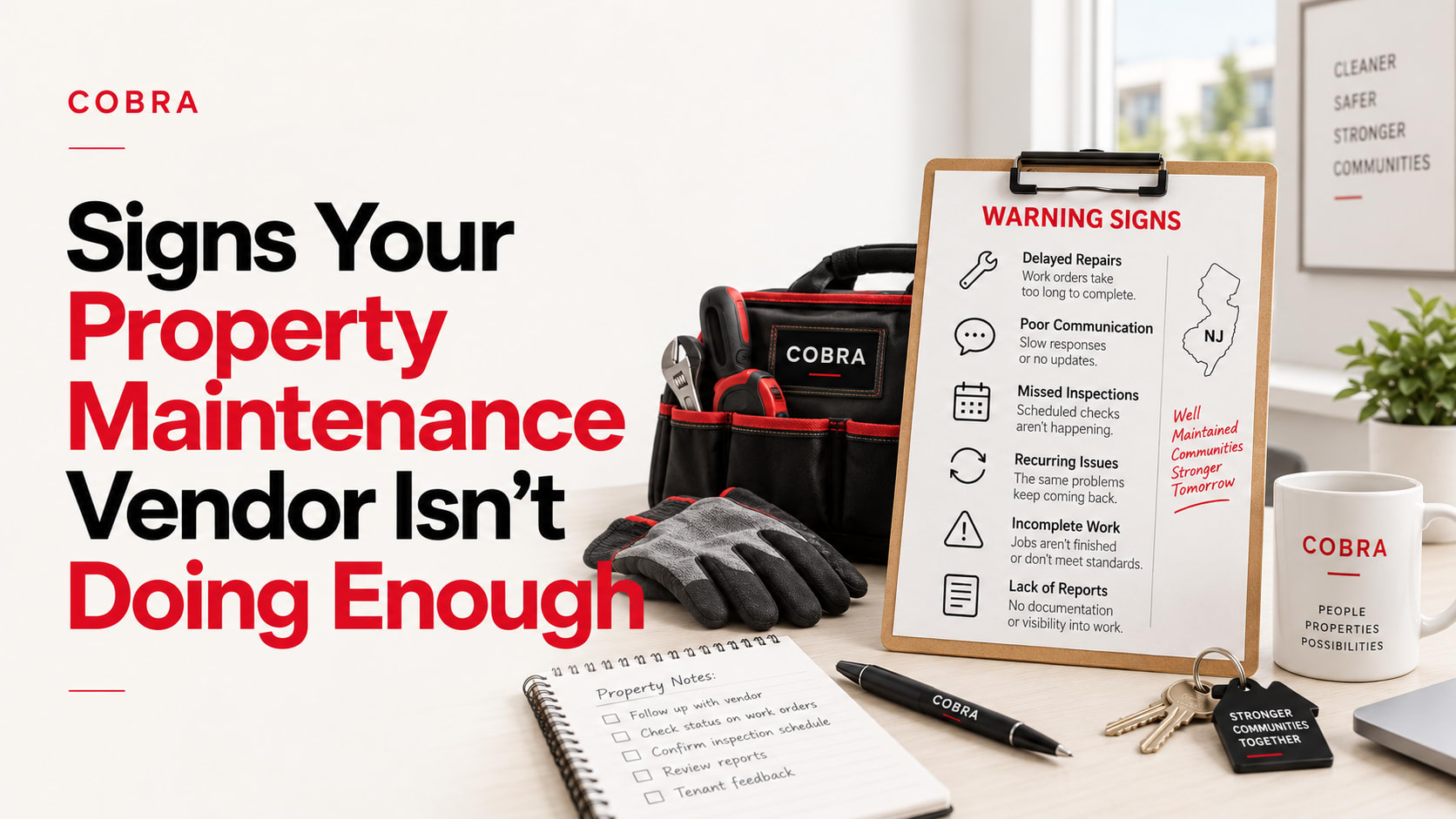
Delayed repairs. Work orders that consistently take too long to complete, even for straightforward issues.
Poor communication. Slow responses or no updates on the status of a reported issue.
Missed inspections. Scheduled checks that aren't actually happening, or happening on paper without real follow-through.
Recurring issues. The same problems keep coming back instead of being genuinely resolved.
Incomplete work. Jobs that aren't finished or don't meet a reasonable standard.
Lack of reports. No documentation or visibility into what work was actually performed.
Why delayed repairs are the clearest signal
A single delayed repair could be a scheduling issue. A pattern of delayed repairs across multiple requests is a vendor problem. Track how long routine issues take to resolve over a few months, if the timeline keeps stretching without a clear reason, that's not a coincidence.
Recurring issues mean the root cause was never fixed
When the same problem shows up again a few months after it was supposedly resolved, it usually means the vendor treated the symptom instead of the actual cause. A leak that gets patched three times in a year instead of properly repaired once is costing more in total than a correct fix would have the first time.
Why documentation gaps are a bigger deal than they seem
A vendor who can't tell you what was inspected, what was found, and what was done about it isn't actually managing your property, they're reacting to whatever gets reported. Regular reports and visible documentation aren't just paperwork, they're the only way to confirm inspections and preventive work are genuinely happening rather than being skipped.
How to have the conversation with an underperforming vendor
Before switching vendors, it's worth having a direct conversation backed by specifics, not a general complaint. Bring a documented list: which requests took too long, which issues recurred, what reports were promised but never delivered. A vendor genuinely capable of doing better will respond to specifics. One that gets defensive or vague is confirming the problem rather than addressing it.
When it's time to actually switch
If the same issues persist after a direct conversation and a reasonable window to improve, it's a sign the vendor relationship has reached its limit. Continuing to tolerate delayed repairs, recurring problems, and poor communication costs more over time than the disruption of switching to a vendor who will actually follow through.
If you're also unsure whether your current arrangement is even the right model, see our guide to property maintenance vs. property management.
Frequently Asked Questions
How do I know if repair delays are a real pattern or just bad luck?
Track response and completion times across several requests over a few months. A consistent pattern of delays, rather than one-off incidents, points to a vendor issue.
What does it mean if the same maintenance issue keeps coming back?
It usually means the underlying cause was never properly addressed, and the vendor treated a symptom instead of fixing the actual problem.
Should a maintenance vendor provide regular reports?
Yes. Documentation of inspections and completed work is the main way to confirm preventive maintenance is actually happening.
What should I do before switching maintenance vendors?
Have a direct conversation backed by specific documented issues. A vendor capable of improving will respond to specifics rather than getting defensive.
How long should I give a vendor to improve before switching?
A reasonable window after a direct conversation, if the same issues persist after that, it's a sign to move on.
For what a genuinely thorough maintenance program should include, see our guide to property maintenance services.