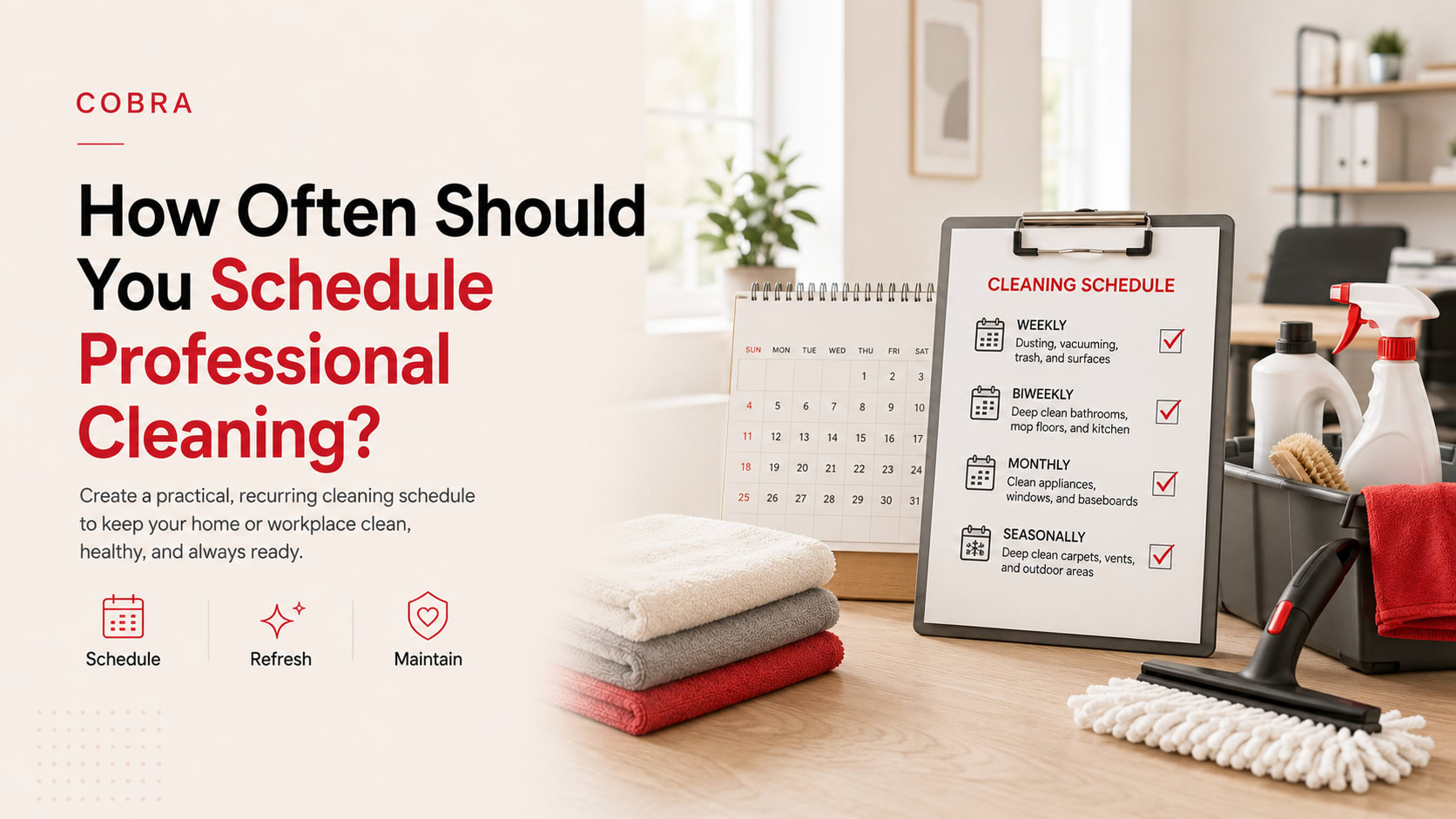
How Often Should You Schedule Professional Cleaning?
For any property or community decision-maker, the cleaning schedule you set isn’t just about appearances—it’s about safety, compliance, and keeping costs predictable. The right cadence keeps your property healthy, reduces liability, and prevents small issues from becoming expensive problems. Here’s how to set a cleaning schedule you can defend to your board, your residents, and your budget.
Start with Your Property’s Needs—Not Industry Myths
There’s no universal answer. The right frequency depends on your property type, usage, risk profile, and regulatory requirements. For example, a high-traffic school or HOA clubhouse needs a different approach than a small office suite. Before you set a schedule, assess:
Foot traffic and occupancy patterns
Special use areas (restrooms, gyms, food prep, medical rooms)
Local health codes and insurance requirements
Recent incidents (illness outbreaks, pest sightings, complaints)
Seasonal factors (flu season, pollen, weather events)
Engage a licensed provider like cleaning services in NJ for an initial walkthrough and risk assessment. This ensures nothing is missed—especially in common areas, high-touch surfaces, and spaces with compliance requirements.
Preventive vs. Reactive Cleaning—Why Frequency Matters
Deferred cleaning is a false economy. Minor neglect leads to faster wear, health complaints, and even failed inspections. A preventive schedule is cheaper and safer than reacting to problems:
Area/Task Preventive Frequency Risks of Infrequent Cleaning Lobby/Common Areas Daily to 3x/Week First impressions, slip hazards, pest attraction Restrooms Daily (min.) Health code violations, complaints, odors Offices/Classrooms 1-2x/Week Dust buildup, absenteeism, allergy triggers Deep Cleaning (all areas) Quarterly to Biannually Hidden grime, mold, missed maintenance issues Windows/Exterior Monthly to Quarterly Staining, curb appeal loss, long-term damage
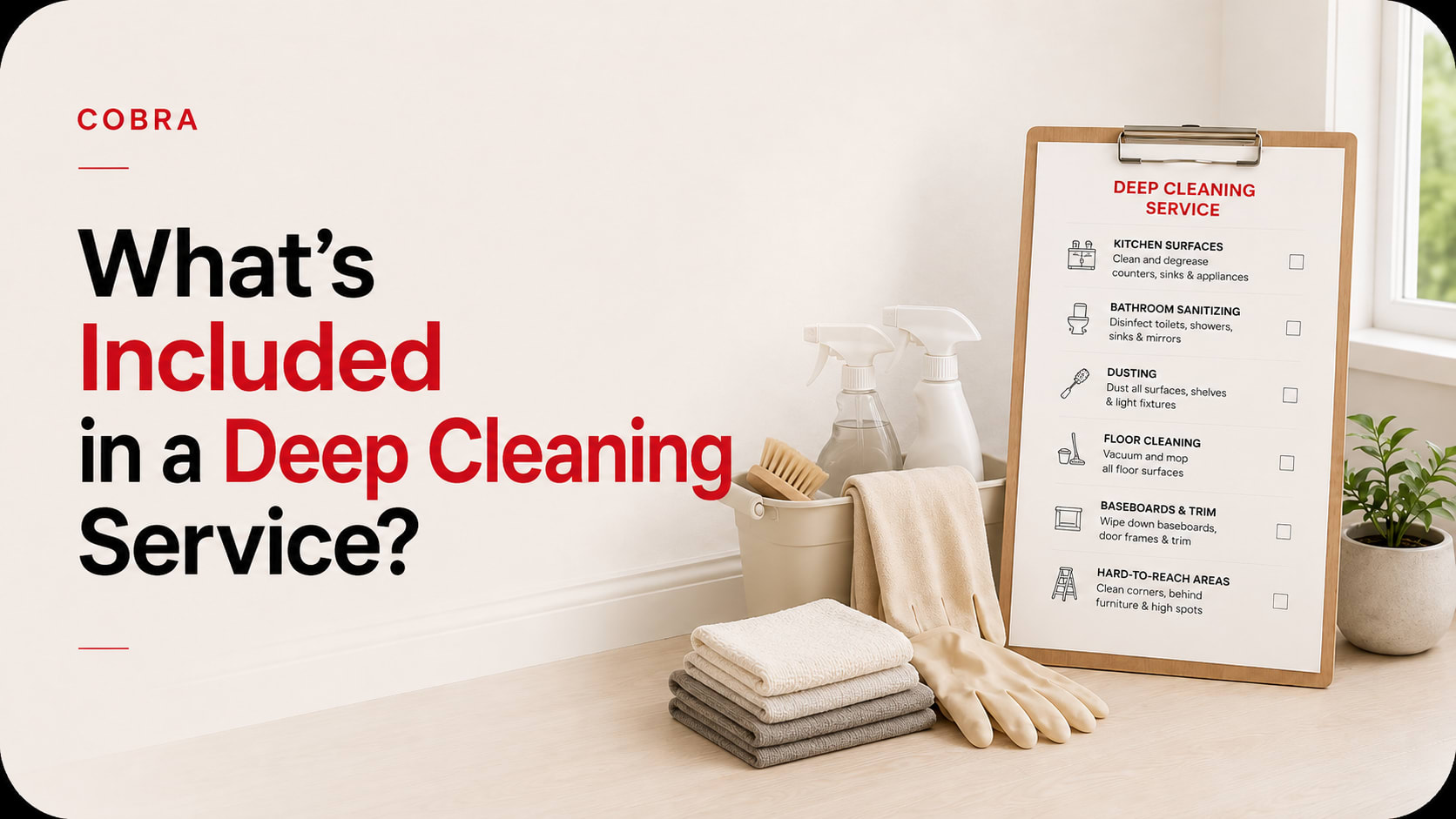
For a breakdown of what’s included in each service, see Deep Cleaning vs Regular Cleaning: What’s the Difference?
Vendor Accountability: Why Consistency Is Non-Negotiable
Missed cleanings and unreliable contractors are a top complaint among HOAs, schools, and commercial property managers. Every missed visit increases liability—especially if you’re subject to health codes or have vulnerable populations. Here’s what to require from any cleaning partner:
Proof of licensing and insurance
Documented cleaning checklists and sign-offs
Clear escalation protocols for missed or subpar work
Ability to scale across multiple sites if you manage more than one property
Transparent communication and reporting (photos, logs, inspection results)
Cobra Prime’s Assess → Plan → Execute → Monitor process ensures nothing falls through the cracks, and you have one point of accountability instead of juggling multiple vendors.
Checklist: Setting the Right Cleaning Cadence
Walk your property and identify all high-traffic and high-risk areas.
Review occupancy schedules and event calendars for peak usage periods.
Consult local and state regulations for cleaning frequency and documentation requirements.
Decide on a mix of regular and deep cleaning—see what’s essential in this Office Cleaning Checklist for a Healthier Workplace.
Vet your cleaning provider for licensing, insurance, and documented procedures.
Set up a monitoring process: regular inspections, feedback channels, and schedule reviews.
Adjust frequency seasonally or after incidents (illness, spills, construction, pest sightings).
Budgeting and Cost Control
Cleaning frequency drives your operating budget, but so do missed issues. One major incident—like a slip-and-fall or failed health inspection—can cost more than a year of preventive cleaning. Work with your provider to scope services to your property’s actual needs. Avoid one-size-fits-all contracts; instead, request a tailored quote based on your priorities and risk profile.
For a simple week-by-week routine you can hand to staff or a vendor, see our Weekly Cleaning Checklist.
Frequently Asked Questions
How do I know if my current cleaning schedule is enough?
Look for signs like recurring complaints, visible dust or grime, persistent odors, or health incidents. If you’re getting flagged during inspections or your staff is spending time cleaning up after the cleaners, it’s time to reassess.
What’s the difference between regular and deep cleaning?
Regular cleaning covers daily/weekly tasks (trash, vacuuming, restrooms), while deep cleaning targets areas that accumulate hidden grime—carpets, vents, baseboards, and behind appliances. For more details, see the linked guide above.
How do I handle cleaning for special events or emergencies?
Build flexibility into your contract for on-call or post-event cleanings. Communicate with your provider in advance for large gatherings, renovations, or after incidents like illness outbreaks.
Is it better to use one provider or multiple specialists?
One accountable provider streamlines communication, reduces scheduling errors, and ensures consistent standards. This is especially important for properties with multiple service needs or locations.
How do I document cleaning for compliance?
Require your provider to keep cleaning logs, inspection reports, and incident records. These are critical for audits, insurance claims, and defending against complaints.
Next Steps: Defensible Cleaning Schedules Start Here
Setting the right cleaning frequency is a strategic decision—one that protects your property, your people, and your budget. If you’re ready to move beyond guesswork and no-show vendors, request a quote or schedule a consultation with Cobra Prime. Our licensed and insured team will assess your property, recommend a custom plan, and deliver reliable service you can count on.