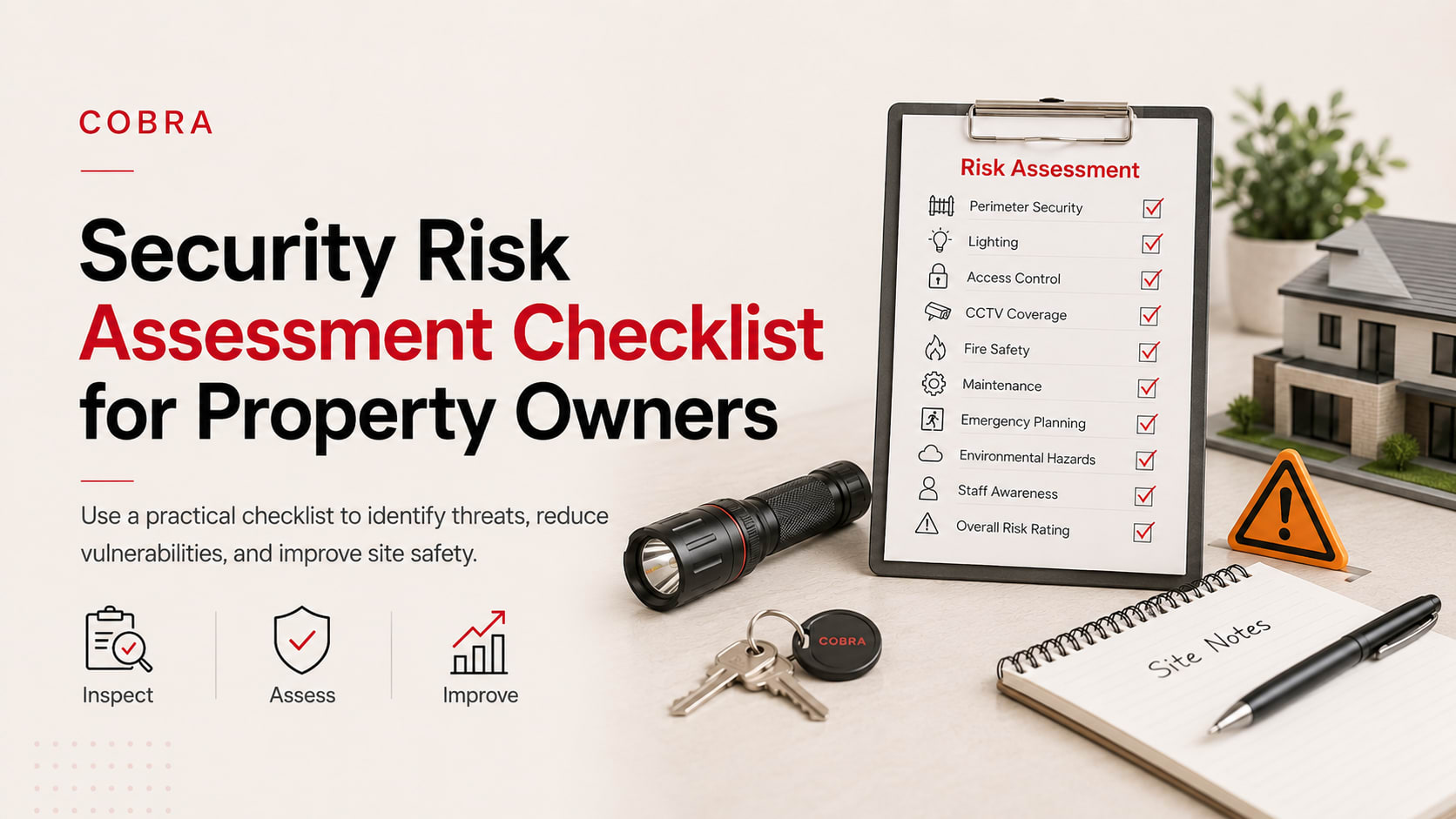
Security Risk Assessment Checklist for Property Owners
Every property decision-maker—from HOA boards to school facility managers—faces the same challenge: keeping people and assets safe without wasting budget or getting burned by unreliable vendors. A thorough security risk assessment is your first line of defense against liability, loss, and operational headaches. Here’s a practical, field-tested checklist to help you assess, plan, and address security risks—plus criteria for choosing the right partner to execute your plan.
What Is a Security Risk Assessment—and Why Does It Matter?
A security risk assessment is a systematic process to identify, evaluate, and address vulnerabilities across your property. It covers physical security, access control, lighting, emergency preparedness, and vendor reliability. Done right, it helps you:
Spot gaps before they become costly incidents
Meet insurance, legal, and HOA compliance requirements
Control costs by prioritizing preventive action over reactive fixes
Hold vendors accountable with clear, documented expectations
For commercial sites, see how a layered approach can prevent theft and damage in our Construction Site Security Tips to Prevent Theft and Damage.
Security Risk Assessment Checklist: Step by Step
Step What to Check Example Criteria 1. Assess Walk the property inside and out Broken locks, blind spots, lighting outages, unsecured access points 2. Plan Prioritize risks by severity and likelihood Immediate: broken entry doors; Medium: outdated camera coverage 3. Execute Assign fixes and upgrades to trusted, licensed professionals Install new access control, repair fencing, update signage 4. Monitor Set inspection schedules and track incident reports Quarterly walk-throughs, log all security events
Key Areas to Inspect
Perimeter Security: Fences, gates, landscaping (no overgrown shrubs near windows), signage
Access Points: Doors, windows, garages, loading docks—check locks, hinges, and card readers
Lighting: Exterior and interior, especially in parking lots, walkways, and entrances
Surveillance: Camera placement, coverage, recording quality, and storage policies
Access Control: Badges, key fobs, visitor management—see Access Control Basics for Businesses and Properties for a breakdown
Security Personnel: Patrol routes, guard post visibility, training and licensing—learn more about what to expect in Security Guard Duties: What Do Professional Guards Actually Do?
Emergency Preparedness: Fire exits, alarms, evacuation signage, first aid kits
Preventive vs. Reactive Maintenance: Why It Matters
Deferred maintenance—like ignoring a broken gate or letting lighting outages linger—creates both security and liability risks. Preventive action (scheduled inspections, rapid repairs, ongoing monitoring) is far less costly than responding to break-ins, vandalism, or injury claims after the fact. If you manage multiple properties, standardizing your inspection and maintenance schedule is critical for consistency and compliance. For a deeper dive into scalable solutions, see our guide on commercial security services.
Vendor Accountability and Choosing a Security Partner
Licensing & Insurance: Always require proof of licensing and insurance—no exceptions.
References & Track Record: Ask for recent property references and check for no-show or incomplete work complaints.
Clear Scope of Work: Get a written, detailed scope—avoid vague promises.
Single Point of Accountability: The fewer vendors you juggle, the less risk of finger-pointing or gaps in coverage. One provider for security, maintenance, and monitoring simplifies reporting and escalations.
Ongoing Monitoring: Insist on regular status updates and transparent reporting.
If you’re in the Northeast, see how Cobra Prime delivers security services in NJ as a licensed, insured, all-in-one provider—covering assessment, planning, execution, and monitoring under one accountable roof.
Sample Security Risk Assessment Checklist
Are all exterior doors and windows secured and in good repair?
Is perimeter fencing intact and free of climbable objects?
Is lighting functional and adequate in all public and high-risk areas?
Are access control systems up to date and logs reviewed regularly?
Are security cameras positioned to eliminate blind spots and recording properly?
Are security staff trained, licensed, and present as scheduled?
Are emergency exits, alarms, and signage clearly marked and maintained?
Is there a documented incident response and reporting process?
Are vendor contracts clear on response times, scope, and accountability?
For a deeper dive, see how to choose a security company in New Jersey.
Frequently Asked Questions
How often should I conduct a security risk assessment?
At minimum, conduct a full assessment annually, plus after any major incident, renovation, or change in occupancy. High-traffic or high-risk properties may require quarterly or even monthly reviews.
What’s the biggest risk property owners overlook?
Deferred maintenance—especially broken locks, malfunctioning cameras, and poor lighting. These are easy to miss but are often exploited in incidents. Regular preventive checks are essential.
Can I use the same checklist for multiple properties?
Yes, but tailor each checklist to property type, occupancy, and use. Standardizing your process across properties is efficient, but don’t skip site-specific risks.
What should I look for in a security vendor contract?
Require clear response times, scope of services, proof of licensing and insurance, and a single point of contact. Avoid open-ended or vague agreements.
How do I ensure ongoing compliance and improvement?
Schedule regular audits, keep documented inspection logs, and require periodic vendor performance reviews. Use findings to update your plan and budget for future improvements.
Next Steps: Get a Custom Security Assessment
Security is never one-size-fits-all. If you’re ready to stop juggling unreliable vendors and want one accountable partner for assessment, planning, execution, and monitoring, request a quote or schedule a consultation with Cobra Prime. Our licensed and insured team delivers scalable solutions for HOAs, schools, commercial properties, and more—so you can focus on your core responsibilities, not chasing contractors.