Water-Damaged Drywall: Repair or Replace?
If you manage an HOA, school, or commercial property, you’ve likely faced water-damaged drywall. The right call—repair or replace—impacts safety, liability, costs, and resident satisfaction. Here’s how to make the decision with confidence, backed by experience managing hundreds of properties.
Start With a Practical Assessment
Don’t guess. Systematic inspection is essential. Use this checklist to assess the severity and scope:
Is the drywall soft, crumbling, or sagging?
Is there visible mold, staining, or odor?
How large is the affected area? (Small patch vs. entire wall or ceiling)
Has the underlying leak or moisture source been fixed?
Are there electrical, insulation, or structural elements behind the wall?
Is the area a high-risk zone (kitchen, bath, common hallway)?
Document findings with photos for your records and insurance. For complex or multi-unit properties, a licensed provider like Cobra Prime can handle assessment, planning, and execution as a single point of accountability.
When Is Repair an Option?
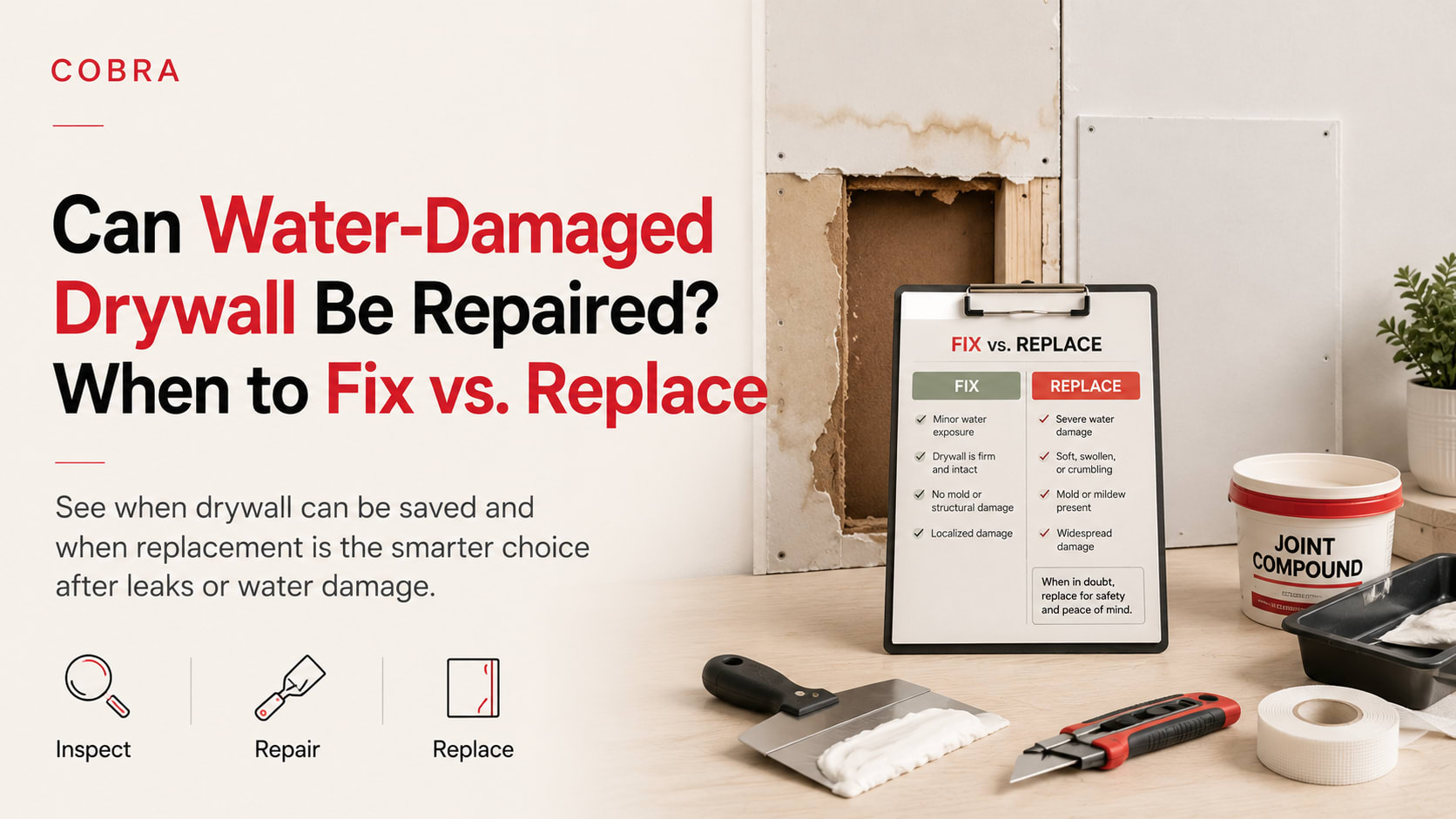
Repair is practical and code-compliant if:
The affected area is less than 2 square feet and not structurally compromised
No active mold growth is present
The source of moisture is fully resolved
No electrical or insulation damage behind the drywall
For minor incidents—like a small leak under a window—cutting out the damaged section, drying the cavity, and patching with new drywall is often sufficient. A skilled handyman can complete this efficiently. For more on what tasks a professional handyman can tackle, see What Does a Handyman Do.
When to Replace Water-Damaged Drywall
Replacement is required if:
The damaged area is extensive (more than 2 square feet, or multiple panels)
There is visible or suspected mold
The drywall is sagging, crumbling, or structurally unsound
Water has reached insulation, wiring, or framing
The area serves as a fire-rated barrier or is in a high-traffic zone
Delaying replacement risks code violations, insurance issues, and liability for tenant or resident health. Mold remediation and fire safety compliance are non-negotiable—especially in schools, multifamily, or commercial spaces. For projects involving structural changes or large-scale remediation, work with a licensed contractor. Learn more about compliant renovation and construction services.
Repair vs. Replace: Quick Comparison Table
Criteria Repair Replace Area Size < 2 sq. ft. > 2 sq. ft. or multiple panels Mold Present No Yes Underlying Damage None Yes (insulation, wiring, framing) Location Non-critical Fire-rated or high-traffic Compliance Risk Low High
Preventive vs. Reactive Maintenance
Drywall damage is often a symptom, not the root cause. Preventive maintenance—regular roof, plumbing, and HVAC inspections—reduces surprise repairs and liability. Reactive maintenance (fixing after the fact) is more disruptive and costly. Build inspection checklists and schedule periodic reviews of all water-prone areas, especially in older buildings or those with complex plumbing. If you’re coordinating large events or construction, remember that access control and safety protocols also help prevent accidental water incidents. For event-specific safety, see Event Security Services.
Vendor Selection and Accountability
Vetting your drywall repair or replacement vendor is critical. Look for:
Licensed and insured providers
Experience with similar property types (HOA, school, commercial)
Clear scope, timeline, and communication
Ability to handle related work (mold, electrical, painting, cleanup)
References and transparent process
Managing multiple vendors increases the risk of miscommunication and finger-pointing. With Cobra Solutions, you get an all-in-one provider—one accountable team through Assess → Plan → Execute → Monitor. This reduces downtime and ensures code compliance across every step. For properties under construction, see how to protect your site with Construction Site Security.
Compliance, Liability, and Fire Safety
Water-damaged drywall can compromise fire barriers and increase liability. In common areas or multi-unit buildings, this is a code compliance issue. Fire watch and remediation protocols must be followed during repairs, especially if fire-rated assemblies are involved. For more on maintaining compliance during downtime, visit Fire Watch Services.
For properties in New Jersey and surrounding areas, Cobra Solutions provides security services in nj to support safe, compliant restoration—covering everything from access control to emergency response.
Frequently Asked Questions
How quickly should water-damaged drywall be addressed?
Act within 24-48 hours. Mold can begin to grow quickly, and delays increase repair costs and liability. If you’re managing multiple units or a school, coordinate access and communication to prevent delays.
Can drywall be dried in place and left alone?
Rarely. Even if the surface appears dry, moisture may linger inside. This creates a risk for hidden mold and structural issues. Always inspect behind the wall and remove any compromised material.
What are the risks of partial repairs?
Partial repairs can miss underlying issues—like wet insulation or wiring—which can lead to recurring damage, failed inspections, or tenant complaints. Always confirm the source of water is fixed before closing up the wall.
Is drywall repair covered by insurance?
It depends on the policy and cause of the damage. Document everything and consult your insurance provider. Licensed contractors can supply the required documentation for claims.
Who is responsible for drywall repairs in an HOA?
Responsibility is defined in your governing documents. Typically, common areas are the HOA’s responsibility, while unit interiors fall to owners. Clarify with your legal counsel and document all decisions.
Next Steps: Streamline Your Repair Process
Whether you need a targeted drywall patch, full replacement, or a comprehensive property assessment, Cobra Solutions delivers licensed, insured, and scalable services. Our single-provider approach means one contract, one point of contact, and no gaps in accountability—ideal for HOAs, schools, and commercial properties.
Ready to resolve water-damaged drywall without the vendor runaround? Request a quote or schedule a consultation with Cobra Prime today.