Unarmed Security Guards: Clear Roles, Smart Decisions
If you manage a property, community, or facility, you know security is about prevention, not just response. Unarmed security guards are a proven way to deter incidents, enforce rules, and maintain order—without the risks or costs of armed personnel. The key is knowing when unarmed guards are the right fit, what to expect from them, and how to hold your provider accountable.
What Do Unarmed Security Guards Actually Do?
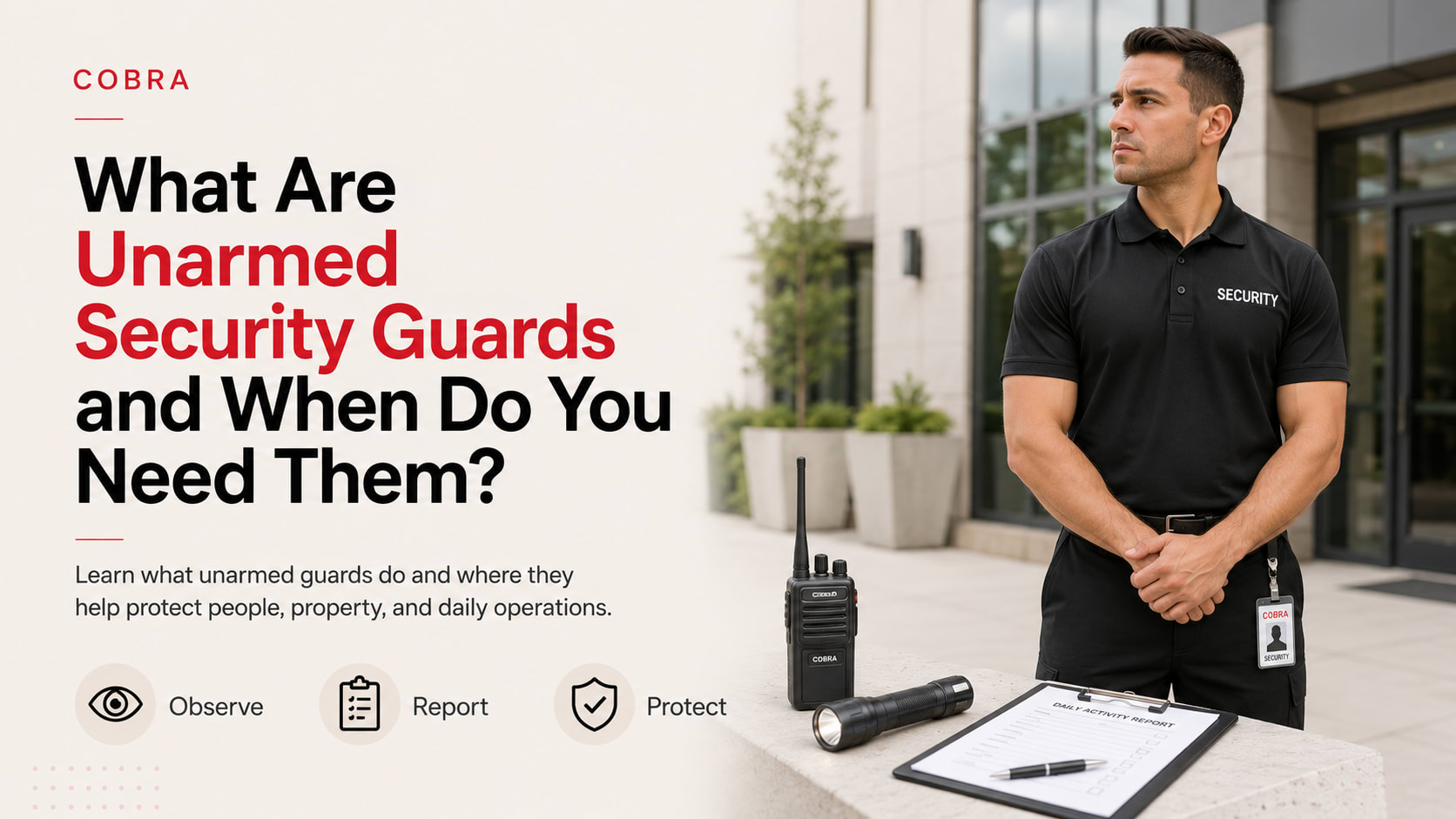
Unarmed security guards are trained professionals who protect people and property without carrying firearms. Their primary focus is on prevention, observation, and reporting. Typical duties include:
Patrolling buildings, parking lots, and common areas
Checking IDs and managing access control
Monitoring security cameras and alarm systems
Responding to disturbances, suspicious activity, or emergencies
Writing incident and daily activity reports
Enforcing property rules and policies
Assisting residents, visitors, or staff with directions or minor issues
For a deeper dive into daily responsibilities and what sets professional guards apart, see Security Guard Duties: What Do Professional Guards Actually Do?.
When Do You Need Unarmed Security Guards?
Unarmed guards are the right choice when you need a visible deterrent, rule enforcement, or customer service presence—but not the escalation potential or liability of armed force. Here are common scenarios where unarmed security makes sense:
HOAs and residential communities: Access control, amenity monitoring, parking enforcement, pool safety
Schools and campuses: Visitor screening, hallway patrols, event supervision
Commercial properties: Lobby security, after-hours patrols, delivery oversight
Events: Crowd management, entry screening, emergency response (learn more in Event Security Planning: What Every Organizer Should Know)
Facilities: Construction sites, warehouses, office buildings, healthcare environments
Unarmed guards are especially effective where you need to reduce risk, enforce compliance, and provide a sense of order—without intimidating residents, students, or guests.
Checklist: Is Unarmed Security the Right Fit?
Criteria Unarmed Guards Armed Guards Primary Risk Theft, trespass, vandalism, rule violations Active threats, high-value assets, violence Desired Presence Approachable, service-oriented, deterrent Authoritative, high-security, possible escalation Budget Sensitivity More cost-effective Higher cost (training, insurance, licensing) Community Comfort Low-profile, less intimidating Can cause anxiety or resistance Insurance & Liability Lower exposure Higher exposure, more restrictions
If your primary concerns are access control, policy enforcement, and customer service—unarmed guards are typically the right call. For high-risk or high-value environments, consider a blended approach or consult a licensed provider for a risk assessment.
How to Vet and Manage Security Guard Providers
Many property managers have been burned by unreliable contractors: no-shows, poor training, or legal headaches. To avoid these risks, use this vetting checklist:
Licensing & Insurance: Confirm your provider is licensed and insured in your state.
Training: Ask about de-escalation, first aid, report writing, and property-specific protocols.
Supervision: Require regular site checks, performance reviews, and clear escalation paths.
Accountability: Insist on digital reporting, GPS-tracked patrols, and transparent communication.
References: Request current client references, especially for properties similar to yours.
Scalability: Ensure the provider can support multiple properties or adjust coverage as your needs change.
For a comparison of security service models and what to expect from a reputable provider, see security guard services.
How Cobra Prime Delivers Reliable Security
Cobra Prime is a licensed and insured, all-in-one property services provider. Our Assess → Plan → Execute → Monitor process means you get one point of accountability for security, maintenance, and compliance—no more chasing multiple vendors. We tailor our security services in NJ to the unique needs of HOAs, schools, commercial properties, and facilities, integrating security with your overall property strategy. Our operations scale across portfolios, and our reporting keeps you in control—so you can focus on your core responsibilities, not vendor headaches.
Frequently Asked Questions
What types of incidents do unarmed security guards handle?
Unarmed guards respond to trespassing, disturbances, unauthorized access, rule violations, and emergencies like fire alarms or medical incidents. They observe, report, and de-escalate—calling law enforcement if needed.
Are unarmed guards effective without weapons?
Yes. The presence of uniformed, trained personnel deters most unwanted behavior. Their authority comes from vigilance and visible presence, not weapons. For most properties, this is enough to prevent incidents.
Do unarmed guards need to be licensed?
In most states, including New Jersey, unarmed guards must be licensed and pass background checks. Always verify your provider’s credentials and compliance with local laws.
How do I know if my property needs unarmed or armed security?
Assess your risk profile: If your main concerns are access, vandalism, or minor disturbances, unarmed is usually best. For active threats or high-risk environments, consult a professional for a security assessment.
Can unarmed guards detain people?
Unarmed guards can detain individuals only under specific circumstances (like trespassing) and must follow state laws. Their main role is to observe, report, and summon law enforcement if needed.
Ready to Take the Next Step?
Don’t leave security to chance—or to unreliable vendors. Request a quote or schedule a consultation with Cobra Prime. We’ll assess your property, recommend the right security solution, and provide clear, accountable service—so you stay compliant, safe, and in control.