Should You Use One Vendor or Many for Commercial Property Services?
Every decision-maker responsible for a commercial property, HOA, or campus faces the same question: do you contract with one all-in-one provider, or assemble a roster of specialists for maintenance, repairs, security, and cleaning? The answer shapes your risk exposure, costs, compliance, and daily headaches. Here’s a practical, operations-driven comparison to help you decide what fits your property—and your tolerance for complexity.
What’s at Stake: Accountability, Risk, and Cost Control
Managing a commercial building or community isn’t just about keeping the lights on. You’re responsible for safety, regulatory compliance, budget stewardship, and—critically—vendor reliability. Deferred maintenance, missed inspections, or uncoordinated work can lead to liability, tenant complaints, and costly emergencies. The structure of your vendor relationships either simplifies or complicates these responsibilities.
One Vendor vs Multiple Vendors: What’s the Difference?
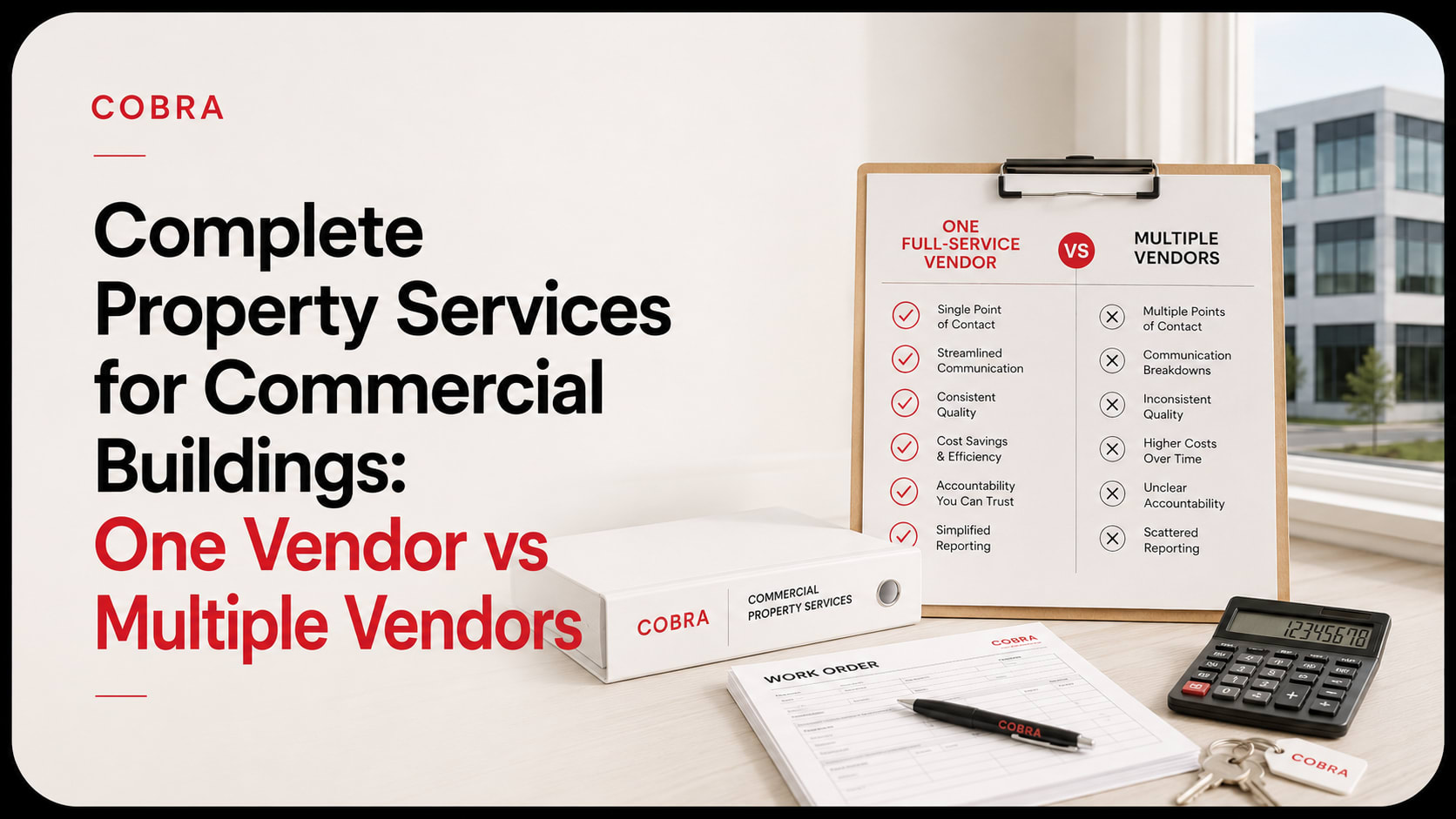
Criteria One All-in-One Provider Multiple Specialized Vendors Accountability Single point of contact. No finger-pointing. Responsibility can be unclear if issues overlap. Scheduling Coordinated by one team. Fewer delays. Requires juggling calendars and access for each vendor. Compliance & Documentation Centralized records. Easier for audits/HOA reviews. Scattered paperwork. Higher risk of missing documentation. Cost Control Bundled services can reduce admin overhead. Potential for competitive pricing, but more admin time. Vendor Vetting One-time vetting for a licensed, insured provider. Must vet, onboard, and monitor every vendor individually. Emergency Response One call. No confusion. May require contacting several vendors in sequence.
Checklist: When to Choose One Provider
You manage multiple properties or a large campus and need scalable, uniform service.
You want clear accountability—one provider responsible for all outcomes.
You’re frustrated by no-shows, finger-pointing, or disjointed communication between vendors.
You need a documented, proactive approach to preventive maintenance (not just reactive fixes).
You value streamlined budgeting and reporting for board meetings or audits.
Checklist: When Multiple Vendors Make Sense
You have highly specialized needs (e.g., historic restoration, unique equipment) requiring niche expertise.
You have the bandwidth to manage contracts, scheduling, and vetting for each trade.
You want to bid out each project for potential savings and don’t mind extra admin work.
Real-World Risks: Deferred Maintenance, Compliance, and Liability
Deferred maintenance is one of the most common—and costly—risks for property managers. When responsibilities are split among multiple vendors, tasks can fall through the cracks. For example, a missed annual inspection on fire systems or neglected water-damaged drywall can lead to code violations or even insurance claims. If you’re not sure what to look for, review our guide on Signs You Need Drywall Repair to spot early warning signs before they escalate.
Compliance is another major concern. A single, licensed, and insured provider can centralize inspection documentation, permits, and service records—making it easier to demonstrate due diligence to your board or regulatory agencies. For a deeper look at how licensed work protects your property, see our licensed trade services overview.
How Cobra Solutions Simplifies Property Operations
As a property services company with experience across HOAs, schools, and commercial buildings, Cobra Solutions is built for decision-makers who want reliability and clarity. Our Assess → Plan → Execute → Monitor process creates a closed loop: we evaluate your property, develop a custom plan, execute with licensed teams, and monitor results—so nothing gets missed, and you always know who’s accountable.
Whether you’re planning a major renovation or routine maintenance, our team can scope the full project, coordinate trades, and ensure compliance. For those considering upgrades or repairs, our blog on How to Plan a Home Renovation outlines steps that apply to commercial properties as well: assessment, budgeting, scheduling, and oversight.
Preventive vs. Reactive Maintenance: Why It Matters
Preventive maintenance—regular inspections, cleaning, and minor repairs—reduces emergency calls and extends asset life. Reactive maintenance, by contrast, means waiting until something breaks (and often paying more for urgent repairs). A single provider can better track and manage preventive tasks across all systems, from HVAC to landscaping. If you’re dealing with older properties, check out our article on Renovating an Old House for insight into balancing upgrades and repairs without losing control of costs or compliance.
Vendor Vetting: What to Require
Active license(s) for all trades performed
Proof of insurance (liability and workers’ comp)
References from similar properties
Clear, written scope of work and deliverables
Transparent communication and reporting standards
For more on handling water damage and repairs, especially in multi-unit or public spaces, see our guide to Water Damaged Drywall Repair.
Frequently Asked Questions
How does using one provider reduce liability?
With a single, licensed provider, there’s one team responsible for compliance, safety, and documentation. This reduces the risk of missed tasks or gaps in service that could lead to liability claims.
Is it more expensive to use an all-in-one company?
Bundled services often reduce administrative costs and scheduling headaches. Pricing depends on your property’s needs; request a quote to compare total costs and value.
What if my property has unique or historic features?
All-in-one providers like Cobra Solutions can coordinate with specialists when needed. For highly specialized work, you may still need a niche vendor, but most routine and preventive services can be handled in-house.
How do I ensure preventive maintenance isn’t neglected?
Require a documented maintenance plan, regular reporting, and clear accountability—features built into Cobra’s Assess → Plan → Execute → Monitor process.
Can I switch from multiple vendors to one provider mid-year?
Yes. Review existing contracts for termination clauses and coordinate a phased transition to maintain service continuity.
Take the Next Step
If you’re ready to simplify your property operations, reduce risk, and get one accountable partner for all your property needs, schedule a consultation or request a quote from Cobra Prime. Our team can assess your property, develop a tailored plan, and handle everything from preventive maintenance to major renovations. Make your next board meeting about results—not vendor excuses.