How Long Does Furniture Assembly Actually Take?
If you manage properties, schools, or community spaces, you know that furniture assembly is rarely as simple as the box suggests. Timelines can swing from under an hour to several days depending on the scope, vendor reliability, and site realities. Here’s a practical breakdown to help you set expectations, avoid costly delays, and ensure safety and compliance—whether you’re furnishing a clubhouse, updating classrooms, or setting up new office suites.
Key Factors That Impact Furniture Assembly Time
Type and Quantity of Furniture: Assembling a single office chair is not the same as outfitting an entire conference room or library. More pieces, more time.
Complexity: Flat-pack desks with cable management, bunk beds, or modular storage take longer than basic tables or stackable chairs.
Site Prep and Access: Clear access, elevator availability, and pre-cleared spaces speed things up. Delays often come from moving old furniture, tight corridors, or unprepared rooms.
Vendor Experience: A licensed, insured provider with a systematic process is less likely to miss parts, make assembly errors, or require return visits.
Compliance and Safety Checks: Especially in schools and HOAs, proper anchoring, tip-over prevention, and ADA compliance add steps—and time, but reduce liability.
Realistic Timelines: What to Expect
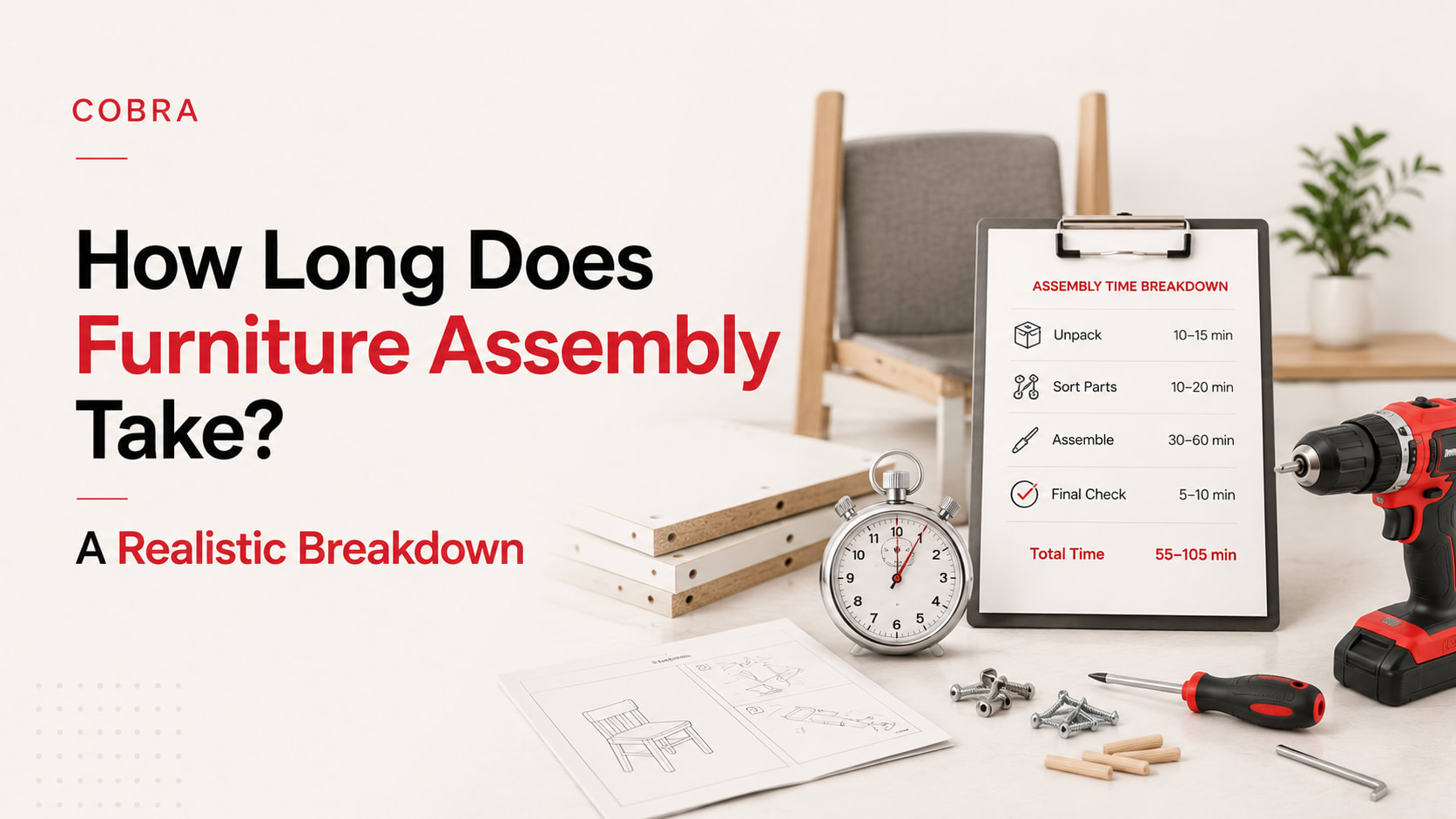
Furniture TypeAssembly Time (Per Item)NotesOffice Chair20–30 minutesMinimal tools, quick buildStandard Desk45–90 minutesMore parts, cable routing increases timeBookshelf (with anchoring)45–75 minutesWall anchoring adds time but is critical for safetyConference Table1–2 hoursHeavy, may require multiple peopleClassroom Set (desks & chairs, 20 units)4–8 hours totalTeam of 2–3 recommendedOutdoor Benches30–60 minutesWeatherproofing may add time
For full-room or multi-room projects, always add time for staging, debris removal, and final walk-throughs. If you’re coordinating with other trades (painting, flooring, security), build in buffer days to avoid overlap and chaos.
Checklist: How to Keep Assembly Projects On Track
Inventory all parts and hardware before starting—missing pieces are a top cause of delays.
Confirm access: keys, elevators, parking, and clear pathways.
Schedule assembly outside of peak hours to minimize disruption, especially in schools or offices.
Assign a single accountable provider for the full project, including debris haul-away and compliance checks.
Request a clear scope and timeline in writing. For larger jobs, ask for a phased plan and daily progress updates.
Document completed work with photos and sign-off sheets, especially for shared or common areas.
Risks of Underestimating Assembly Time
Disruption: Projects that run over can delay move-ins, disrupt classes, or block access to amenities.
Safety Issues: Rushed or incomplete assembly risks tip-overs, sharp edges, or non-compliance with local codes.
Budget Overruns: Multiple call-backs or overtime charges add up quickly.
Vendor Accountability: No-shows and incomplete jobs are common with unvetted contractors—leading to finger-pointing and wasted time.
To avoid these pitfalls, many property managers opt for a licensed, all-in-one provider like Cobra Prime, which uses a structured Assess → Plan → Execute → Monitor process. This approach ensures you get a single point of contact, transparent timelines, and scalable operations across multiple properties.
Who Should Handle Furniture Assembly?
For small, straightforward jobs, your in-house team or a qualified handyman may suffice. But for larger, high-stakes projects—such as outfitting a school, clubhouse, or multiple office suites—professional oversight is essential. If you’re unsure, see our guide on When to Hire a Handyman for a practical decision framework.
For projects in educational settings, compliance and safety are non-negotiable. Learn more about specialized school facility services and maintenance to ensure every installation meets local and federal standards.
Integrating Assembly with Broader Property Operations
Furniture assembly rarely happens in isolation. It often coincides with security upgrades, cleaning, or minor renovations. Coordinating these tasks is where an all-in-one provider stands out. For example, if you’re installing new workstations and want to enhance access control, review our Home Security Camera Setup article for tips on integrating assembly with security improvements.
In multi-unit or HOA settings, aligning schedules for furniture, maintenance, and security is critical. If you’re comparing providers, see our breakdown of Handyman vs. General Contractor to choose the right fit for your project’s scope and compliance needs.
What Does a Handyman Actually Do?
Furniture assembly is just one piece of the property maintenance puzzle. For a full look at what a licensed handyman can handle—from minor repairs to seasonal maintenance—read What Does a Handyman Do.
Preventive vs. Reactive: Assembly in Maintenance Planning
Proactive planning—ordering furniture ahead of need, scheduling assembly before occupancy, and combining tasks with other maintenance—reduces disruption and cost. Relying on last-minute, reactive assembly leads to rushed jobs, compliance risks, and tenant or resident complaints.
For properties with ongoing needs, consider a maintenance partner that can scale and adapt—especially if you’re managing multiple buildings or communities. If security is a concern during or after assembly, consult a security company in NJ with experience in property and asset protection.
Frequently Asked Questions
How do I estimate total assembly time for a large project?
Start by listing every furniture item and its estimated assembly time (see table above). Multiply by quantity, then add 20–30% buffer for site prep, access, and unforeseen issues. For multi-room jobs, factor in logistics like elevator use and debris removal.
Who is liable if furniture is assembled incorrectly?
Liability typically falls on the assembler—especially if they are a licensed, insured professional. In-house teams should follow manufacturer instructions and document their work. Using a single accountable provider reduces finger-pointing and risk.
Can assembly be done during business or school hours?
It’s possible, but not recommended. Noise, debris, and access issues can disrupt operations. Schedule off-hours or school breaks when feasible, and always communicate the schedule to all stakeholders.
What should I look for in an assembly vendor?
Check for licensing, insurance, relevant experience, and clear communication. Ask for references, written scopes, and proof of compliance with local codes—especially for schools and HOAs.
How can I avoid project delays?
Inventory all parts before starting, confirm site readiness, use a single accountable provider, and schedule a final walkthrough for sign-off. Build in buffer time for coordination with other vendors.
For a seamless, accountable approach to furniture assembly and broader property services, request a quote or schedule a consultation with Cobra Solutions. Our team manages the full process—Assess, Plan, Execute, Monitor—so you can focus on your core responsibilities and avoid costly surprises.