
Renovation vs Remodeling: Make the Right Call for Your Property
If you manage a residential community, school, or commercial facility, you’ll eventually face this decision: Do we renovate, remodel, or both? The distinction matters for budgeting, compliance, risk, and long-term value. Here’s how to make the right call—and avoid common pitfalls.
What’s the Difference?
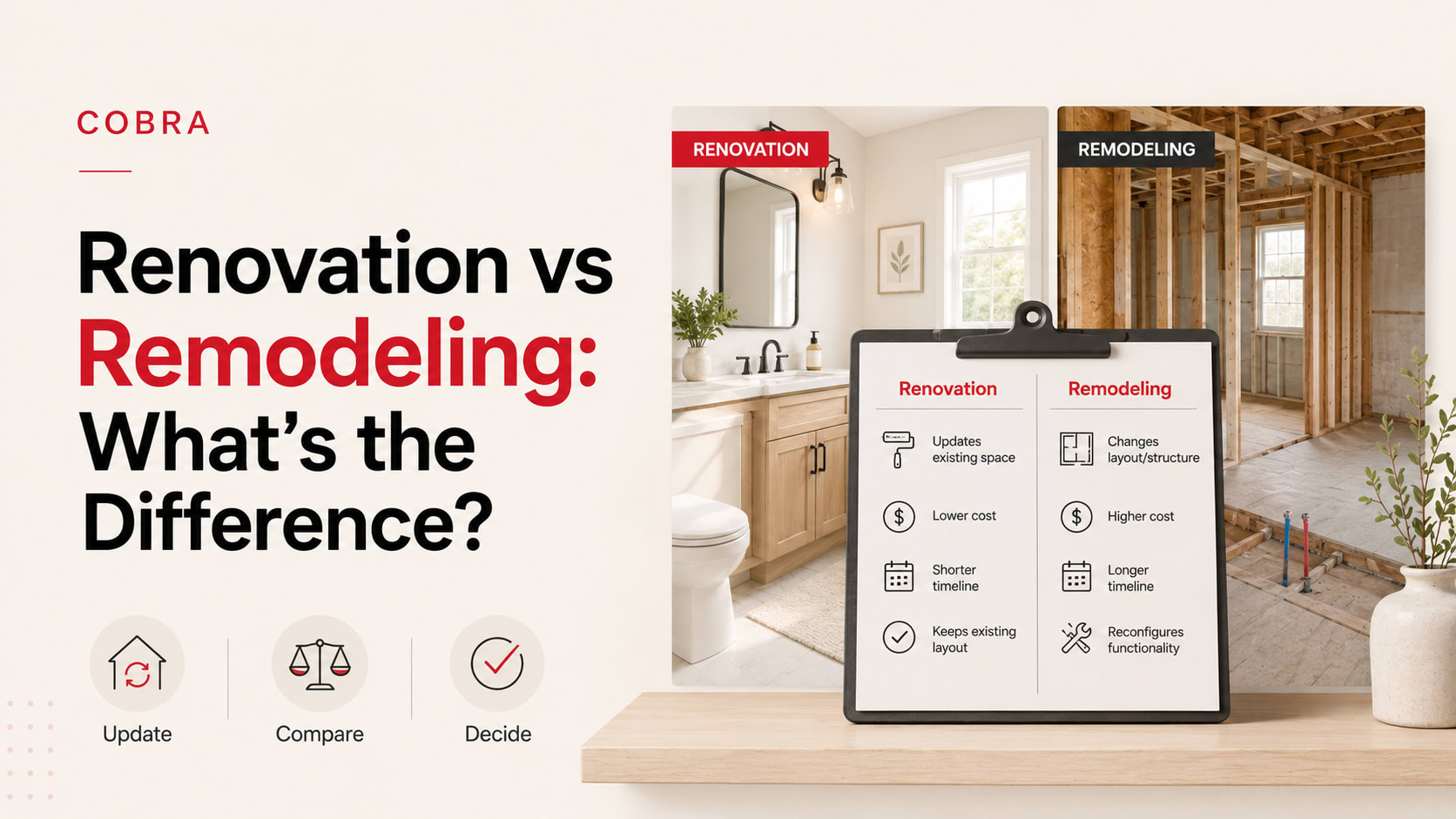
Renovation: Restoring what’s already there. Replacing worn finishes, repairing damage, updating systems, but keeping the layout and function largely the same. Example: Repainting hallways, replacing old flooring, or upgrading light fixtures in a lobby.
Remodeling: Changing the structure, layout, or function. Moving walls, reconfiguring spaces, or adding new features. Example: Converting a storage room into a new office, redesigning a clubhouse, or expanding a kitchen.
Renovation is usually less invasive, faster, and focused on maintenance and refresh. Remodeling is a bigger lift—more disruption, more permits, and higher costs, but it can solve functional problems or add value.
How to Decide: Key Criteria
Criteria Renovation Remodeling Scope Surface-level, repairs, refresh Structural, layout changes Permits Sometimes required (e.g., electrical, plumbing) Almost always required Disruption Minimal to moderate Significant (may require vacating areas) Cost Lower Higher Timeline Shorter Longer Common Triggers Deferred maintenance, cosmetic updates Functional issues, code compliance, repurposing space
Risks and Responsibilities: What Decision-Makers Need to Watch
Deferred Maintenance: Putting off renovations can lead to bigger, costlier remodels later (e.g., water damage spreading behind old tile).
Compliance and Permits: Remodeling without proper permits or licensed contractors exposes you to liability and fines.
Vendor Reliability: Missed deadlines, cut corners, or no-shows can disrupt operations and erode trust with residents or users.
Budget Overruns: Scope creep is common in remodeling. Build in contingencies and clear sign-offs.
Safety and Access Control: Both renovations and remodels can create temporary hazards—make sure your provider manages site safety, signage, and access.
For a step-by-step approach to planning, see this home renovation checklist that applies to both residential and commercial properties.
Preventive vs Reactive: When to Renovate, When to Remodel
Preventive renovations—like regular repainting, roof repairs, and updating fixtures—help you avoid costly, disruptive remodels down the line. Reactive remodeling is often required after major failures, code changes, or shifting needs (e.g., adding ADA-compliant bathrooms or reconfiguring classrooms).
For high-traffic areas, kitchens, or bathrooms, review this Kitchen Renovation Checklist for Homeowners and Bathroom Renovation Mistakes to Avoid—many tips apply to multi-unit and public spaces as well.
How to Plan and Budget: A Proven Process
Start with a thorough assessment. Walk the property, document issues, and consult with a licensed provider. Use a structured process—like Cobra Prime’s Assess → Plan → Execute → Monitor—to reduce surprises and keep projects on track.
Assess: Identify needs, risks, and compliance gaps.
Plan: Scope the project, get necessary permits, set timelines, and communicate with stakeholders.
Execute: Use licensed and insured professionals. Monitor progress and site safety daily.
Monitor: Inspect finished work, close out punch lists, and schedule future preventive maintenance.
For a practical guide to scoping and managing projects, see how to plan a home improvement project.
Budgeting is always a concern. Costs vary widely based on size, scope, and compliance needs. For guidance on setting realistic budgets and avoiding overruns, review How to Budget for a Renovation Project. Always request a detailed quote—never accept vague estimates.
Vendor Accountability: Why It Matters
Juggling multiple contractors increases risk—miscommunication, finger-pointing, and missed deadlines are common. With Cobra Prime, you get one accountable provider for renovation and construction services, maintenance, security, and more. That means fewer headaches, clear communication, and licensed, compliant work every time. Operations scale across multiple properties, so you don’t have to reinvent the wheel for each site.
Frequently Asked Questions
Do I need permits for a renovation or remodel?
Minor renovations (like painting or flooring) may not need permits, but anything involving plumbing, electrical, or structural changes almost always does. Always check local codes and use licensed professionals.
How do I avoid project delays and cost overruns?
Start with a detailed assessment, clear scope, and written contract. Build in contingencies (10-20% for remodels), and schedule regular check-ins. See our home renovation checklist for more tips.
What’s the best way to communicate with residents or users during work?
Notify everyone early and often. Share timelines, access restrictions, and safety measures. Use signs, emails, and updates to minimize surprises.
Can I combine renovation and remodeling in one project?
Yes, many projects blend both—such as renovating finishes while remodeling a lobby layout. Just be clear on scope, permits, and budget for each part.
How do I choose the right provider?
Look for licensed, insured contractors with experience in your property type. Ask for references, detailed quotes, and a clear project management process. One accountable provider reduces risk and streamlines communication.
Next Steps: Protect Your Property and Budget
Ready to assess your building or community? Request a quote or schedule a consultation with Cobra Prime. You’ll get a clear plan, licensed work, and one point of accountability—no more chasing down multiple contractors. For more expert insights, visit our blog and see how we help decision-makers like you manage risk and deliver results.