Roof Repair vs. Replacement: Make the Right Call for Your Property
Roof issues are never just about shingles—they’re about liability, budgeting, and the reputation of your community or building. Whether you’re on an HOA board, manage a facility, or oversee a portfolio, the decision between roof repair and roof replacement demands a structured, risk-aware approach. Here’s a practical guide to help you decide, avoid costly mistakes, and keep your property protected.
Start with a Professional Assessment
Skipping a thorough inspection is the fastest way to miss hidden damage or overspend on unnecessary work. A licensed provider like Cobra Prime uses a structured Assess → Plan → Execute → Monitor process to ensure nothing is overlooked. Key steps include:
Visual inspection of shingles, flashing, gutters, and penetrations
Attic check for leaks, mold, or insulation issues
Documentation of past repairs and warranty status
Assessment of drainage and potential ponding
For multi-building communities, standardize inspection protocols across properties to ensure consistency and compliance.
Repair or Replace? Criteria to Guide Your Decision
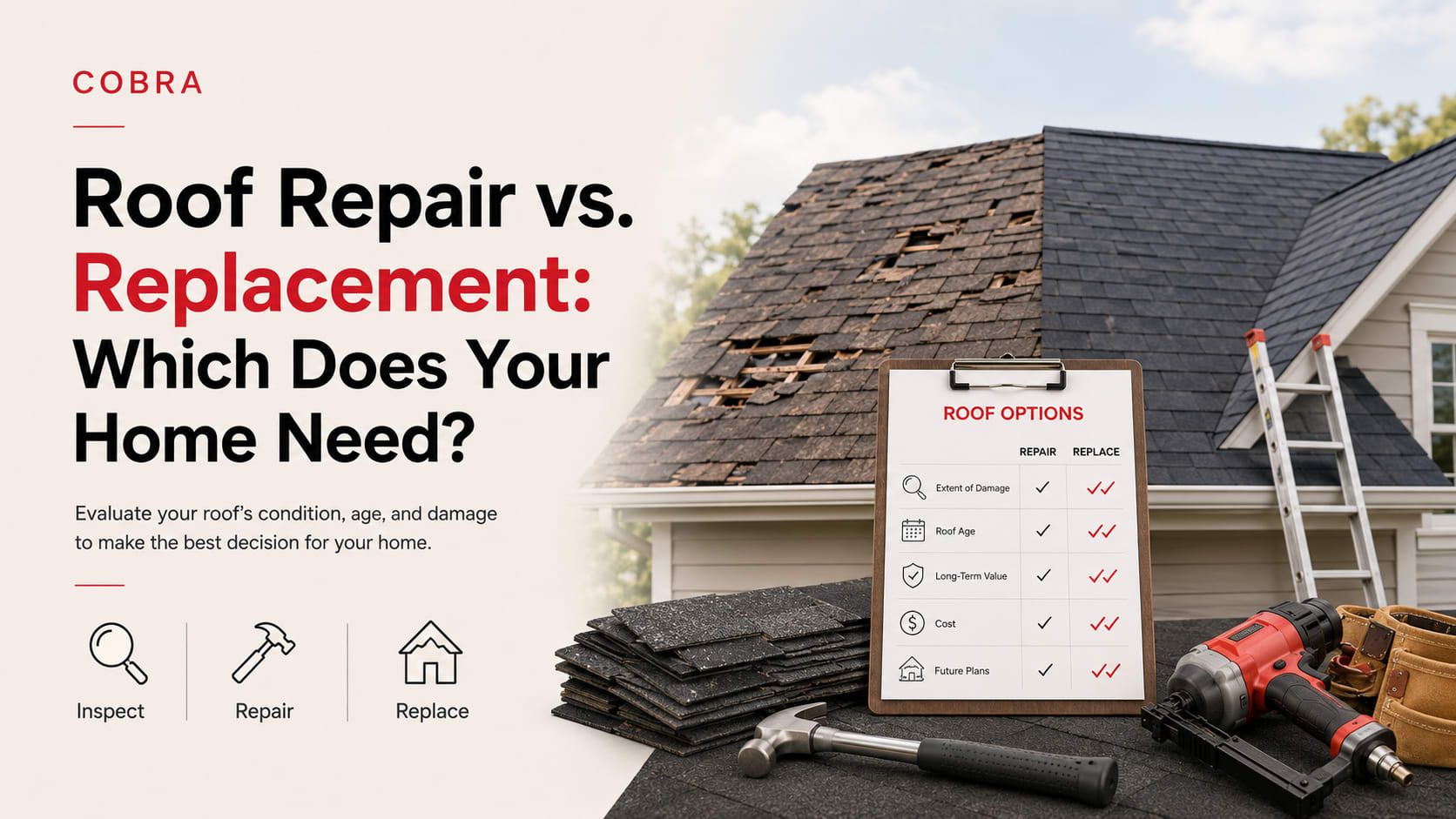
Factor Repair Replacement Age of Roof <15 years Near/at end of service life Extent of Damage Localized (e.g., a few shingles, minor leaks) Widespread, recurring leaks, structural issues History No pattern of repeated issues Multiple repairs, ongoing problems Budget Impact Cost-effective, minimal disruption Long-term savings, avoids patchwork costs Compliance/Liability Meets code, no safety risk Needed for code, insurance, or safety
Preventive vs. Reactive Maintenance: Why Timing Matters
Deferred maintenance is a top liability risk. Small leaks can become rot, mold, or even structural failures—especially if you’re managing schools or occupied communities. Proactive, scheduled roof inspections help you catch issues before they escalate. For more on preventive strategies across property systems, see our guide on Drywall Repair.
Budgeting and Vendor Accountability
Roof replacements are capital expenses that require careful planning and reserve studies, especially for HOAs or community associations. Repairs can often be handled as operating expenses, but beware of "band-aid" fixes that just defer the inevitable and increase long-term costs. Always demand transparent scopes of work and check references. If you’re tired of juggling multiple vendors for repairs, cleaning, and construction, consider a single accountable provider who can manage the full process—including renovation and construction services when full replacement is needed.
Checklist: What to Review Before Deciding
When was the last full roof inspection? (Document findings)
Is the damage isolated or widespread?
What is the current age and expected lifespan of your roofing system?
Have there been repeated leaks or repairs in the same area?
Do you have adequate reserves or budget for a replacement?
Are there insurance, code, or warranty requirements influencing your choice?
Do you have a reliable, licensed contractor with a clear process?
Risk Factors: Liability, Safety, and Compliance
Water intrusion can lead to slip hazards, electrical risks, and even mold-related lawsuits. For schools and high-occupancy buildings, these risks are amplified. Always confirm that work is performed by licensed and insured professionals, and that all repairs or replacements meet local code and HOA guidelines. For more on property safety and compliance, see our overview of security services in nj.
Coordinating with Other Maintenance and Security
Roof work often overlaps with other projects—HVAC, attic insulation, even camera or access control upgrades. Coordinating these tasks with one provider minimizes disruption and ensures accountability. For tips on managing property projects efficiently, see our Furniture Assembly Tips and Security Guard Duties for broader facility management insights.
Access Control and Onsite Safety During Roofing Projects
Roof work means ladders, debris, and sometimes restricted areas. Clear communication and access control are essential—especially in schools or active communities. Consider temporary signage, restricted zones, and coordination with onsite security. For a primer on security staffing during projects, review What Are Unarmed Security Guards.
Frequently Asked Questions
How often should a roof be inspected?
At minimum, schedule a professional inspection every 1-2 years, and after major storms. For community associations, align inspections with annual reserve studies or maintenance cycles.
What are signs a repair isn’t enough?
Recurring leaks, sagging, widespread shingle loss, or visible rot indicate underlying problems that repairs won’t address. Multiple failed repairs are a clear replacement signal.
How do I vet a roofing contractor?
Require proof of licensing and insurance, references from similar properties, and a clear scope of work. Avoid vendors who won’t provide documentation or who pressure for immediate decisions.
Can I bundle roof work with other property projects?
Yes, combining roof work with other maintenance or renovations saves time and reduces disruption. An all-in-one provider can coordinate schedules and ensure accountability across trades.
What’s the risk of delaying roof replacement?
Delays increase the risk of water damage, mold, and liability claims. Insurance may not cover damage from deferred maintenance, so timely action protects your budget and compliance.
When it’s time to make a decision on roof repair or replacement, don’t go it alone. Cobra Solutions offers a structured, accountable process—Assess → Plan → Execute → Monitor—so you get the right solution for your property, every time. Request a quote or schedule a consultation to protect your assets and simplify your vendor management.