Vinyl vs. Laminate Flooring: What’s the Best Choice for Your Property?
If you’re responsible for flooring decisions in a residential community, school, or commercial building, you know the wrong surface can mean years of headaches. The right choice should balance durability, safety, cost, and ease of maintenance. Here’s a practical comparison of vinyl and laminate flooring—with checklists, criteria, and real-world advice for property managers, HOAs, and facilities teams.
Key Decision Factors: Flooring That Works for Operations
Durability: How well does the floor handle foot traffic, spills, and moving furniture?
Maintenance: What’s required for daily cleaning and long-term care?
Water Resistance: Will the floor survive leaks, cleaning, or tracked-in moisture?
Safety & Compliance: Is it slip-resistant? Does it meet code for your facility type?
Cost Control: What are the installation, repair, and lifecycle costs?
Vendor Accountability: Can you trust your installer for code-compliant work?
Vinyl Flooring: Pros, Cons, and Use Cases
Waterproof: Most modern vinyl (including luxury vinyl planks/tiles) is highly water-resistant—ideal for kitchens, bathrooms, lobbies, and anywhere spills are likely.
Durable: Handles heavy traffic and is less likely to chip or crack than laminate. Thicker wear layers improve scratch resistance.
Easy Cleaning: Simple to sweep and mop. For best results, follow a professional cleaning schedule tailored to your property size and usage.
Installation: Can be installed over many subfloors, including concrete and existing vinyl. Professional installation is recommended for warranty and compliance.
Appearance: Advances in printing and texture mean vinyl can convincingly mimic wood or stone, though some products still look artificial up close.
Laminate Flooring: Pros, Cons, and Use Cases
Realistic Look: High-quality laminate often looks and feels more like real wood than vinyl, making it popular in living rooms, offices, and classrooms.
Affordability: Typically less expensive than luxury vinyl, but costs vary by thickness and brand.
Scratch Resistance: The tough wear layer resists scratches and dents, but laminate is more vulnerable to water damage than vinyl. Spills must be cleaned quickly.
Maintenance: Regular sweeping and occasional damp mopping. Avoid wet cleaning or steam mops to prevent swelling or warping.
Installation: Most laminate is a floating floor system—quick to install but requires a flat, dry subfloor. Moisture barriers are essential in ground-level or basement installs.
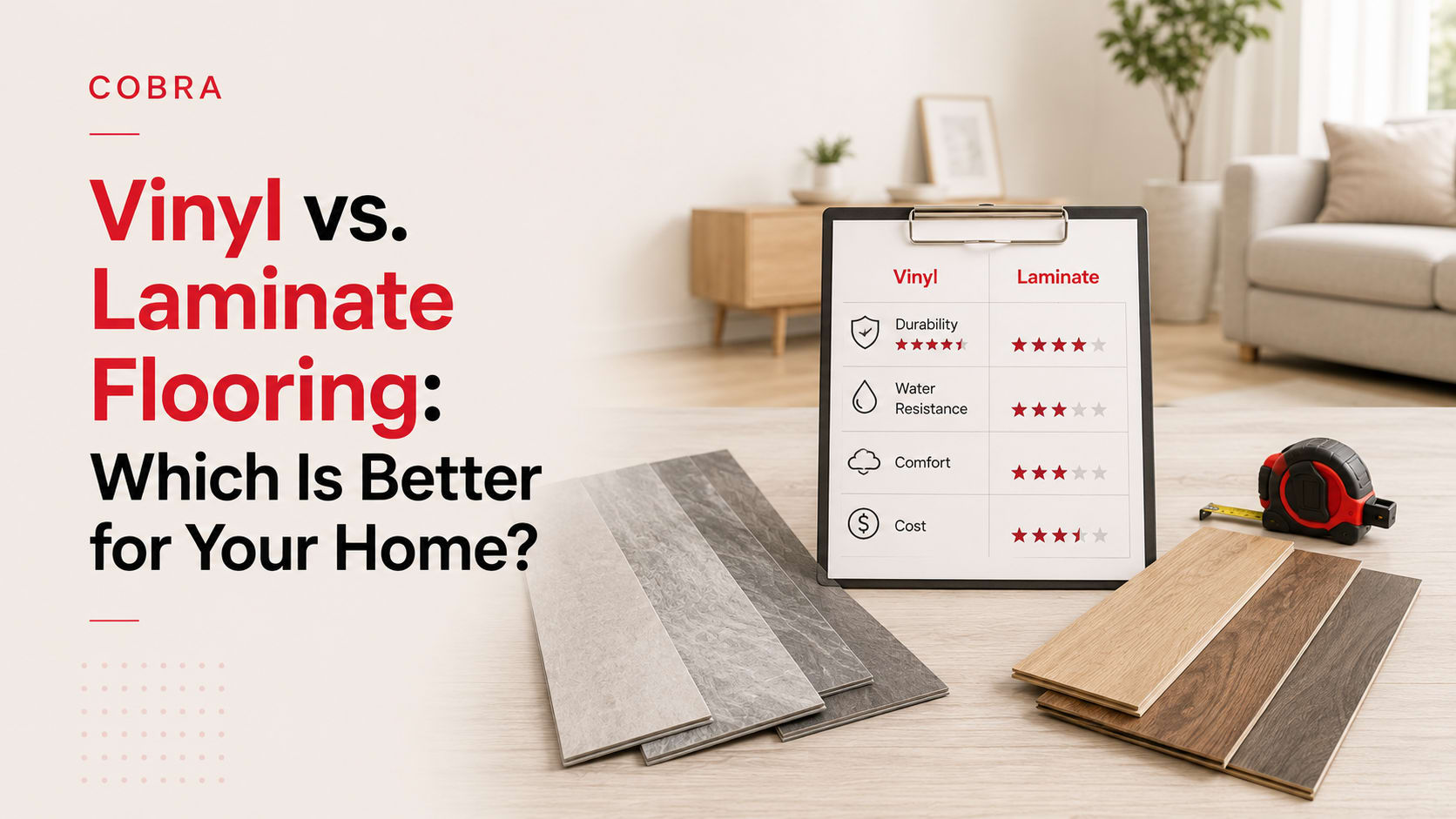
Comparison Table: Vinyl vs. Laminate for Property Managers
CriteriaVinylLaminate Water ResistanceExcellent (waterproof)Poor–Moderate (not waterproof) DurabilityHigh (good for heavy use)Moderate–High (prone to water damage) AppearanceGood–Very Good (varies by product)Very Good (realistic wood look) MaintenanceEasy (mop, sweep)Easy (sweep, damp mop) InstallationFlexible (glue, click, loose lay)Floating (click-together) CostVaries (request a quote)Varies (request a quote) Best UseWet/high-traffic areasDry, lower-traffic areas
Checklist: Choosing the Right Flooring for Your Property
Assess current subfloor conditions and moisture risks.
Review traffic patterns and cleaning protocols. For high-turnover spaces, reference a move in cleaning checklist to spot problem areas.
Determine if waterproofing or slip resistance is required by code or insurance.
Get samples of both vinyl and laminate to compare in your actual lighting and use areas.
Vet installers for proper licensing and insurance. Consider a licensed trade services provider to avoid compliance issues.
Calculate lifecycle costs, including cleaning, repairs, and potential replacement.
Plan for move-in and move-out cleaning to protect new floors; see the move out cleaning checklist for turnover best practices.
Risk Management: Avoiding Costly Flooring Mistakes
Deferred maintenance and poor installation are two of the biggest flooring risks for property managers. Water damage under laminate, for example, often isn’t covered by warranty if caused by improper cleaning or installation. Vinyl can hide subfloor issues that lead to mold or odors. Regular inspections and a office cleaning checklist can help catch early signs of trouble before they become liabilities.
How Cobra Solutions Simplifies Flooring Decisions
With Cobra Solutions, you work with one accountable property services company for assessment, planning, installation, and ongoing monitoring. Our licensed and insured teams follow a proven Assess → Plan → Execute → Monitor process—so you’re not left chasing multiple vendors or worrying about compliance gaps. We scale our operations for HOAs, schools, and multi-site portfolios, and scope every flooring project to your property’s unique needs.
For a full range of property and facility solutions, visit Cobra Prime.
Frequently Asked Questions
Is vinyl or laminate flooring better for high-moisture areas?
Vinyl flooring is the better choice for bathrooms, kitchens, and basements due to its waterproof properties. Laminate is not recommended for areas with frequent spills or moisture.
Which flooring lasts longer in heavy-use common areas?
High-quality vinyl typically outlasts laminate in lobbies, hallways, and other high-traffic zones, especially where cleaning is frequent and moisture is possible.
What are the main maintenance differences?
Both floors are easy to clean, but vinyl can be wet-mopped, while laminate should only be damp-mopped. Always use cleaning products approved for the flooring type to avoid voiding warranties.
How do I ensure flooring is installed to code?
Use a licensed, insured contractor familiar with local building codes and HOA or facility requirements. Cobra Solutions provides licensed trade services for code-compliant, warrantied installations.
Can I use the same flooring in all rooms?
It’s possible, but not always optimal. Use vinyl in wet or high-traffic areas, and laminate where you want a warmer feel and less exposure to water. Assess each area’s needs before standardizing.
Next Steps: Get Flooring Right the First Time
Choosing between vinyl and laminate flooring is a decision with long-term operational and financial impact. If you want a single point of accountability for assessment, installation, and ongoing care, request a flooring quote or schedule a consultation with Cobra Solutions. We’ll help you make the right call for your property, your budget, and your residents’ safety.