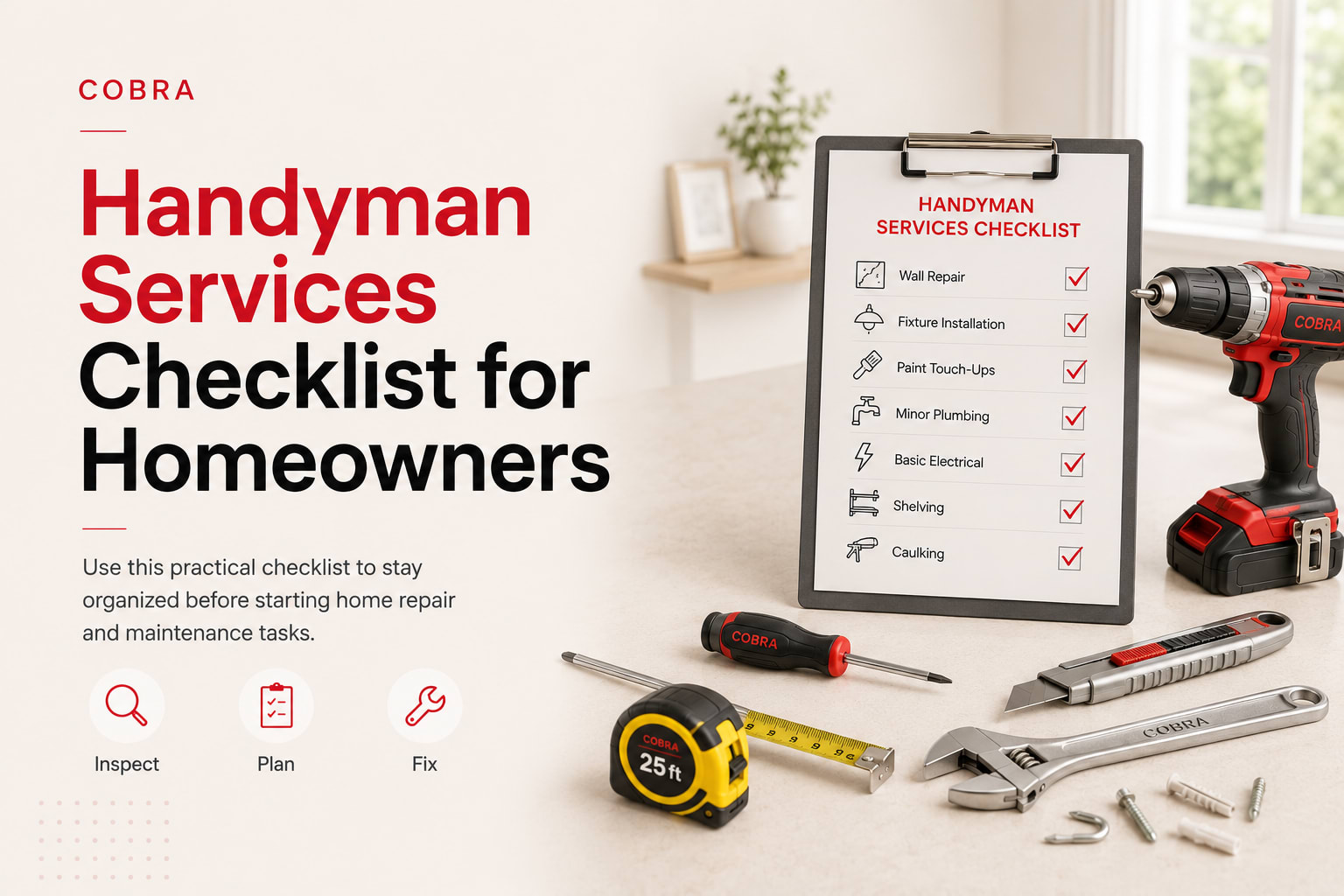
Handyman Services Checklist for Homeowners
Managing property repairs and maintenance is a continuous job. Whether you’re responsible for an HOA, a multifamily building, or a single-family home, having a clear, actionable handyman services checklist will help you reduce risk, control costs, and avoid common headaches like deferred maintenance or unreliable contractors. Here’s what to cover, how to vet vendors, and how to keep your property safe and compliant—based on years of real-world experience.
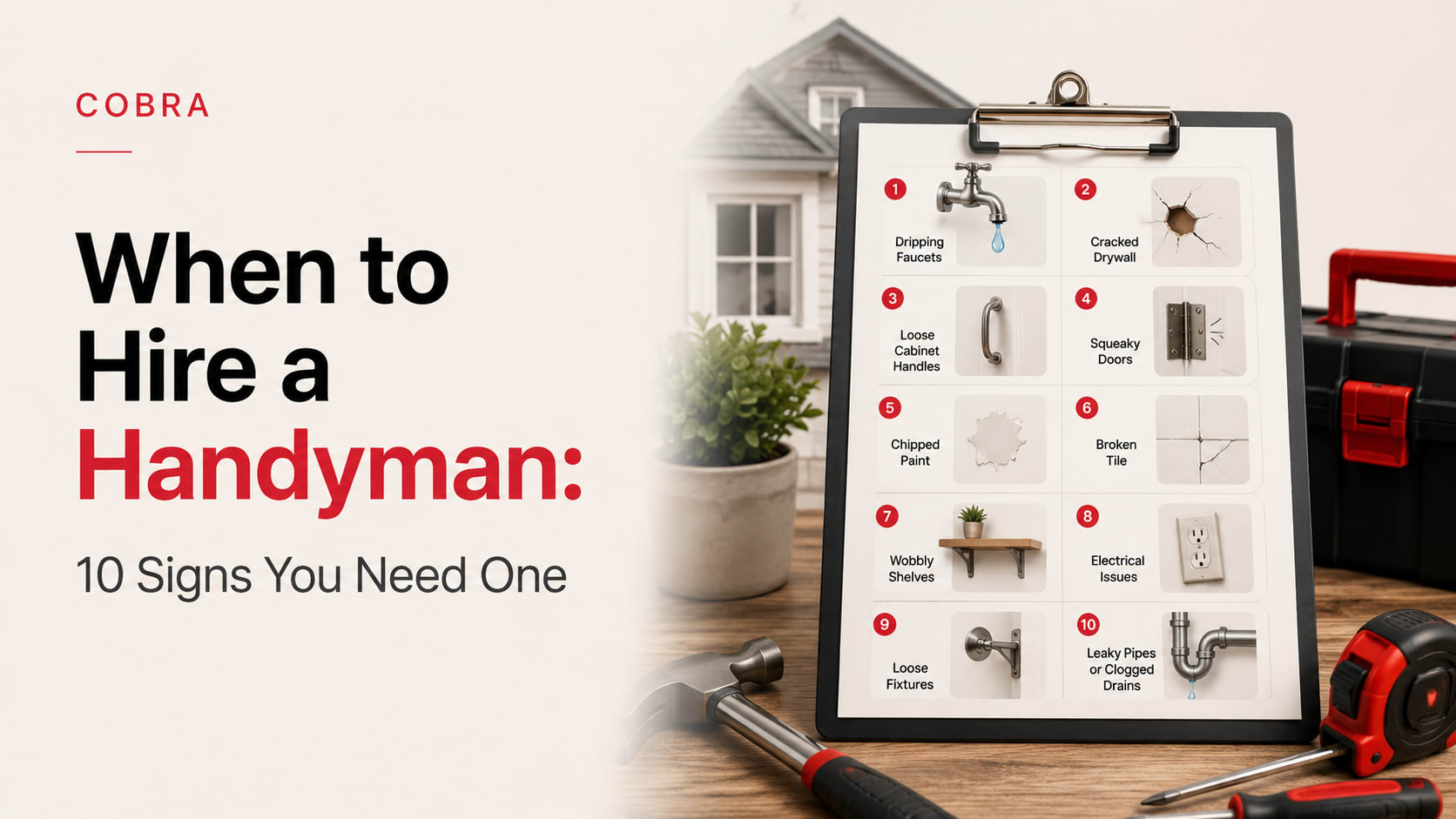
What to Include on Your Handyman Services Checklist
Annual and seasonal preventive maintenance (gutters, caulking, weatherproofing)
Minor plumbing repairs (leaks, faucet replacement, toilet fixes)
Electrical fixes (outlet/switch replacement, light fixture installation)
Drywall patching and painting
Door, window, and lock repairs
Furniture assembly and minor carpentry
Appliance hookups and replacements
Exterior maintenance (deck repairs, fence fixes, power washing)
Safety checks (smoke/CO detectors, trip hazards, handrails)
Junk removal and small hauling jobs
For a deeper breakdown of the most frequent issues, see common home repairs—a practical reference for what typically comes up.
Preventive vs. Reactive Maintenance
Preventive maintenance is always less expensive and disruptive than emergency repairs. Schedule regular inspections—seasonal is best for most properties. Create a calendar for tasks like HVAC filter changes, gutter cleaning, and minor exterior repairs. Document what’s done and when, so you have a record for insurance and compliance.
Reactive maintenance should be reserved for true surprises: sudden leaks, broken locks, urgent electrical issues. If you’re seeing the same problem repeatedly, it’s a sign your preventive checklist is missing something.
Vetting Handyman Vendors: What to Require
Licensing and Insurance: Only work with licensed and insured providers. This reduces liability and ensures code compliance.
References and Track Record: Ask for references—especially from similar properties or communities. Reliable vendors should have no problem providing them.
Clear Scope and Written Estimates: Insist on detailed scopes of work, not vague promises. Avoid contractors who can’t specify what’s included and excluded.
Accountability: One provider, one point of contact, and a documented process (like Assess → Plan → Execute → Monitor) makes oversight and follow-up far simpler.
Compliance: Confirm knowledge of local codes and HOA or association rules. For example, some repairs may require permits or specific materials.
The difference between a handyman and a general contractor isn’t always obvious. For a breakdown, see handyman vs. general contractor—it can help you decide who to call for each job.
Checklist: Handyman Service Needs by Property Type
Task Single-Family HOA/Community Commercial/School Annual Safety Inspection ✔ ✔ ✔ Drywall Repair ✔ ✔ ✔ Exterior Maintenance ✔ ✔ ✔ Lock/Access Control ✔ ✔ ✔ Common Area Upkeep — ✔ ✔ Furniture Assembly ✔ ✔ ✔ Junk Removal ✔ ✔ ✔
Not sure how to handle furniture assembly efficiently? See Furniture Assembly Tips: What to Know Before You Start for practical advice.
Budgeting and Scheduling: How to Stay in Control
Budgeting for handyman services means tracking recurring vs. one-off costs. Preventive tasks (like gutter cleaning) should be scheduled and budgeted annually. For larger or unpredictable repairs, maintain a reserve fund—especially for HOAs or multi-unit properties. Document every repair and invoice for transparency and future planning.
If you’re unsure whether a task is DIY, handyman, or contractor territory, when to hire a handyman breaks down the decision points.
Liability, Access, and Compliance
Always confirm that vendors are insured and understand your property’s access protocols. For schools and HOAs, background checks and clear sign-in/out procedures are a must. Keep all permits, inspection reports, and vendor agreements on file. If an incident occurs, you’ll want documentation showing you followed best practices.
For drywall issues, timing matters: see Drywall Repair: When to Patch, Repair, or Replace for guidance on what’s urgent and what can wait.
How Cobra Prime Streamlines Property Maintenance
Coordinating multiple vendors is a major source of frustration for property managers and HOA boards. Cobra Prime offers licensed and insured handyman services in NJ—with a single point of contact, transparent scoping, and a proven Assess → Plan → Execute → Monitor process. This reduces risk, simplifies oversight, and scales easily across multiple properties or communities.
Frequently Asked Questions
What’s the difference between preventive and reactive handyman work?
Preventive work is scheduled in advance to avoid problems—like seasonal inspections or routine maintenance. Reactive work responds to sudden issues, such as leaks or breakages. Prioritizing preventive work reduces long-term costs and emergencies.
How do I know if a handyman is licensed and insured?
Ask for proof of licensing and insurance up front. Reputable providers will supply documentation without hesitation. For HOAs and commercial properties, keep copies on file for compliance and liability protection.
Should I hire a handyman or a general contractor?
Handymen are best for small-to-medium repairs and maintenance. General contractors are needed for large-scale renovations or projects requiring permits and multiple trades. For more, review handyman vs. general contractor.
How often should I schedule handyman inspections?
At minimum, schedule annual inspections. For multi-unit or high-traffic properties, consider seasonal or quarterly checkups to catch issues early and maintain compliance.
How do I avoid no-show or unreliable contractors?
Work with established, licensed providers who offer clear communication, written scopes, and references. One accountable provider, like Cobra Prime, reduces the risk of missed appointments or unfinished work.
Ready to simplify your property maintenance? Request a quote or schedule a consultation with Cobra Prime. Get one accountable partner for all your handyman and property service needs.